 Comparison
Circle Chiropractic Alternatives for Sciatica
Table of Contents
- Understanding Sciatica and Why Treatment Matters
- How Spinal Decompression for Sciatica Differs from Chiropractic Adjustment
- Sciatica Treatment Options: A Practical Comparison
- Chiropractor or Massage Therapist for Sciatica: What the Evidence Shows
- Herniated Disc Sciatica Treatment: Beyond Adjustments
- Red Flags That Demand a Different Approach
- What to Expect: Treatment Timeline and Realistic Outcomes
- Frequently Asked Questions
Last Updated: October 11, 2026
Understanding Sciatica and Why Treatment Matters
Sciatica occurs when the sciatic nerve becomes irritated or compressed, causing radiating pain from the lower back down one leg. Patients describe sharp, burning, or tingling sensations, sometimes with numbness or weakness. When the longest nerve in your body is compressed, the results can be debilitating.
True sciatica follows the nerve pathway down your leg, not just the back. If you're experiencing radiating pain below the knee, you're likely dealing with nerve compression requiring targeted care.
Sciatica rarely resolves without treatment, making sciatica treatment alternatives an important consideration. The longer compression persists, the more inflammation builds. Early, targeted intervention significantly improves recovery time and outcomes.
How Spinal Decompression for Sciatica Differs from Chiropractic Adjustment
Spinal decompression and chiropractic adjustment are both non-surgical but work differently. This distinction explains why some patients see results with decompression after chiropractic care has plateaued.
The mechanics of decompression therapy
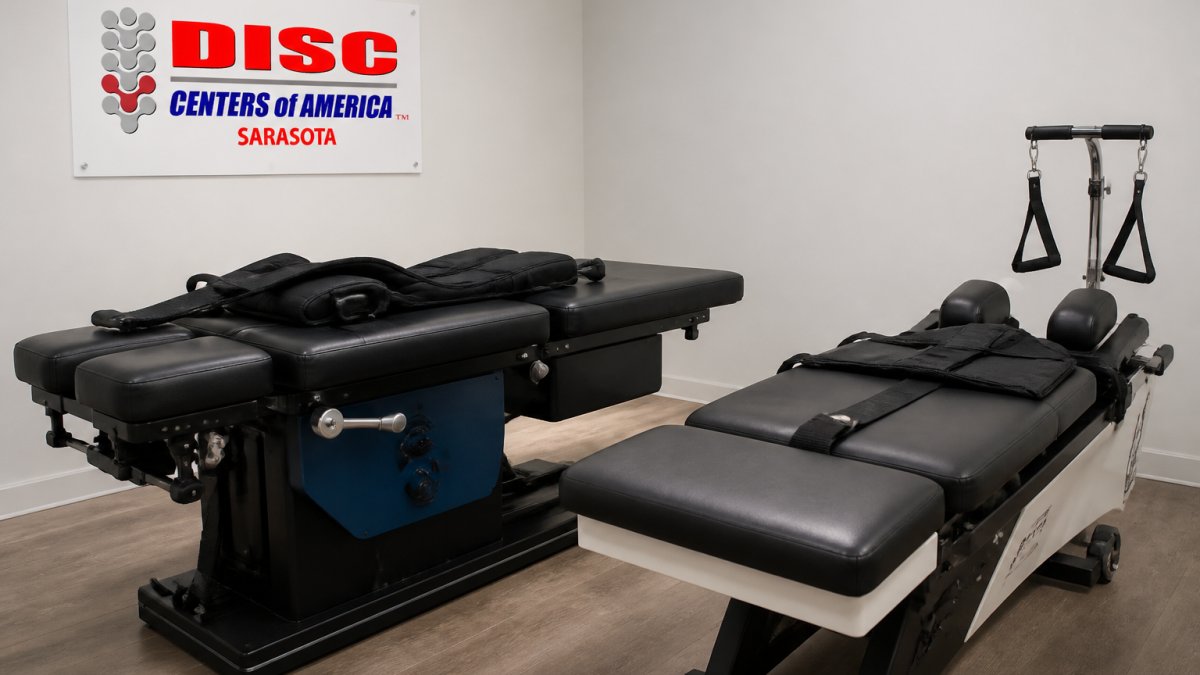
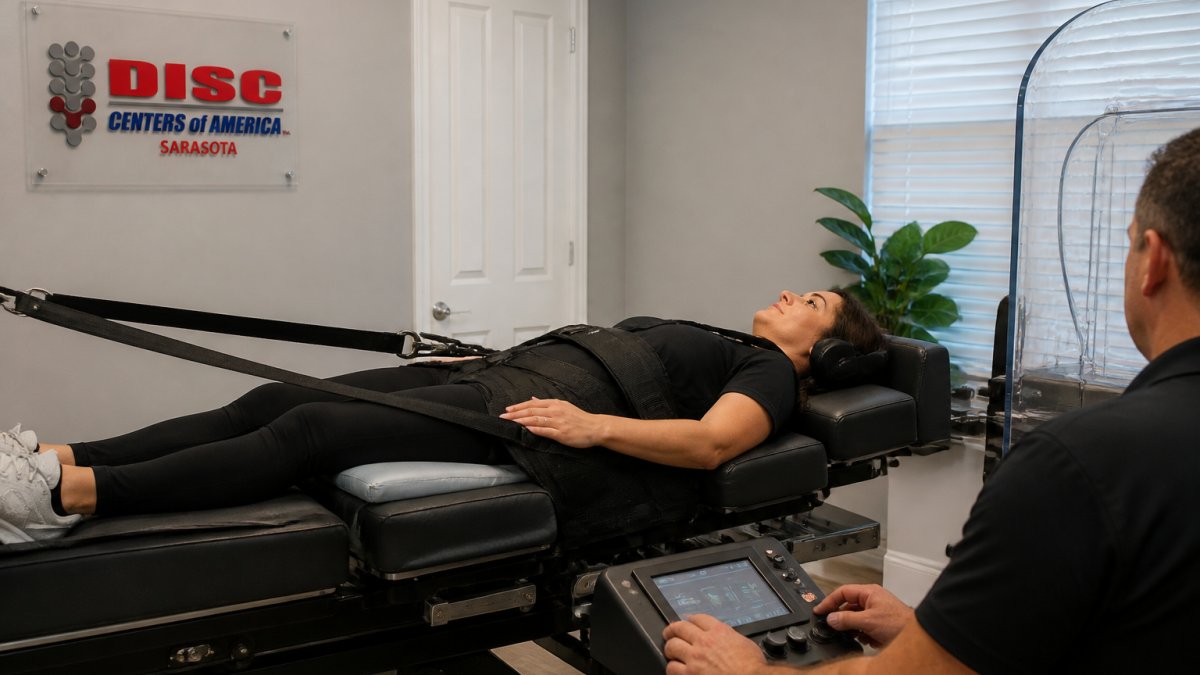
Spinal decompression uses motorized traction to create negative pressure within spinal discs, drawing herniated material back into place and reducing nerve pressure. Sessions last 20-30 minutes, repeated over several weeks.
Chiropractic adjustment uses manual force to reposition vertebrae. It's effective for some back pain but doesn't address disc herniation like decompression does.
Adjustment repositions the spine; decompression reduces nerve pressure directly. For herniated disc sciatica, this distinction is critical.
Why patients fail with traditional chiropractic care
Many patients arrive after months of chiropractic adjustments without relief. Adjustment alone cannot resolve disc herniation. While it may temporarily improve alignment, it won't reduce the disc pressure causing nerve irritation.
If chiropractic didn't work, it doesn't mean nothing will. It means disc herniation or nerve compression requires a different approach. Decompression specifically addresses the mechanical cause of nerve pressure.
Chiropractic typically shows results within 4-6 weeks. Decompression requires 20-30 sessions over 6-8 weeks to allow the body time to reabsorb herniated material and reduce inflammation.
Sciatica Treatment Options: A Practical Comparison
Several legitimate sciatica treatment alternatives exist for managing this condition. The right choice depends on your diagnosis, symptom severity, pain duration, and prior treatments.
Treatment comparison by diagnosis and severity
| Treatment | Best For | Typical Timeline | Commitment Level | When to Consider |
|---|---|---|---|---|
| Rest and self-care (heat/ice, activity modification) | Acute flare-ups, mild pain | 1-2 weeks | Minimal | First 2 weeks of new sciatica; between other treatments |
| Over-the-counter medication (ibuprofen, acetaminophen) | Temporary pain relief, inflammation reduction | Ongoing as needed | Minimal | Short-term symptom management; not a long-term solution |
| Physical therapy | Muscle weakness, postural issues, long-term prevention | 8-12 weeks (2-3 sessions/week) | Moderate to high | Pain from weakness or poor posture; after acute phase resolves |
| Massage therapy | Muscle tension, secondary muscle spasm | 4-8 weeks | Low to moderate | Muscle tightness contributing to pain; as complement to other care |
| Chiropractic adjustment | Spinal misalignment, mild nerve irritation | 4-6 weeks (2-3 visits/week) | Moderate | Suspected misalignment; if improvement appears within 4-6 visits |
| Spinal decompression | Herniated disc, nerve compression, failed conservative care | 6-8 weeks (20-30 sessions, 3-5 per week) | High | Imaging shows disc herniation; other treatments haven't worked |
| Medical care (epidural injection, oral steroids) | Severe inflammation, pain limiting function | Varies | Low to moderate | Severe pain; as bridge to other treatment; when conservative care hasn't worked |
How to choose: a decision framework
Step 1: Understand your diagnosis. Imaging (MRI or CT) showing nerve compression guides your choice. Herniated disc → decompression or medical options.
Step 2: Assess symptom severity. Mild pain (3-4/10) may respond to rest and physical therapy. Moderate pain (5-7/10) affecting sleep or work requires professional intervention.
Step 3: Consider your timeline. New-onset pain (less than 2 weeks) often improves with rest. Pain lasting 2-6 weeks warrants professional evaluation.
Step 5: Assess your preferences and constraints. Consider your preferred treatment style, weekly availability, insurance coverage, and timeline. These practical factors should inform your choice.
Common treatment sequences that work
For acute sciatica (less than 2 weeks): Start with rest, heat/ice, and over-the-counter medication. If pain persists beyond 2 weeks, add physical therapy or chiropractic evaluation.
For subacute sciatica (2-6 weeks): Physical therapy + chiropractic adjustment. If no improvement after 6 weeks, move to imaging and consider decompression.
For herniated disc sciatica (confirmed by imaging): Spinal decompression as primary treatment. Add physical therapy to rebuild strength and prevent recurrence.
For sciatica unresponsive to conservative care (6+ weeks): Get imaging if you haven't. If imaging shows disc herniation, consider spinal decompression. If imaging is normal, consider medical evaluation (epidural injection or oral steroids).
Red flags that change the decision
Seek immediate medical attention for: progressive neurological symptoms (increasing weakness, loss of sensation, genital numbness, possible cauda equina syndrome), loss of bladder/bowel control, severe pain despite treatment, pain following trauma, unexplained weight loss with back pain, fever with back pain, or new-onset sciatica in patients over 50.
Cost, insurance, and access considerations
Physical therapy and chiropractic adjustment typically have $20-$50 copays. Spinal decompression coverage varies; out-of-pocket costs range widely. Medical interventions are usually covered but may have higher copays.
Before committing, ask your provider about insurance coverage and total cost for a full treatment course.
Chiropractor or Massage Therapist for Sciatica: What the Evidence Shows
The evidence for both chiropractic care and massage therapy in sciatica is more nuanced than marketing claims suggest. Understanding what research does and does not establish helps you set realistic expectations and choose the right approach for your situation.

What research shows about chiropractic adjustment for sciatica
Spinal manipulation evidence is mixed. It works better for general lower back pain than for true sciatica with radiating leg pain. For herniated disc sciatica, adjustment may temporarily improve alignment but does not reverse disc herniation or reduce nerve compression.
Research does not establish chiropractic superiority over physical therapy or decompression for disc-related sciatica. If your sciatica stems from muscle tightness, adjustment may help. If from a herniated disc, adjustment alone is unlikely to resolve the root problem.
Patients who improve with chiropractic care typically show results within 4-6 weeks. No improvement after 10-15 adjustments suggests a different intervention is needed.
What research shows about massage therapy for sciatica
Massage reduces muscle tension and eases muscle-related pain. However, it does not address disc herniation or nerve compression. Massage works best as complementary treatment supporting recovery.
Research on massage for sciatica is limited. Evidence supports it for muscle-related pain when combined with other care, but not as a standalone solution for nerve compression sciatica.
CALL TODAY TO SCHEDULE YOUR FREE CONSULTATION →
The evidence gap: what we don't know
Neither chiropractic adjustment nor massage reverses herniated disc material or reduces nerve compression directly. This reflects their mechanism: adjustment repositions the spine; massage releases tension. Neither creates negative pressure within the disc.
Spinal decompression fills a distinct role by creating sustained negative pressure within the disc to reduce herniation and nerve compression. Evidence for decompression in herniated disc sciatica is stronger than for adjustment alone, particularly in patients unresponsive to conventional care.
Realistic outcome variation
Outcomes vary significantly based on individual factors: age, herniation severity and duration, multiple disc problems, overall health, and treatment commitment. A treatment effective for one patient may produce modest results for another.
This variation is normal. When evaluating any sciatica treatment, ask your provider: "What does success look like for my specific situation?"
How to use this evidence in your decision
If imaging shows a herniated disc, prioritize treatments addressing disc compression (decompression, traction, or medical intervention) over adjustment alone. If sciatica is mild or stems from muscle tightness, adjustment or massage may suffice.
Start with a clear diagnosis via imaging (MRI or CT). Match treatment to diagnosis, not the other way around. No improvement after 4-6 weeks suggests trying a different approach.
Herniated Disc Sciatica Treatment: Beyond Adjustments
Herniated disc sciatica requires specific thinking. A herniated disc means inner material has pushed through the outer layer, pressing on the sciatic nerve. This is a structural problem, not misalignment.
Why disc herniation requires targeted decompression
Chiropractic adjustment cannot reverse a herniated disc. It repositions vertebrae but doesn't address herniated material pressing on the nerve.
Spinal decompression creates negative pressure within the disc, drawing herniated material back into the disc space. This reduces nerve pressure and allows inflammation to decrease.
Full healing typically requires 6-8 weeks of consistent decompression therapy. The body needs time to reabsorb material and reduce inflammation.
Many patients with herniated disc sciatica have tried physical therapy or chiropractic care without success. This signals that your disc problem requires more targeted intervention.
Red Flags That Demand a Different Approach
Certain warning signs require medical evaluation beyond conservative care.
Seek immediate medical attention for progressive neurological symptoms: increasing weakness, loss of bladder/bowel control, genital numbness, or severe pain despite treatment. These may indicate cauda equina syndrome.
Other red flags include pain following trauma, unexplained weight loss with back pain, fever with back pain, or pain unresponsive to conservative care after 4-6 weeks.
If you're over 50 with new-onset sciatica or sciatica following a fall, get imaging to rule out fracture or structural problems.
Conservative care works well for many patients, but a thorough evaluation ensures you're pursuing the right path for your specific condition.
What to Expect: Treatment Timeline and Realistic Outcomes
Understanding realistic timelines helps you commit to the right treatment course and avoid abandoning effective care too early. Different approaches have different paces.
Physical therapy typically shows initial improvement within 2-3 weeks, with meaningful progress by 6-8 weeks.
Chiropractic adjustment usually produces noticeable relief within the first 4-6 visits if it's going to work for you.
Spinal decompression requires longer commitment. Most patients need 20-30 sessions over 6-8 weeks to see meaningful results.
Realistic expectations matter. Decompression doesn't produce overnight relief, but it does address the mechanical cause of your pain.
The cost of patience is worth it.
Choosing between Circle Chiropractic alternatives and other sciatica treatments comes down to matching your diagnosis with the right intervention.
Frequently Asked Questions
How is spinal decompression for sciatica different from a chiropractic adjustment?
Spinal decompression uses motorized traction to gently stretch the spine and reduce pressure on the sciatic nerve, targeting the root cause of nerve compression. Chiropractic adjustments focus on realigning vertebrae through manual manipulation. Decompression works best for disc-related sciatica (herniated or bulging discs), while adjustments address misalignment. Many patients who fail with traditional chiropractic care respond well to decompression because it directly reduces the mechanical pressure causing radiating pain and nerve irritation.
What sciatica treatment options exist besides chiropractic care?
Beyond chiropractic adjustments, sciatica treatment options include physical therapy (muscle strengthening and flexibility work), spinal decompression therapy, acupuncture, massage therapy, over-the-counter or prescription medication, epidural steroid injections, and in severe cases, surgery. Non-surgical, drug-free treatments like spinal decompression and physical therapy are often recommended first. Your choice depends on the root cause (disc herniation, nerve compression, muscle tightness), symptom severity, and how long you've had sciatica. A clinical assessment from a qualified healthcare provider helps identify which approach matches your specific condition.
Is a chiropractor or massage therapist better for sciatica?
Both can provide relief, but they work differently. Chiropractors focus on spinal alignment and nerve interference through adjustments. Massage therapists reduce muscle tension and inflammation around the sciatic nerve. For sciatica caused by a herniated disc or direct nerve compression, a chiropractor is often more appropriate. For sciatica triggered by tight muscles or poor posture, massage therapy combined with physical therapy may be more effective. Many patients benefit from combining both approaches. The best choice depends on whether your sciatica stems from disc issues, muscle tension, or misalignment, a clinical assessment clarifies this.
Can spinal decompression help sciatica caused by a herniated disc?
Yes, spinal decompression therapy is specifically designed to address herniated disc sciatica treatment by reducing pressure on the affected nerve. The motorized traction gently pulls the vertebrae apart, creating negative pressure that can help retract the herniated disc material away from the nerve root. This reduces nerve irritation, inflammation, and the radiating pain down your leg. Success depends on the severity and location of the herniation and how long symptoms have persisted. Many patients with herniated disc sciatica see significant improvement without surgery or injections, though individual results vary.
When should I consider a different sciatica treatment if chiropractic care isn't working?
If you've had regular chiropractic adjustments for 4-6 weeks without meaningful improvement, or if your symptoms are worsening, it's time to explore alternatives. Red flags include progressive numbness or weakness in your leg, loss of bowel or bladder control, or severe, unrelenting pain, these require immediate medical evaluation. If your sciatica stems from a herniated disc or significant nerve compression, spinal decompression may be more effective than adjustments alone. A clinical assessment and possibly imaging (MRI) can reveal whether your condition requires a different approach. Continuing an ineffective treatment delays relief and can extend recovery time.