 Comparison
Spinal Decompression vs Traction Table: Which Works Better?
Table of Contents
- Spinal Decompression vs Traction Table: Quick Comparison
- What Is Spinal Decompression Therapy?
- How a Spinal Decompression Table Works
- Understanding Traction Tables and Manual Traction
- Mechanical Spinal Traction for Herniated Disc: How It Differs
- Conditions Treated: Sciatica, Disc Herniation, and Spinal Stenosis
- Spinal Decompression Therapy Risks and Side Effects
- Spinal Decompression vs Inversion Table: Key Differences
- Frequently Asked Questions
Last Updated: October 20, 2026
Spinal Decompression vs Traction Table: Quick Comparison
When comparing spinal decompression vs traction, both relieve spinal pressure, but they work differently. The answer depends on your condition, goals, and what your body needs.
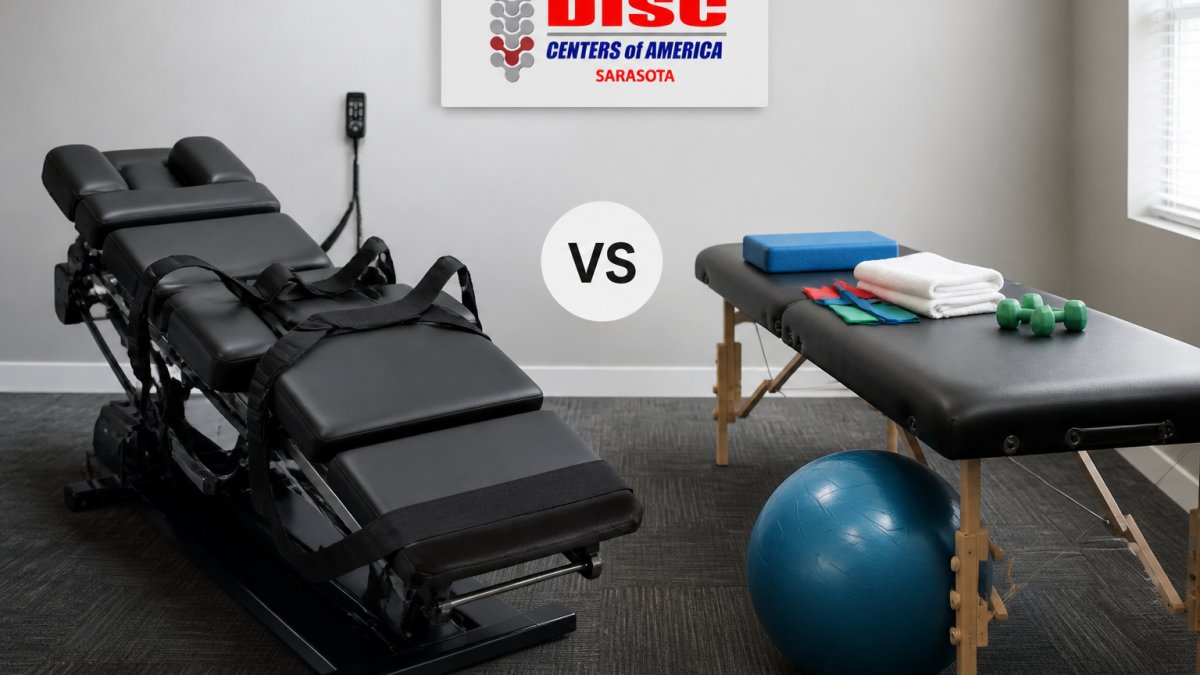
Spinal decompression therapy uses computerized motorized tables that apply precise, controlled force to stretch your spine and decompress affected discs. Traction tables, whether motorized or manual, apply a simpler pulling force without the same level of computerized control. The key distinction: decompression therapy targets specific intervertebral discs with programmed protocols, while standard traction provides more general stretching.
Here's what you need to know before choosing between them.
| Treatment Type | How It Works | Best For | Typical Duration |
|---|---|---|---|
| Spinal Decompression | Motorized, computerized stretching with precise force control | Herniated discs, nerve compression, sciatica | 20-30 minutes per session |
| Motorized Traction Table | Motorized stretching without computerized targeting | General spine decompression, flexibility | 15-20 minutes per session |
| Manual Traction | Physical therapist-applied pulling force | Acute injuries, flexibility work | 10-15 minutes per session |
| Inversion Table (home use) | Gravity-assisted stretching at adjustable angles | Mild back pain, flexibility | 5-15 minutes per session |
What Is Spinal Decompression Therapy?
Spinal decompression therapy is a non-surgical treatment that uses a motorized table to gently stretch your spine and reduce pressure on compressed nerves and herniated discs. The table applies a controlled, intermittent pulling force, a precise sequence of stretch and release cycles, that allows fluid to move back into damaged discs and takes pressure off irritated nerve roots.
Unlike a simple traction table, spinal decompression equipment uses sensors and computerized programming to monitor muscle resistance. When your muscles tense up, the table adjusts the force so that resistance doesn't counteract the stretch, the feedback loop that separates true decompression from basic traction.
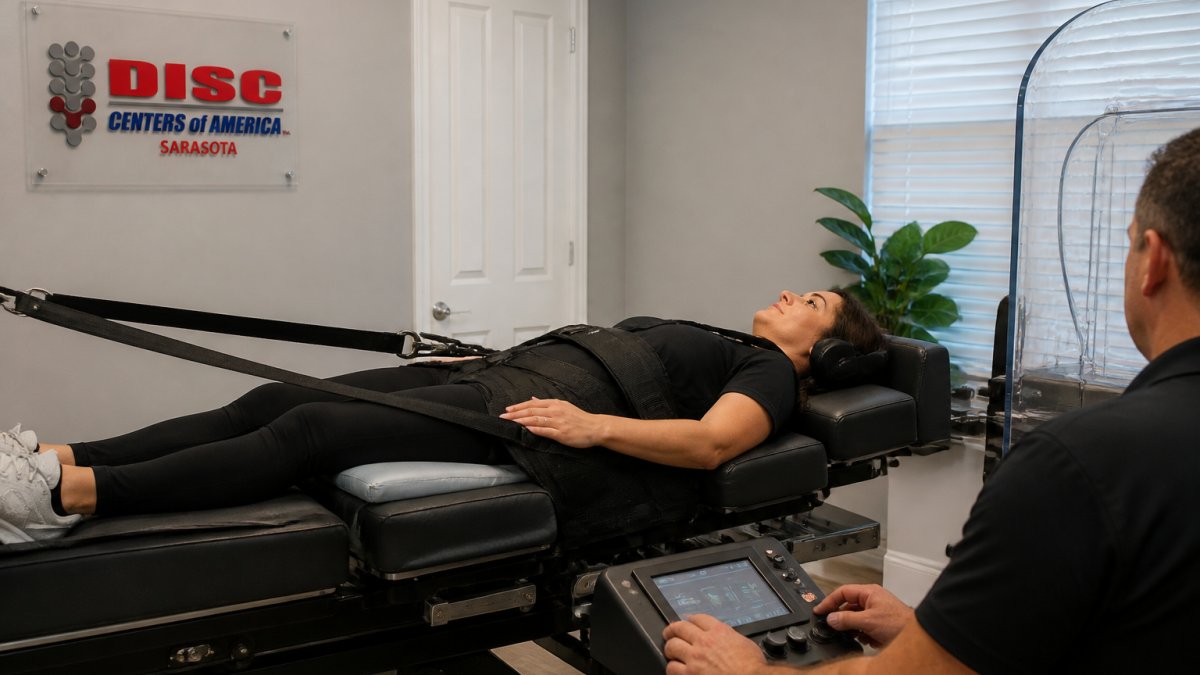
A typical session lasts 20 to 30 minutes. You lie on the table, usually on your back for lower back pain or prone for neck pain, while the motorized mechanism gently pulls your spine. The sensation is generally painless, though you may feel mild stretching. Protocols involve multiple sessions per week over several weeks, depending on your condition and response.
How a Spinal Decompression Table Works
A spinal decompression table combines motorized mechanics and computerized control. Your lower half (or upper half for neck treatment) is secured while the table applies a programmed stretching force in a specific pattern: gradual tension buildup, peak stretch, gradual release, rest period, and repeat.
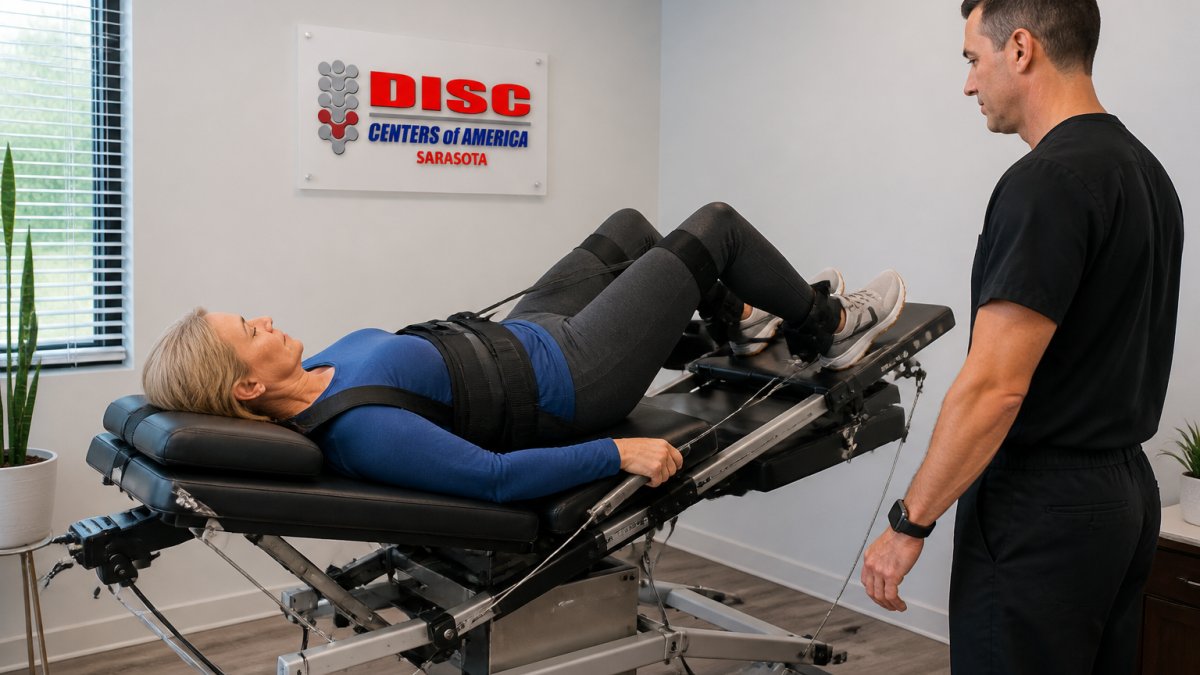
This cycle creates negative pressure inside your discs, which can help draw herniated material back toward the center, reduces pressure on compressed or irritated spinal nerves, and prevents your muscles from tensing up in a protective response that would counteract the decompression effect.
Sensors detect when your muscles resist the stretch, and the table automatically reduces force just enough to prevent that resistance from building, ensuring the stretch actually decompresses your spine rather than fighting your body's protective instinct.
Force, stretch-cycle duration, and session time are all programmed to your condition and tolerance.
Understanding Traction Tables and Manual Traction
Traction tables come in two main varieties: motorized and manual. Both apply a pulling force to your spine, but they differ significantly in precision and control.
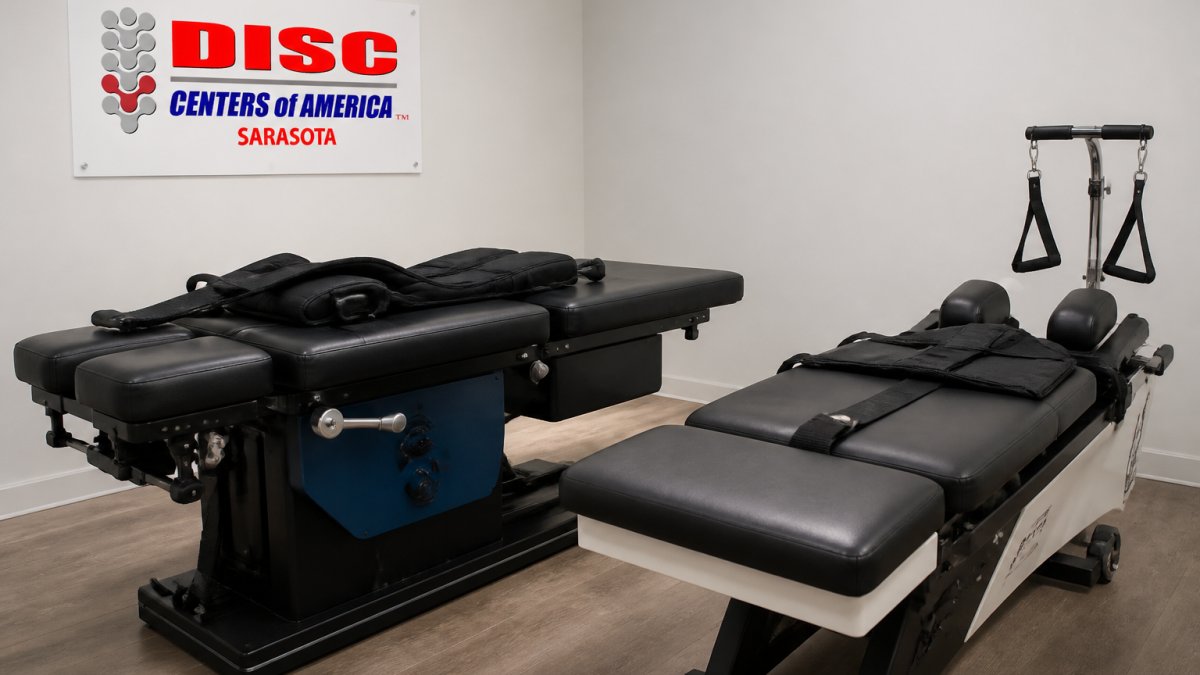
Motorized traction tables look similar to spinal decompression tables but lack the computerized feedback system. They apply a steady or intermittent pulling force based on pre-set parameters, without adjusting in real-time to muscle resistance. Force is typically applied for 15 to 20 minutes, then released. Some offer intermittent settings, but without the sensor feedback true decompression systems use.
Manual traction involves a physical therapist or chiropractor applying the pulling force by hand, controlling direction, intensity, and duration based on what they feel and what you report. It's often part of a broader session including stretching, mobilization, or muscle work, and typically lasts 10 to 15 minutes.
Motorized traction provides consistent, repeatable force; manual traction offers flexibility and real-time adjustment but depends heavily on the therapist's skill. Motorized traction is more standardized but can't adapt as dynamically to your body's changing response.
Many patients find motorized traction helpful for general spine decompression and mobility improvement. It's less specialized than computerized spinal decompression, but it still provides real benefit for certain conditions.
Mechanical Spinal Traction for Herniated Disc: How It Differs
Mechanical spinal traction for herniated disc treatment creates space between your vertebrae so bulging disc material can retract: pulling your spine apart reduces pressure inside the disc.
Here's where spinal decompression and standard mechanical traction diverge. Standard mechanical traction applies a constant or rhythmic pulling force. Your spine stretches, pressure decreases, and that's the primary effect. It works for many people, especially those with mild to moderate disc bulges.
Spinal decompression therapy adds sophistication: computerized programming applies force in specific patterns that maximize disc decompression while minimizing muscle guarding. The intermittent stretch-hold-release-rest cycles create a pumping action that may draw herniated material back into the disc more effectively than constant traction, and sensor feedback allows deeper decompression.
For herniated discs, research suggests both approaches can help, but they're not equivalent. Mechanical traction is widely available; spinal decompression is more targeted but requires specialized equipment and trained practitioners.
The choice often depends on severity and your response to initial treatment. A mild to moderate herniation might respond well to mechanical traction. A more severe herniation or one that hasn't responded to other treatments might warrant the more specialized approach of computerized spinal decompression.
Conditions Treated: Sciatica, Disc Herniation, and Spinal Stenosis
Both spinal decompression and traction tables are used to treat overlapping but distinct conditions. Understanding which condition you have helps clarify which treatment might work better for you.
Sciatica involves compression of the sciatic nerve, usually from a herniated disc or bone spur in the lower back, causing pain, numbness, or tingling down your leg. Both treatments reduce pressure on that nerve; decompression is often preferred because it targets the specific disc or area causing the compression, but traction also relieves many people with sciatica.
CALL TODAY TO SCHEDULE YOUR FREE CONSULTATION →
Disc herniation occurs when the inner gel of a disc pushes through the outer layer, compressing nearby nerves and causing localized or radiating pain. Both treatments create space for the herniated material to retract; spinal decompression's advantage is precision, computerized control targets the specific herniated disc.
Spinal stenosis is a narrowing of the spinal canal that compresses nerves, often from gradual wear and tear. Traction and decompression both provide temporary relief by opening space in the canal, though neither reverses the narrowing; patients often need ongoing or periodic treatment.
Many patients have multiple issues at once, a herniated disc plus stenosis, for example. There, spinal decompression's ability to target specific areas becomes more valuable: a therapist can program the table to focus on the herniated disc while also addressing overall stenosis through the decompression cycles.
Spinal Decompression Therapy Risks and Side Effects
Spinal decompression therapy is generally considered safe, but it's not risk-free, and it's not appropriate for everyone.
Common temporary side effects include mild muscle soreness or increased pain in the first few sessions as your body adjusts, typically resolving within a few sessions. Some patients feel temporary stiffness or muscle fatigue after treatment, similar to post-workout soreness.
More serious contraindications exist. If you have severe spinal instability, spinal fusion hardware, bone tumors, active infections, or certain types of fractures, spinal decompression is not appropriate. Pregnancy is also a contraindication. If you have osteoporosis, the pulling force might be too risky for your bones.
The most important risk to understand is that spinal decompression doesn't work for everyone. Some patients see significant improvement; others see minimal benefit. There's no way to predict in advance who will respond well.
For many patients, spinal decompression provides temporary relief: once you stop treatment, symptoms may gradually return. That doesn't mean the treatment failed, your underlying condition may require ongoing management.
At Sarasota Disc Center, we evaluate each patient carefully to ensure spinal decompression is appropriate for your specific situation. Dr. David Cifra reviews your imaging and medical history to identify contraindications and determine whether this treatment is likely to help you.
Spinal Decompression vs Inversion Table: Key Differences
Inversion tables are a popular home-use option for back pain, and many people wonder how they compare to clinical spinal decompression therapy. The comparison reveals important distinctions.
An inversion table tilts you upside down or at an angle so gravity helps stretch your spine, with you controlling the angle and duration.
But inversion tables have significant limitations. They're passive and uncontrolled, you rely on gravity and body weight, with no feedback mechanism to ensure you're decompressing discs or preventing muscle guarding.
For mild back pain or general flexibility maintenance, an inversion table might be sufficient. For herniated discs, sciatica, spinal stenosis, or pain that hasn't responded to other treatments, clinical spinal decompression is more likely to provide meaningful relief.
For many patients the choice isn't either-or: some use an inversion table at home for maintenance while receiving clinical spinal decompression for their more serious condition.
Choosing between spinal decompression and traction therapy depends on your specific diagnosis, the severity of your condition, and how your body responds to treatment. Both approaches can provide relief, but they're not interchangeable.
At Sarasota Disc Center, we specialize in non-surgical spinal decompression for patients who have found little success with traditional treatments. Dr. David Cifra will review your MRI and medical history to determine whether spinal decompression is right for you.
Frequently Asked Questions
What's the difference between a spinal decompression table and a traction table?
Spinal decompression tables use motorized, computerized systems with sensors that detect muscle resistance and adjust the stretch automatically to unload spinal discs and reduce nerve compression. Standard traction tables apply a static or intermittent pull without the same level of feedback control. Decompression tables target specific disc pressure and are often used for conditions like disc herniation and sciatica, while traction is a broader stretching approach. Both aim to relieve nerve and disc pressure, but decompression offers more precise, controlled treatment.
Is spinal decompression just traction?
While both use stretching to unload the spine, spinal decompression is not the same as standard traction. Decompression is a specialized form of motorized traction that uses computerized tables with muscle-resistance sensors to apply a more controlled, targeted pull. The table adjusts based on how your muscles respond, creating cycles of stretch and relaxation designed to reduce disc pressure and decompress nerves. Standard traction is a simpler, often manual or static stretch. Decompression is more refined and aims for deeper therapeutic effect.
How many spinal decompression or traction sessions might be needed?
Treatment protocols vary based on your condition and response. Your healthcare provider will assess your progress using pain scales and functional tests to determine if you need additional sessions or if conservative treatment is sufficient. Your specific plan depends on your diagnosis, severity, and how your body responds.
What are the risks or side effects of spinal decompression therapy?
Spinal decompression therapy is generally well-tolerated, but side effects can include temporary muscle soreness, increased pain during early sessions, or mild discomfort at the attachment points. Contraindications include pregnancy, severe osteoporosis, fractures, certain spinal implants, and active infections. Patients with metallic hardware, severe nerve damage, or unstable spinal conditions should avoid treatment. Side effects are usually mild and resolve quickly. Always consult a qualified healthcare provider to determine whether spinal decompression is safe for your specific condition and medical history.
Who should avoid spinal decompression, and when should I seek medical assessment first?
Do not pursue spinal decompression if you are pregnant, have severe osteoporosis, active spinal fractures, metallic implants incompatible with the equipment, severe nerve damage, unstable spinal segments, or active infections. Patients with a history of multiple spinal surgeries should consult their surgeon first. If you have persistent pain lasting more than 6 weeks, progressive numbness or weakness, loss of bladder or bowel control, or unexplained weight loss, seek medical evaluation immediately to rule out serious underlying conditions. A qualified healthcare professional should assess your imaging and medical history before beginning treatment.