 Comparison
Spinal Decompression vs Physical Therapy: 2026 Guide
Table of Contents
- Spinal Decompression vs Physical Therapy: How the Two Approaches Differ
- Quick Comparison: Spinal Decompression vs Physical Therapy at a Glance
- Spinal Decompression Therapy for Herniated Disc: How It Works
- Physical Therapy for Herniated Disc: Goals and Methods
- How Long Does Spinal Decompression Therapy Take to Work?
- Spinal Decompression Therapy Benefits and Risks
- Costs, Insurance Coverage, and Access
- Choosing Your Path: A Decision Guide for Back Pain and Sciatica
- Frequently Asked Questions
Last Updated: October 12, 2026
Spinal Decompression vs Physical Therapy: How the Two Approaches Differ
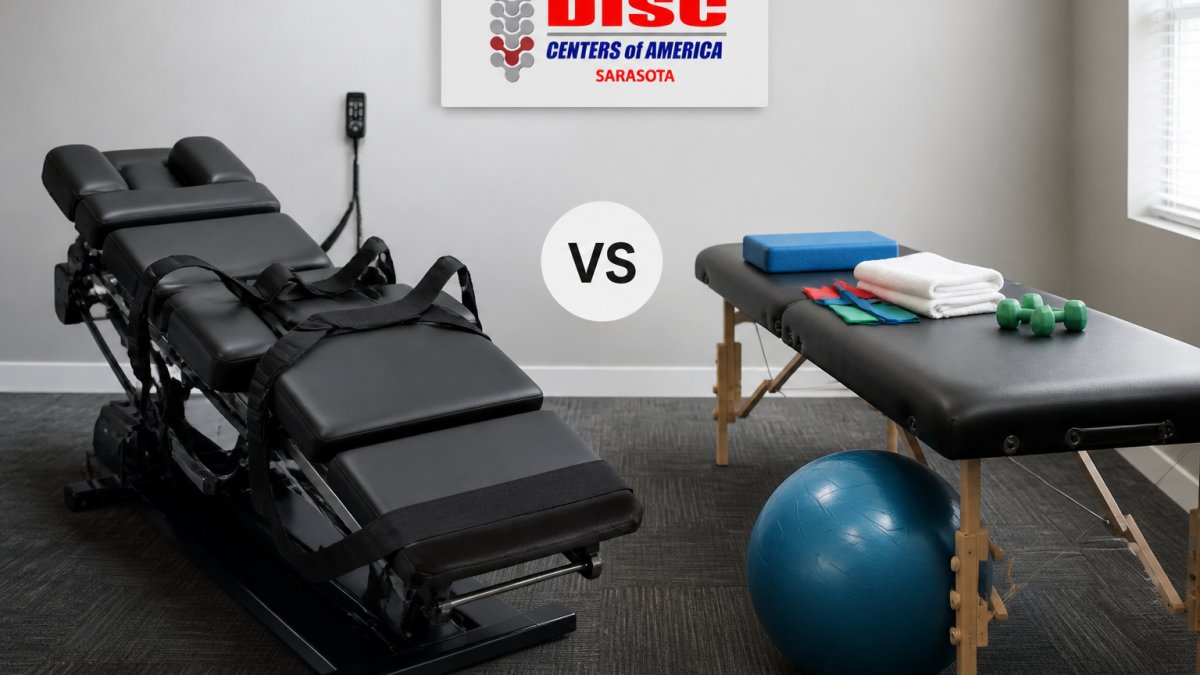
Spinal decompression vs physical therapy is the comparison most back-pain patients eventually face, and the two work in fundamentally different ways.
That difference determines who benefits from which approach. A patient with a herniated disc and nerve pressure may need the disc addressed directly, while someone with weak core muscles and poor movement habits may get everything they need from a structured exercise program.
Below, we break down how each treatment works, what the evidence supports, how long results take, and how to choose.
Quick Comparison: Spinal Decompression vs Physical Therapy at a Glance
| Factor | Spinal Decompression | Physical Therapy |
|---|---|---|
| Primary target | Disc pressure and nerve compression | Muscles, movement, and function |
| Method | Controlled mechanical traction | Exercise, manual therapy, education |
| Typical session | 30-45 minutes, mostly passive | 45-60 minutes, active participation |
| Best for | Herniated or bulging discs, sciatica | Core weakness, poor posture, recovery |
| Home component | Minimal | Daily exercises required |
| Course length | Often 4-6 weeks | Often 6-12 weeks |
The two are not rivals so much as different tools, and many patients need both. Decompression can reduce nerve pressure enough to make exercise tolerable; physical therapy then keeps the gains from fading.
Spinal Decompression Therapy for Herniated Disc: How It Works
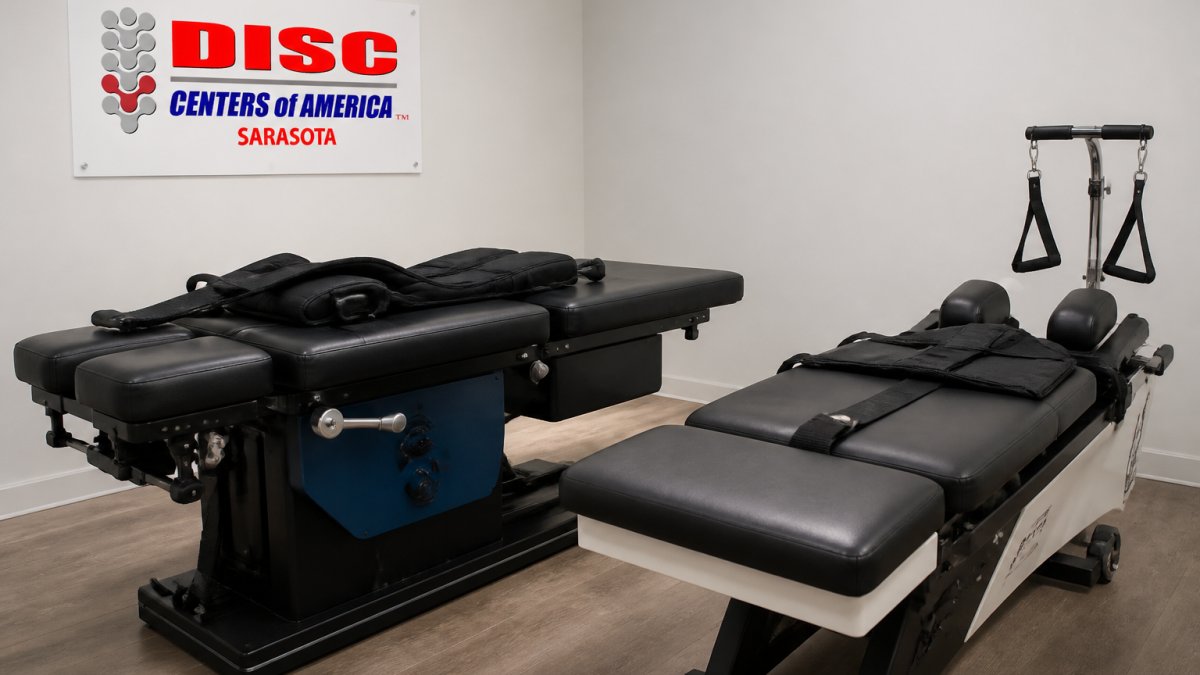
Spinal decompression therapy for a herniated disc applies a controlled, computer-regulated pulling force along the spine. That force gently separates the vertebrae, lowering pressure inside the disc and potentially allowing bulging disc material to retract away from the nerve.
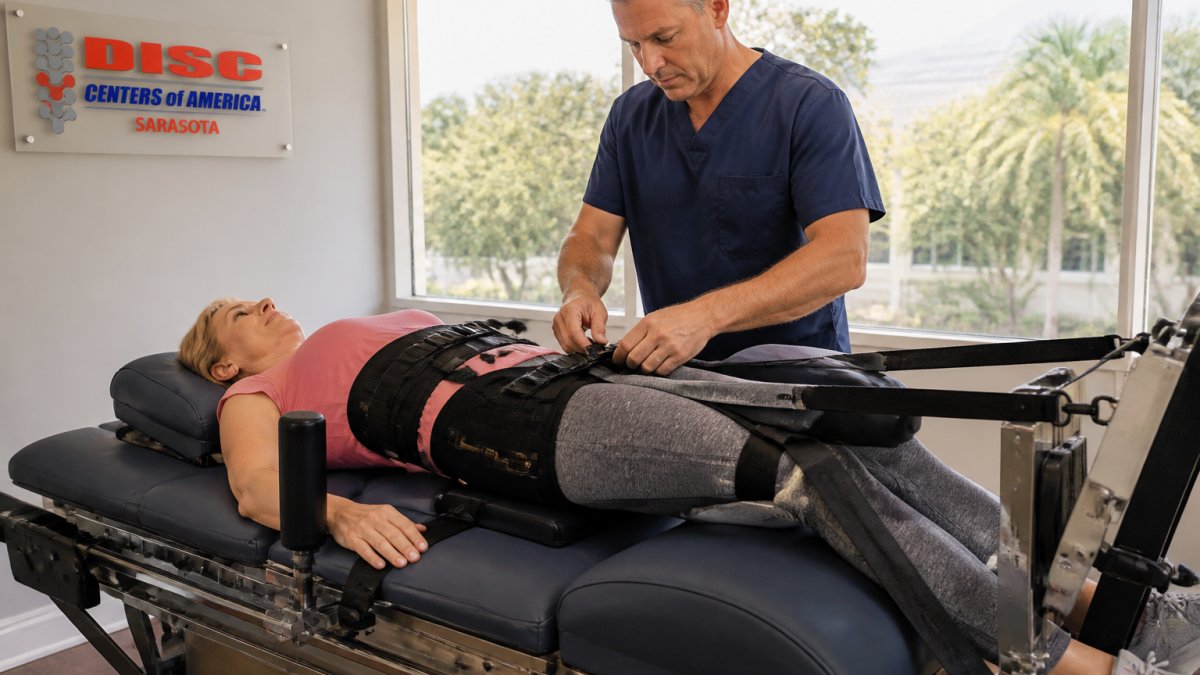
The goal is not to stretch you out but to change the pressure environment around the disc so the body can begin its own repair process. Patients often describe a slow, gentle pull rather than a stretch.
The Mechanism, Step by Step
The proposed chain of events looks like this:
- Distraction. The table applies a programmed pull that separates adjacent vertebrae by a small amount.
- Pressure drop. That separation is thought to lower intradiscal pressure, creating a relative vacuum inside the disc.
- Retraction. A bulging or herniated fragment may be pulled back toward the center of the disc, away from the nerve root.
- Diffusion. Reduced pressure may allow nutrients and fluid to move back into a disc that has been starved of them.
- Nerve relief. With less mechanical pressure on the nerve root, leg pain, numbness, and tingling often ease.
Steps 1 and 2 are well established in biomechanics research; steps 3 through 5 remain debated.
Decompression vs. Traditional Traction
These two get used interchangeably, but they differ:
- Traditional traction applies a steady, static pull. It is an old technique, widely studied, and generally used for short-term symptom relief.
- Spinal decompression uses a motorized table that cycles between pull and relaxation, varies the angle and force, and targets a specific spinal level. The cycling is the point: it is designed to bypass the muscle-guarding reflex that kicks in when the body feels a constant pull.
That difference is why decompression is marketed as more targeted than traction.
What the Evidence Actually Shows
Here is the honest version of the evidence:
- For mechanical traction and decompression: studies generally show short-term reductions in leg pain and disability for people with radicular symptoms (pain that travels down the leg). The effect is real but usually modest.
- For disc retraction: imaging studies have shown changes in disc position after decompression in some patients, but not consistently, and not always correlated with symptom improvement.
- Guideline positioning: major clinical guidelines for low back pain do not list spinal decompression as a first-line treatment. They typically recommend staying active, physical therapy, and non-invasive care before considering more specialized interventions.
None of that means decompression does not work, it means the strongest claims outrun the strongest evidence.
What Happens During a Session
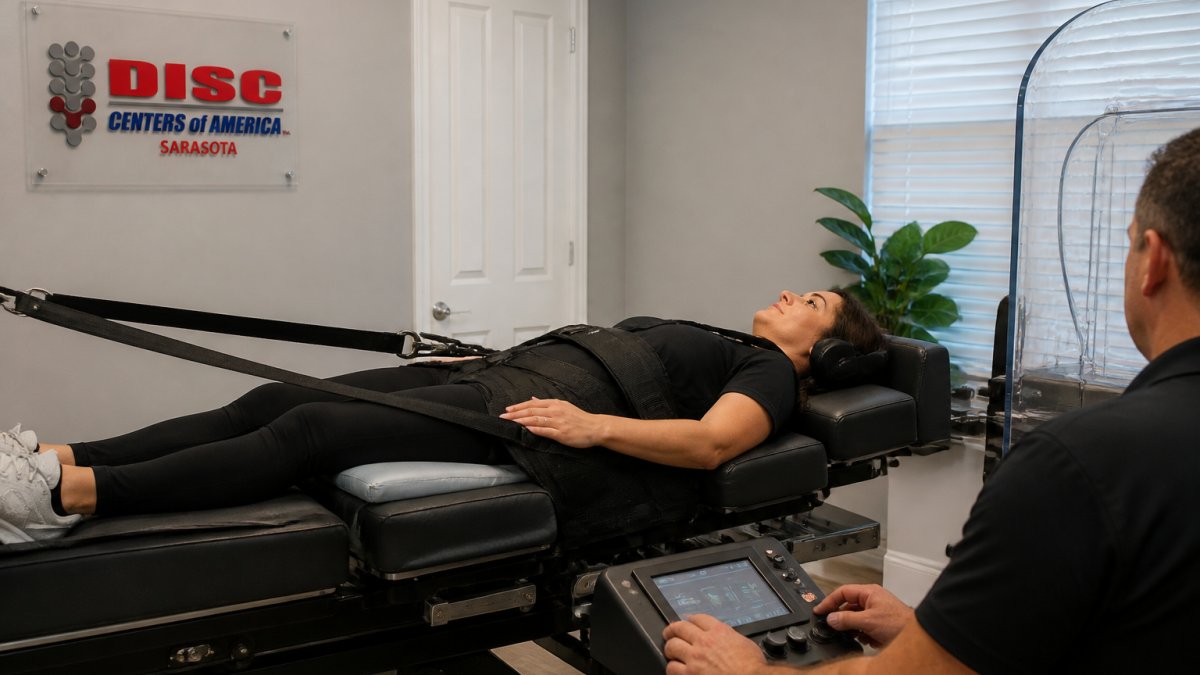
A session typically runs 30 to 45 minutes. You lie fully clothed on a specialized table while a harness secures your hips or upper body, and the machine cycles through pull and relaxation phases.
A few things to expect:
- No anesthesia and no injections
- Mild soreness afterward is common, similar to a light workout
- Most protocols involve several visits per week for a few weeks
Physical Therapy for Herniated Disc: Goals and Methods
Physical therapy for a herniated disc builds the strength and control that protect the spine long term. A therapist assesses your movement, identifies weaknesses, and prescribes exercises that reduce strain on the injured disc.
The focus is active: you do the work while the therapist guides progression, which is why physical therapy takes longer to show results than a passive treatment like decompression.
Core Strength and Spinal Mobility Work
Most programs combine three elements:
- Core strength: dead bugs, bird dogs, and planks to stabilize the trunk
- Spinal mobility: gentle extension and flexion drills within a pain-free range
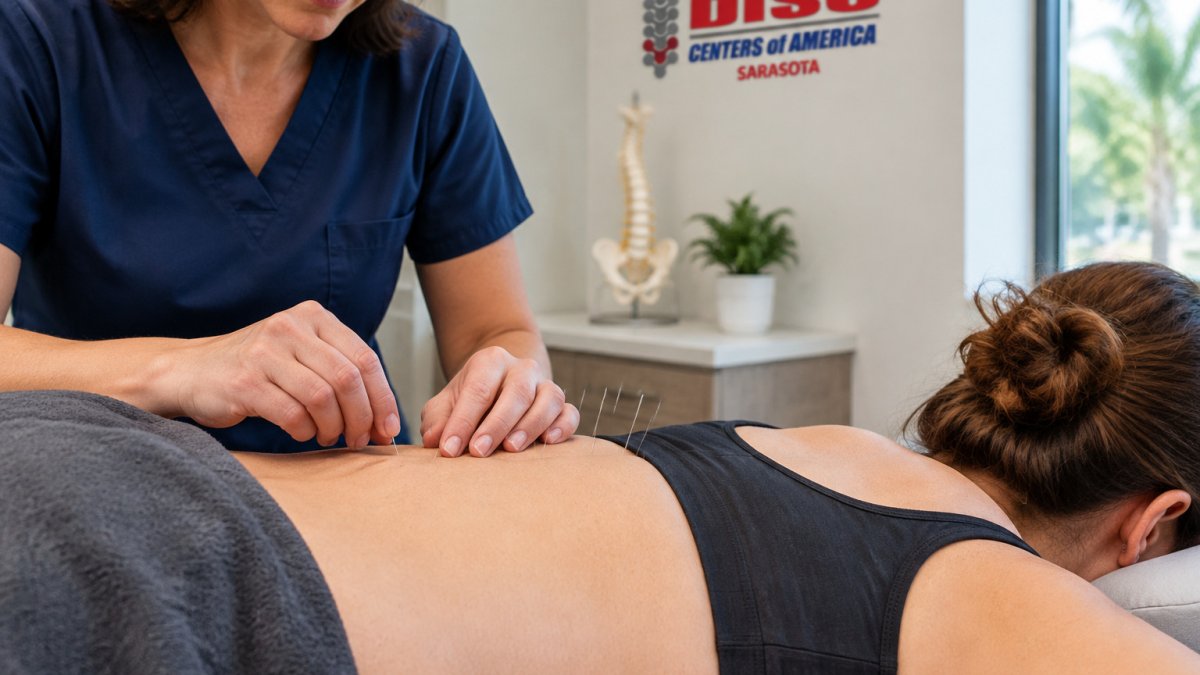
- Manual therapy: hands-on work to release tight muscles around the spine
How Long Does Spinal Decompression Therapy Take to Work?
Most patients notice meaningful change within two to four weeks of starting spinal decompression, though full results take longer.
Timelines vary by diagnosis: a single-level bulging disc with recent symptoms often responds faster than long-standing degenerative changes, and age, fitness, and pain duration all play a role.
CALL TODAY TO SCHEDULE YOUR FREE CONSULTATION →
Physical therapy follows a longer arc.
One question often asked is whether decompression can help someone who already had back surgery.
Spinal Decompression Therapy Benefits and Risks
Spinal decompression therapy benefits and risks should be weighed honestly, because no treatment suits everyone. Patients commonly report reduced leg pain, improved mobility, and less reliance on pain medication, and the treatment is non-invasive with no recovery time.
The risks are modest but real: some patients get temporary muscle soreness, and a few find the traction uncomfortable. More importantly, decompression is not appropriate for everyone.
Who Is a Good Candidate
Good candidates typically have a diagnosed herniated or bulging disc, sciatica, or degenerative disc disease, and have not found lasting relief through medication or rest. Patients with certain spinal fractures, advanced osteoporosis, or specific implants may not be suitable, and a qualified clinician should make that call after reviewing your imaging.
Costs, Insurance Coverage, and Access
Cost and coverage are where most patients get stuck, and details vary widely.
Because pricing and coverage rules change, we do not quote figures here. Call your insurer with the procedure and diagnosis codes your provider gives you, and ask what is covered and what your out-of-pocket responsibility would be.
Access is easier for physical therapy, since most communities have multiple clinics. Specialized decompression equipment is less common, so patients sometimes travel to a center that offers it.
How the Two Compare on Cost Structure
Physical therapy and spinal decompression are billed very differently, and that shapes what you actually pay:
- Physical therapy is typically billed per visit, with codes for evaluation, therapeutic exercise, and manual therapy. Most plans apply a copay or coinsurance per visit, and many cap the number of visits per year (commonly in the range of 20 to 30, though this varies by plan).
- Spinal decompression is often billed as a series rather than a single visit. A typical course runs 20 to 30 sessions over four to six weeks, and many clinics quote a package price for the full course.
- Insurance treatment of decompression is inconsistent. Some plans cover it under chiropractic or physical medicine benefits; others classify it as experimental or investigational and deny it outright. Medicare and most state Medicaid programs have historically been restrictive about covering it.
Questions to Ask Before You Commit
Whether paying out of pocket or through insurance, these questions save money and frustration:
- What CPT codes will you bill, and what diagnosis codes will you submit?
- Is this provider in network for my plan?
- Does my plan require prior authorization for decompression or for a physical therapy course?
- Is there a visit cap, and how many visits have I already used this year?
- If decompression is denied, what is the cash-pay price per session or per package?
- What is the refund or discontinuation policy if the treatment is not working after a few weeks?
Access and Practical Logistics
- Physical therapy is widely available. Most metropolitan and suburban areas have multiple clinics, and many offer early morning or evening appointments. Wait times are usually short.
- Spinal decompression requires specialized equipment that not every clinic owns. Availability is thinner in rural areas, and patients sometimes drive an hour or more to a center that offers it.
- Time commitment differs too. Physical therapy sessions run 45 to 60 minutes and require home exercise between visits. Decompression sessions run 30 to 45 minutes and are largely passive, but the visit frequency (often three times per week) adds up quickly.
A Note on Marketing Claims
Be cautious of any clinic that promises a fixed cure rate, guarantees surgery avoidance, or pressures you into a large prepaid package before an evaluation. Providers should review your imaging, explain the evidence honestly, and let you start with a short trial before committing to a full course.
Choosing Your Path: A Decision Guide for Back Pain and Sciatica
Choosing between spinal decompression and physical therapy comes down to what is causing your pain. Use this guide as a starting point, then confirm with a clinician.
- Herniated or bulging disc with leg pain or sciatica: Decompression is often the better first step to reduce nerve pressure.
- General low back pain with no leg symptoms: Physical therapy is usually the right starting point.
- Pain that has not improved after months of physical therapy: Decompression is worth evaluating, especially if imaging shows disc involvement.
Many patients do best with a sequence rather than a single choice: decompression first to calm the nerve, then physical therapy to build the strength that keeps the pain away.
Chronic back pain rarely resolves on its own, and the wrong treatment can waste months you cannot get back.
Frequently Asked Questions
What is the difference between spinal decompression and physical therapy?
Spinal decompression uses a motorized table to apply controlled traction, gently stretching the spine to reduce pressure on discs and nerves. Physical therapy focuses on therapeutic exercises, manual therapy, and core strength to support movement and function. Decompression targets disc-related pain directly, while physical therapy builds the muscular support that helps prevent recurrence. Many patients benefit from combining both approaches.
Is spinal decompression better than physical therapy for a herniated disc?
Neither is universally better. Research does not establish spinal decompression as consistently superior to physical therapy. Decompression may help patients with nerve compression or disc-related pain who have not responded to exercise-based care. Physical therapy is often the first-line conservative treatment for herniated discs. A clinician can match the approach to your symptoms and diagnosis.
How long does spinal decompression therapy take to work?
Treatment timelines vary by condition and individual. Many patients attend multiple sessions per week for several weeks, with some reporting pain reduction within the first few sessions and others noticing improvement later in the course. Your provider will set a schedule based on your diagnosis and response. Ask about expected duration and measurable goals before starting.
Can you combine spinal decompression with physical therapy?
Yes. Many clinics use decompression alongside therapeutic exercises and manual therapy. Decompression addresses disc and nerve pressure, while physical therapy builds core strength and spinal mobility to support lasting relief. Combining treatments may improve functional outcomes, but your care plan should reflect your specific diagnosis and treatment goals.
What are the risks or limitations of spinal decompression therapy?
Spinal decompression is generally well tolerated, but it is not appropriate for everyone. Patients with certain conditions, such as spinal fractures, tumors, or advanced osteoporosis, may not be candidates. Side effects can include mild soreness or muscle spasms. Discuss your medical history with a qualified provider to determine whether decompression is safe and suitable for your situation.