 Comparison
Is Acupuncture Good for Herniated Discs? What the Evidence Shows
Last Updated: November 9, 2026
Quick Summary
Is acupuncture good for herniated discs? Acupuncture can help with pain and function for some people, but it does not repair, shrink, or cure a herniated disc. It may change how the nervous system processes pain, but it does not move disc material back into place.
- Acupuncture cannot reabsorb or reposition a bulging or slipped disc, or reverse spinal stenosis.
- A 2024 JAMA Internal Medicine study found real acupuncture beat sham acupuncture for chronic sciatica pain and function.
- A 2024 review reported better outcomes than traditional rehabilitation therapy for lumbar disc herniation, but protocol details were not available.
- Pair symptom relief with active care and reassess progress every few weeks rather than stacking passive treatments.
- Get urgent assessment for loss of bladder or bowel control, saddle numbness, sudden leg weakness, or pain after major trauma.
Table of Contents
- The Verdict on Acupuncture for Herniated Discs
- Acupuncture for Herniated Disc in Neck vs. Lumbar Spine
- Acupuncture for Herniated Disc L4/L5 and Low Back Pain
- Acupuncture for Sciatica From a Herniated Disc
- What the Research Actually Shows, Including Its Limits
- Acupuncture vs. Other Options: The Best Treatment for Herniated Disc
- Safety, Side Effects, and When to Seek Urgent Care
- Planning Your Free MRI Review and Consultation
- Frequently Asked Questions
The Verdict on Acupuncture for Herniated Discs
Is acupuncture good for herniated discs? The honest answer is that acupuncture can help with pain and function for some people, but it does not repair, shrink, or cure a herniated disc.
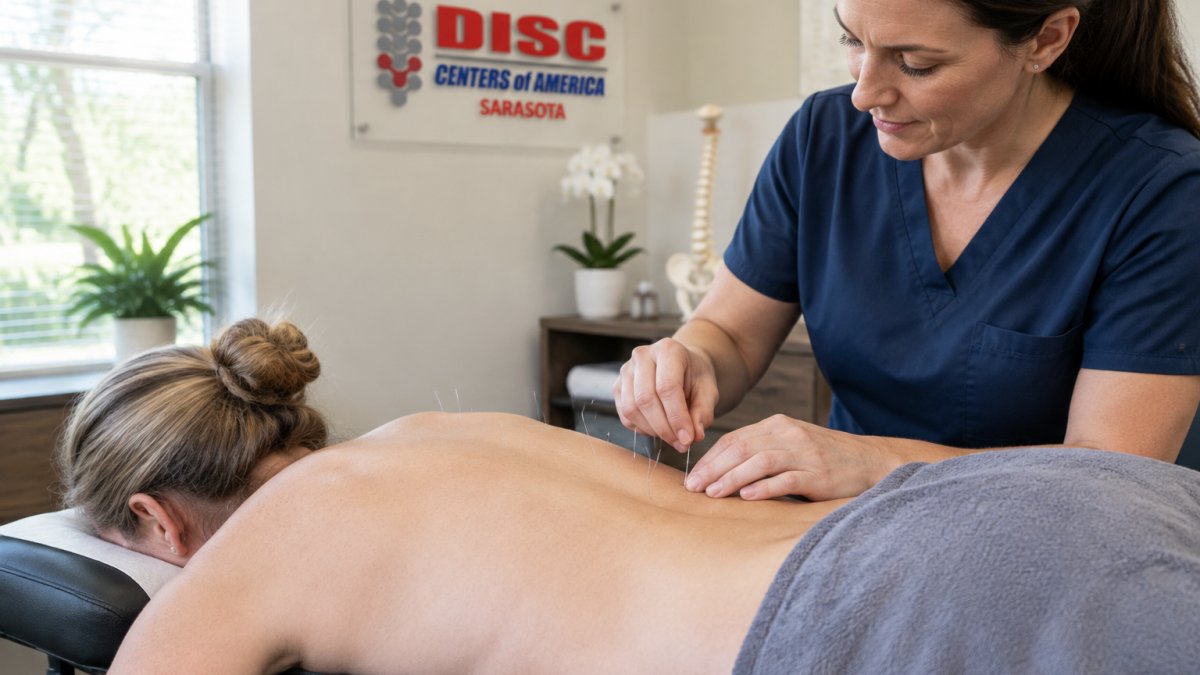
A herniated disc happens when the soft inner material of a spinal disc pushes through its outer ring and presses on a nearby nerve. That mechanical pressure is the source of most disc-related pain, numbness, and weakness.
That distinction matters more than most articles admit. If you are looking for a treatment that addresses the mechanical cause of nerve compression, acupuncture is a supporting tool, not a standalone fix.
What Acupuncture Can and Cannot Do for a Disc
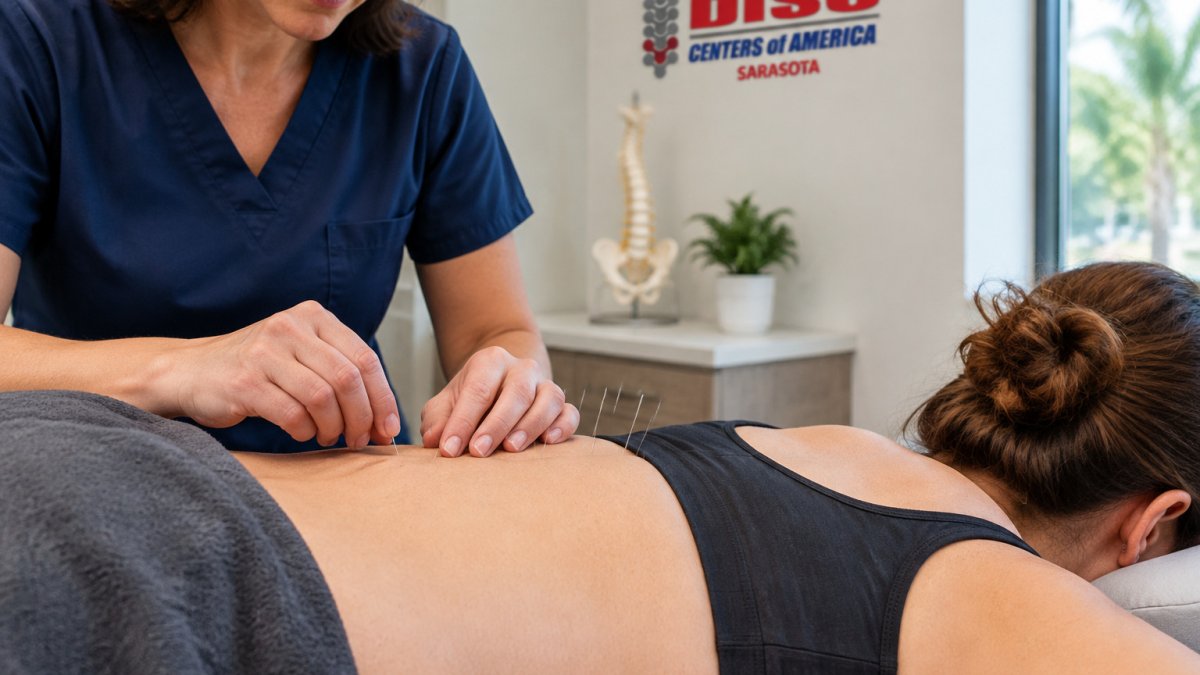
Acupuncture is a technique of inserting thin needles at specific points to influence pain signaling and muscle tension. That is its realistic scope.
What it can do:
- Reduce pain intensity for some patients, at least in the short term
- Ease muscle guarding around the lumbar spine or cervical disc
- Improve tolerance for movement, which supports rehabilitation therapy
What it cannot do:
- Reabsorb or reposition a bulging disc or slipped disc
- Reverse spinal stenosis
- Replace an evaluation for progressive nerve symptoms
A common mistake is treating acupuncture as a substitute for imaging and diagnosis. It is not.
Acupuncture for Herniated Disc in Neck vs. Lumbar Spine
Cervical disc and lumbar disc problems behave differently, so the treatment conversation should differ too.
Neck pain from a cervical disc often comes with shoulder pain, arm tingling, or grip weakness.
Lumbar spine involvement usually shows up as low back pain with leg pain, and it responds to a different point selection along the lower back and hip.
Neither approach changes the disc itself. Both aim at symptom relief and better mobility so you can participate in active care.
| Feature | Cervical Disc Herniation | Lumbar Disc Herniation |
|---|---|---|
| Main pain area | Neck, shoulder, arm | Low back, buttock, leg |
| Common nerve symptoms | Tingling in hand, grip weakness | Radiating pain, numbness in foot |
| Acupuncture goal | Reduce neck and shoulder tension | Reduce low back guarding |
| What it does not fix | Disc material or stenosis | Disc material or stenosis |
Acupuncture for Herniated Disc L4/L5 and Low Back Pain
L4/L5 is the most commonly affected level in the lumbar spine, and it is where most low back pain questions land.
Here is the part that gets lost: short-term relief is not the same as a resolved disc. If pain returns within days, that is a signal to pair acupuncture with something that addresses the mechanical load on the nerve, not to schedule more sessions indefinitely.
Acupuncture for Sciatica From a Herniated Disc
Sciatica is nerve pain that travels from the lower back into the leg, and it is often the most disabling symptom of a lumbar disc herniation.
A 2024 study in JAMA Internal Medicine compared acupuncture with sham acupuncture for chronic sciatica and reported less pain and better function with real acupuncture (JAMA Internal Medicine sciatica acupuncture trial). That is meaningful, because a sham control is a harder test than no treatment at all.
For a broader look at conservative options, our guide to non-surgical sciatica pain relief covers methods that work alongside acupuncture.
What the Research Actually Shows, Including Its Limits
The evidence is promising but uneven, and anyone who tells you otherwise is overselling it.
A 2024 review of acupuncture for lumbar disc herniation reported better outcomes than traditional rehabilitation therapy (PubMed Central lumbar disc herniation study). That is a positive signal, but the summary available does not detail the treatment protocol, the number of sessions, or the size of the benefit.
The stronger test is sham-controlled. A 2024 study in JAMA Internal Medicine compared acupuncture with sham acupuncture for chronic sciatica and reported less pain and better function with real acupuncture (JAMA Internal Medicine sciatica acupuncture trial).
How to Read the Evidence Like a Clinician
When you see a study cited, ask four questions before you let it change your mind:
- What was the comparison? Beating a waiting list is a lower bar than beating sham needles or active physical therapy.
- Who was studied? A trial of chronic sciatica patients may not apply to someone with a fresh L4/L5 herniation and acute leg pain.
- How big was the benefit? A statistically significant change on a pain scale can still be smaller than what a patient would call meaningful relief.
- How long did it last? Most trials follow patients for weeks, not years, so they cannot show whether acupuncture changes the long-term course of a disc herniation.
Study Limitations That Change the Picture
Three limits matter most:
- Blinding is difficult. Patients usually know whether they received real needles, which can inflate reported benefit.
- Protocols vary widely. Session counts, point selection, and needle retention differ between studies, so results are hard to pool.
- Follow-up is short. Few trials track patients long enough to show lasting change, and disc herniations often improve on their own over weeks to months, which makes early relief hard to attribute.
A common pattern in the literature is that acupuncture performs best for short-term pain and function and less clearly for long-term structural outcomes. That matches what most practitioners see: patients feel better, move better, and still have the same disc on their MRI.
So the fair conclusion is that acupuncture may reduce pain and improve function in the short term, with real but modest supporting evidence. It is reasonable to try as part of a broader plan, not as a replacement for diagnosis, rehabilitation, or urgent evaluation when nerve symptoms are worsening.
Acupuncture vs. Other Options: The Best Treatment for Herniated Disc
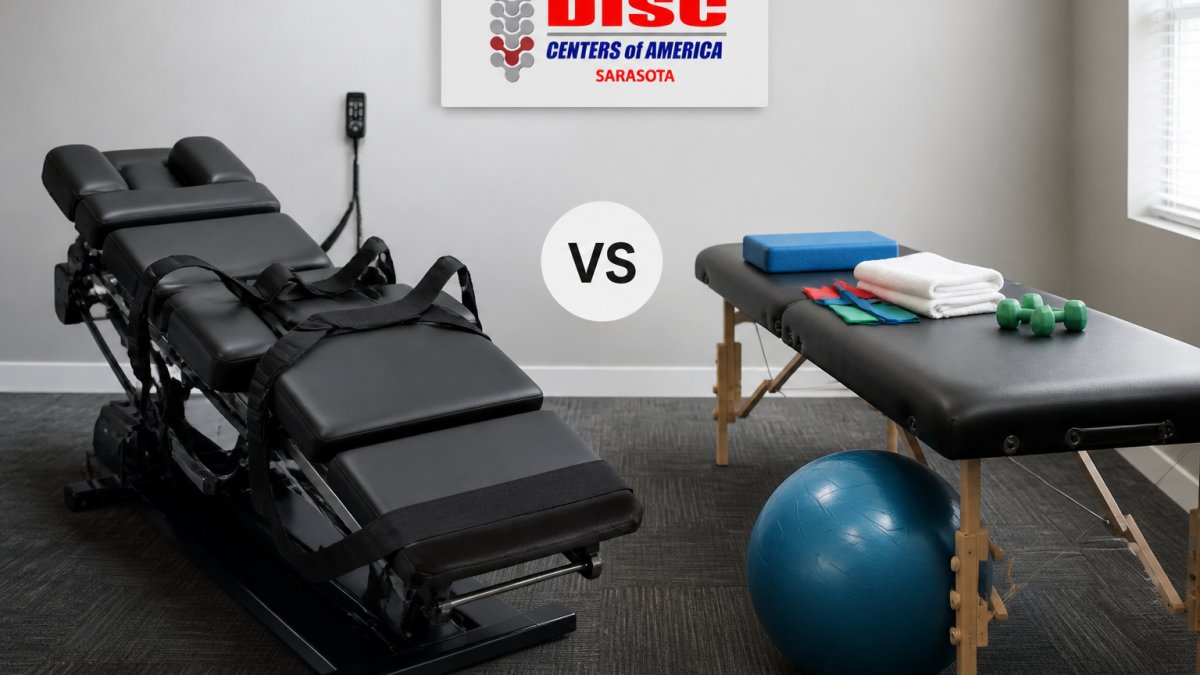
There is no single best treatment for herniated disc cases, and that is the most useful thing we can tell you. The right choice depends on symptom severity, duration, and whether nerve function is at risk. What most guides miss is that these options are not competitors. The patients who do best usually combine passive relief with active rehabilitation, and the sequence matters as much as the choice.
| Option | What It Targets | Typical Role | Main Limitation |
|---|---|---|---|
| Acupuncture | Pain signaling, muscle tension | Symptom relief alongside active care | Does not change disc mechanics |
| Physical therapy | Strength, mobility, core control | First-line conservative care | Takes consistent effort over weeks |
| Spinal decompression | Disc and nerve pressure | Nonsurgical mechanical relief | Requires candidacy evaluation |
| Medication | Inflammation, pain | Short-term bridge | Does not address the cause |
| Epidural steroid injection | Nerve inflammation | Selected cases with severe leg pain | Temporary, and not a structural fix |
| Watchful waiting | Natural history | Reasonable for mild, improving symptoms | Requires monitoring for red flags |
| Surgery | Compressed nerve | Selected severe or progressive cases | Invasive, with recovery time |
How the Options Differ in Practice
Acupuncture can be compared with medication for short-term pain relief.
Physical therapy is the usual first-line active care for lumbar disc herniation and sciatica.
Medication and epidural steroid injections can calm inflammation around the nerve, but they are bridges, not fixes. They may help you through a flare while rehabilitation does the longer work.
Watchful waiting is underrated.
Surgery is reserved for selected cases, progressive weakness, cauda equina symptoms, or pain that remains disabling after a fair trial of conservative care. Acupuncture does not replace that evaluation.
Watch out: stacking passive treatments, acupuncture, injections, and medication, without any active rehabilitation can feel productive while leaving the underlying mechanical and strength problems unaddressed.
If you want the full range of options laid out side by side, read our guide to non surgical herniated disc treatment and our breakdown of effective treatments for herniated discs.
Safety, Side Effects, and When to Seek Urgent Care
Acupuncture is generally well tolerated when performed by a licensed practitioner. Side effects are typically minor, such as small bruises or brief soreness at needle sites.
Serious complications are rare but real, including infection and bleeding in people with clotting disorders or on blood thinners. Tell your practitioner about blood thinners, pregnancy, implanted devices, or a weakened immune system before treatment.
Watch out: seeking acupuncture while ignoring worsening nerve symptoms can delay care that matters. Get urgent medical assessment for loss of bladder or bowel control, numbness in the saddle area, sudden leg weakness, or pain after major trauma. Those signs can indicate a medical emergency, not a disc that needs another session.
Planning Your Free MRI Review and Consultation
Acupuncture may be a reasonable part of your plan, but it should follow a real diagnosis. Many patients arrive at our clinic having tried several therapies without anyone reviewing their imaging.
At Sarasota Disc Center, Dr. David Cifra offers a consultation focused on non-surgical spinal decompression for disc or nerve pressure. Our clinic has served Sarasota and Manatee Counties since 1992, with a focus on conservative care.
If you are local and want to act on this, you can review sciatica treatment options in Sarasota or explore disc pain care in Sarasota before your visit. Both pages explain what an evaluation involves.
The challenge is not choosing between acupuncture and everything else. It is getting an accurate diagnosis first, then building a plan that addresses both your pain and its mechanical cause.
Frequently Asked Questions
Can acupuncture relieve pain from a herniated disc?
Research suggests acupuncture may reduce pain intensity and improve function in some people with herniated discs, mainly in the short term. Research on lumbar disc herniation is mixed, and studies vary in protocol and size. Acupuncture does not repair or shrink a herniated disc. It is best viewed as one part of a conservative treatment plan, alongside physical rehabilitation and, where appropriate, non-surgical spinal decompression.
Is acupuncture safe for a herniated disc?
For most adults, acupuncture is low risk when performed by a licensed practitioner using sterile single-use needles. Common side effects are minor soreness or small bruises at needle sites. Serious complications are rare. Tell your provider about blood thinners, bleeding disorders, pregnancy, or implanted medical devices before treatment. If you have progressive weakness, loss of bladder or bowel control, or saddle numbness, skip acupuncture and seek urgent medical assessment, because those symptoms need immediate evaluation.
How many acupuncture sessions might be needed for back pain?
Course lengths vary widely in the research, with many studies using multiple sessions per week over several weeks. There is no single standard protocol, and response differs by person. A reasonable approach is to set a defined trial period with your practitioner and review pain intensity and mobility at the end of it. If you notice no meaningful change, revisit the plan rather than continuing indefinitely. Ask about session frequency, total cost in USD, and whether your insurance covers visits before starting.
Can acupuncture help sciatica caused by a herniated disc?
Some studies of chronic sciatica have compared acupuncture with sham acupuncture, with mixed results. Sciatica from a herniated disc involves nerve irritation, so outcomes depend on the degree of nerve compression. Acupuncture may ease radiating leg pain for some patients, but it does not remove the underlying disc material pressing on the nerve. If leg pain is severe, worsening, or paired with weakness, a clinical evaluation should come first.
What are the best nonsurgical treatments for a herniated disc?
Conservative care typically combines short-term activity modification, physical rehabilitation, and pain control, with acupuncture as an optional add-on for symptom relief. Non-surgical spinal decompression is another option for patients who have not responded to physical therapy or medication. The best treatment for herniated disc symptoms depends on which spinal level is involved, how long symptoms have lasted, and whether nerve signs are present. A consultation with imaging review helps match the approach to your case.