 How-to
Non-Surgical Sciatica Pain Relief: 7 Methods That Work
Table of Contents
- Understanding Sciatica and Non-Surgical Relief Options
- Cold Therapy and Heat Therapy for Immediate Relief
- Sciatica Stretches and Exercises to Reduce Nerve Pressure
- Physical Therapy for Sciatica: Building Long-Term Strength
- Over-the-Counter Pain Relief and Anti-Inflammatory Options
- Sciatica Self-Care at Home: Rest, Posture, and Daily Modifications
- When to Seek Professional Care and Red-Flag Symptoms
- Building Your Personal Sciatica Pain Relief Plan
- Frequently Asked Questions
Last Updated: October 13, 2026
Understanding Sciatica and Non-Surgical Relief Options
Sciatica pain relief doesn't always require surgery. When the sciatic nerve is irritated or compressed, it causes radiating leg pain, and most people find lasting relief through conservative treatment.
At Sarasota Disc Center, we treat sciatica from herniated discs, nerve pressure, inflammation, or muscle spasms. Most cases respond well to non-surgical sciatica pain relief before surgery becomes necessary.
Your approach to sciatica pain relief depends on the cause: a herniated disc creates different pressure than tight hip muscles, and inflammation needs different treatment than nerve irritation.
Non-surgical treatment works best as a layered plan: cold, heat, stretching, exercise, and activity modification together address both immediate pain and the underlying cause.
Cold Therapy and Heat Therapy for Immediate Relief
Cold and heat are the fastest home tools, but they do different jobs.
Cold therapy is the better first choice in the first 48 hours after a flare-up, or when pain feels sharp or hot.
Heat therapy suits the stiff, achy, chronic phase, when sharp pain has faded but your low back and hip feel locked up.
What to expect: cold and heat are comfort tools, not cures, and typically take the edge off for 30 to 90 minutes.
| Therapy Type | Best For | Duration | Frequency | Key Safety Note |
|---|---|---|---|---|
| Cold packs | Acute flare-ups, sharp pain, first 48 hours | 15 minutes | Every 2-3 hours, with skin recovery between | Always use a barrier between pack and skin |
| Heating pads | Chronic stiffness, muscle guarding | 15-20 minutes | 2-3 times daily | Set a timer; never sleep on heat |
| Alternating | Mixed acute and chronic symptoms | 15 minutes each | Cold first, heat later in the day | Leave at least 1 hour between |
Sciatica Stretches and Exercises to Reduce Nerve Pressure
Stretching and exercise are essential for sciatica pain relief. Movement reduces nerve pressure and strengthens muscles that support your spine.
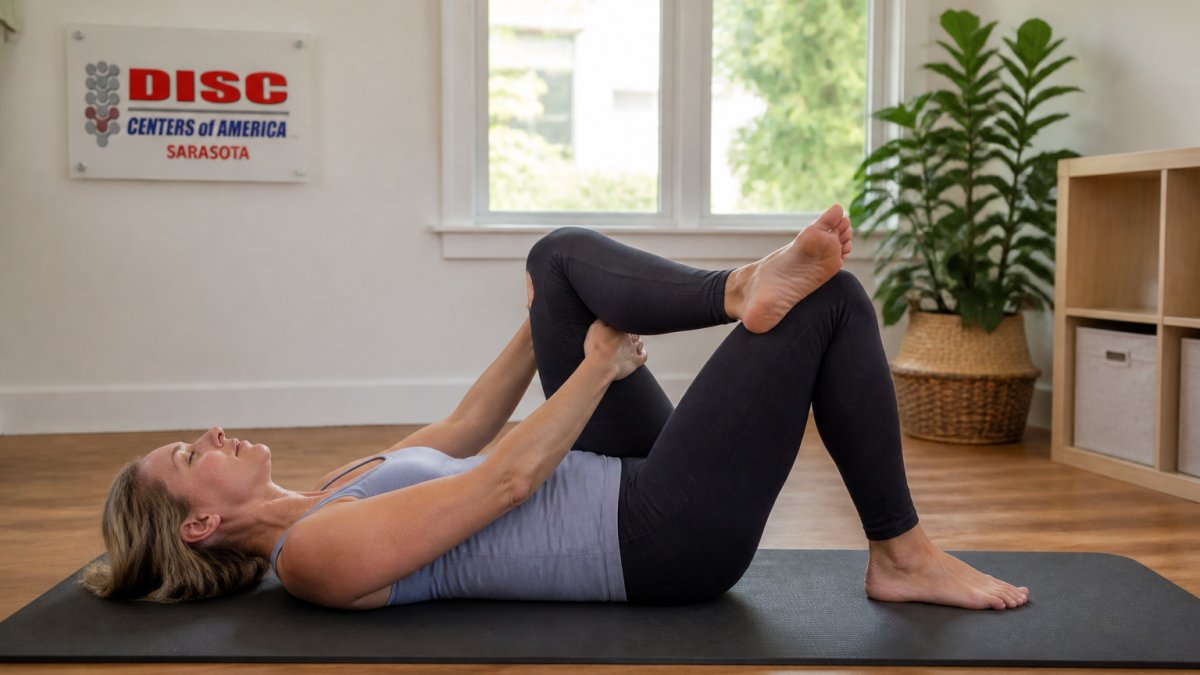
Start gently. Aggressive stretching can worsen symptoms. Hold each stretch for 20-30 seconds without bouncing. Repeat 2-3 times per side.
Figure-four stretch targets hip muscles pressing on your nerve:
- Lie on your back with knees bent
- Cross one ankle over the opposite knee
- Pull your bottom leg toward your chest
- Hold for 30 seconds
- Repeat on the other side
Knee-to-chest stretch relieves lower back tension:
- Lie on your back
- Pull one knee toward your chest
- Keep your other leg straight
- Hold for 30 seconds
- Switch legs
Piriformis stretch addresses deep hip muscle tension:
- Sit in a chair
- Cross one ankle over the opposite knee
- Lean forward gently
- Hold for 30 seconds
- Repeat on both sides
Walking is one of the best exercises for sciatica. Start short and gradually increase, it improves circulation, strengthens supporting muscles, and doesn't stress your spine like running.
Avoid these movements:
- Touching your toes while standing (stretches the nerve)
- Heavy lifting or bending
- Twisting motions
- Sitting for long periods
Physical Therapy for Sciatica: Building Long-Term Strength
Physical therapy for sciatica addresses both pain and prevention, with exercises designed for your situation rather than generic routines.
Therapy focuses on three areas: core strength, hip stability, and spinal alignment.
Treatment starts with basic movements and progresses to harder exercises, with your therapist watching form and adjusting to prevent re-injury.
Most people need 6-12 weeks of consistent therapy: sessions twice weekly plus home exercises. Guidance combined with home practice delivers the best results.
Unlike temporary pain relief, physical therapy builds lasting strength so sciatica doesn't return.
Over-the-Counter Pain Relief and Anti-Inflammatory Options
Over-the-counter options fall into two families that do different things, so knowing which is which helps you pick the right one.
Nonsteroidal anti-inflammatory drugs (NSAIDs), ibuprofen (Advil, Motrin) and naproxen sodium (Aleve) are the two most common, reduce the prostaglandins that drive inflammation and pain.
Acetaminophen (Tylenol) dulls pain signals but does not reduce inflammation.
Safety points that matter more than the brand name:
- Take NSAIDs with food or milk to reduce stomach irritation.
- NSAIDs raise the risk of stomach bleeding, kidney problems, and cardiovascular events, especially with long-term use. Most clinicians suggest limiting them to short courses, often 7 to 10 days, during an acute flare, and only under medical guidance beyond that.
- Do not combine two NSAIDs (for example, ibuprofen plus naproxen, or either one plus a prescription NSAID).
- Check with a pharmacist or physician first if you take blood thinners, blood pressure medication, antidepressants, or steroids, or if you have kidney disease, heart disease, ulcers, or are pregnant.
- Topical NSAID gels and patches deliver medication closer to the painful area with less systemic exposure. They are a reasonable first step for many people, though they are less studied for sciatica specifically than for knee and hand arthritis.
How to use them well: the goal is not to be pain-free but comfortable enough to walk, stretch, and keep moving, because movement is what actually helps most sciatica. Needing medication daily for more than two weeks is a signal to get evaluated.
Sciatica Self-Care at Home: Rest, Posture, and Daily Modifications
Self-care at home prevents flare-ups and supports recovery, small daily changes reduce nerve pressure.
CALL TODAY TO SCHEDULE YOUR FREE CONSULTATION →
Rest strategically. Complete bed rest slows recovery. Rest actively instead: avoid activities that irritate your nerve while maintaining gentle movement.
Avoid sitting for more than 30 minutes at a time. Sitting increases pressure on your sciatic nerve.
Improve your posture. Poor posture compresses your spine and irritates nerves.
Use a lumbar support pillow in your car and office chair.
Sleep position matters. Side sleeping with a pillow between your knees reduces strain.
Daily modifications prevent aggravation:
- Bend at your knees when lifting, not your back
- Keep heavy items close to your body
- Avoid twisting while holding objects
- Take frequent breaks during repetitive tasks
- Wear supportive shoes with good arch support
Stress management helps. Stress tightens muscles and increases pain perception. Breathing exercises, meditation, or gentle yoga reduce that tension.
When to Seek Professional Care and Red-Flag Symptoms
Most sciatica improves within 6-12 weeks with self-care (Diagnosis and treatment of sciatica). However, certain symptoms require professional evaluation immediately.
Seek urgent care if you experience:
- Sudden severe pain that doesn't improve with rest
- Loss of bladder or bowel control
- Numbness in your genital area or inner thighs
- Severe weakness in your leg that prevents walking
- Pain following a fall or trauma
- Fever combined with back pain These red flags indicate a medical emergency that requires immediate professional intervention, whereas minor discomfort often responds well to the fundamentals of relieving back pain at home.
These symptoms suggest serious conditions like cauda equina syndrome or infection. Emergency treatment prevents permanent nerve damage.
Schedule a professional evaluation if:
- Pain persists beyond 6 weeks despite self-care
- Pain worsens despite consistent treatment
- Numbness or weakness spreads
- You can't perform daily activities
- Self-care approaches haven't helped
At Sarasota Disc Center, we evaluate patients who haven't found relief through standard approaches.
A professional assessment identifies your specific cause, because a herniated disc needs different care than piriformis syndrome. Getting the diagnosis right ensures the right treatment path.
Don't wait months hoping pain resolves. Early intervention prevents chronic sciatica that becomes harder to treat.
Building Your Personal Sciatica Pain Relief Plan
Your effective sciatica pain relief plan combines multiple approaches tailored to your situation, because your specific cause matters.
Week 1-2: Immediate relief
- Apply cold therapy for inflammation
- Take anti-inflammatory medication as directed
- Perform gentle stretching 2-3 times daily
- Modify activities that aggravate your nerve
- Improve your posture and sleep position
Week 3-4: Active recovery
- Switch to heat therapy as inflammation decreases
- Add walking to your routine
- Start basic strengthening exercises
- Continue stretching and posture work
- Monitor which activities cause flare-ups
Week 5-8: Building strength
- Increase exercise intensity gradually
- Add more challenging stretches
- Focus on core strengthening
- Return to normal activities carefully
- Consider physical therapy if not improving
Week 8+: Prevention and maintenance
- Continue exercises that worked
- Maintain good posture habits
- Stay active with regular movement
- Perform preventive stretches weekly
- Avoid movements that triggered previous episodes
Track your progress. Note which treatments reduced pain most. Some people respond better to heat, others to cold. Some find stretching more helpful than medication.
If you're not seeing improvement by week 6, professional evaluation helps. Conditions like herniated discs sometimes need advanced treatment. The Sarasota Disc Center team can assess your sciatica.
| Phase | Duration | Focus | Key Activities |
|---|---|---|---|
| Immediate Relief | Weeks 1-2 | Reduce pain and inflammation | Cold therapy, medication, gentle stretching, activity modification |
| Active Recovery | Weeks 3-4 | Transition to movement | Heat therapy, walking, basic exercises, posture improvement |
| Building Strength | Weeks 5-8 | Restore function | Challenging exercises, core work, gradual activity return |
| Prevention | Week 8+ | Long-term health | Maintenance exercises, posture habits, regular movement |
Sciatica pain relief takes time and consistency.
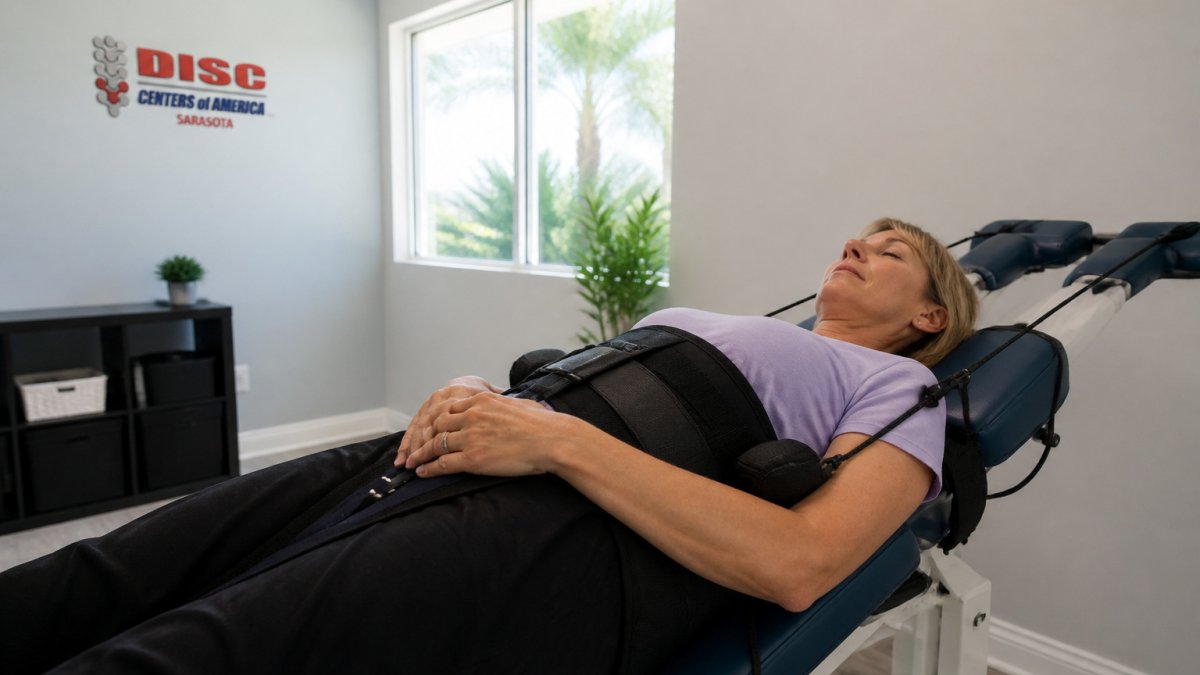
If you've tried self-care for six weeks without improvement, professional evaluation helps identify what's keeping you stuck. Our non-surgical spinal decompression technology targets the source of nerve pressure directly.
Frequently Asked Questions
How can I relieve sciatica pain at home without surgery?
Start with cold therapy (ice packs for 15 minutes) during the first 48 hours, then switch to heat therapy with heating pads. Perform gentle stretches like the figure-four stretch and piriformis stretch daily. Rest when pain is acute, but gradually increase movement as tolerated. Over-the-counter anti-inflammatory medication like naproxen can reduce nerve irritation. Maintain good posture and avoid prolonged sitting. If pain persists beyond two weeks or worsens, consult a healthcare professional to rule out serious underlying conditions.
What stretches and exercises help sciatica pain the most?
The figure-four stretch, piriformis stretch, and knee-to-chest stretch target the sciatic nerve and surrounding muscles effectively. Cat-cow yoga poses improve spinal mobility. Gentle hamstring stretches reduce tension on the nerve. Walking and swimming provide low-impact movement that promotes blood flow without excessive strain. Avoid high-impact activities, heavy lifting, and aggressive stretching that increases pain. Start with 5-10 repetitions of each stretch, holding for 20-30 seconds, and gradually increase as flexibility improves. Consistency matters more than intensity.
When should I seek medical care for sciatica pain?
Seek immediate care if you experience loss of bowel or bladder control, severe numbness in the groin or buttocks, progressive weakness in your leg, or pain following a traumatic injury. Contact a healthcare provider if pain lasts more than two weeks, interferes with daily activities, or worsens despite self-care. If you have a history of cancer, unexplained weight loss, fever, or nighttime pain that wakes you, professional evaluation is essential. A provider can determine the underlying cause and recommend appropriate treatment, including physical therapy or medication.
Is naproxen effective for treating sciatica pain?
Naproxen and other nonsteroidal anti-inflammatory drugs (NSAIDs) can reduce inflammation and provide temporary pain relief for sciatica. They work best when combined with stretching, physical therapy, and activity modification rather than as a standalone treatment. Naproxen is most effective during acute flare-ups. Take it as directed on the package or by your healthcare provider, and do not exceed recommended doses. If you have stomach, kidney, or heart concerns, consult your doctor before use. Long-term reliance on NSAIDs should be discussed with a healthcare professional to explore comprehensive treatment strategies.