 How-to
How Do You Recover From a Back Injury Naturally?
Quick Summary
Back injury recovery starts with calming the injury in the first 48 hours: stop the aggravating activity, rest briefly without staying in bed, use ice or heat, and move gently every hour or two. Most minor strains improve within two to six weeks.
- Stop the activity that caused the pain and avoid heavy lifting, twisting and bending.
- Use ice for a fresh injury and heat for lingering stiffness, 15 to 20 minutes at a time.
- Move gently every hour or two, since short walks beat complete bed rest.
- Most uncomplicated back strains improve within two to six weeks.
- Seek urgent care for leg numbness, weakness, or loss of bladder or bowel control.
Table of Contents
- What to Do in the First 48 Hours After Your Back Goes Out
- How to Choose Between Ice and Heat for Back Pain
- How to Heal a Pulled Back Muscle at Home
- Gentle Stretching and Exercises for Lower Back Injury Recovery
- A Staged Recovery Timeline: How Long Back Injury Recovery Takes
- Red-Flag Symptoms That Mean You Need Medical Care Now
- Booking Your Consultation at Sarasota Disc Center
- Frequently Asked Questions
What to Do in the First 48 Hours After Your Back Goes Out
Last Updated: November 5, 2026
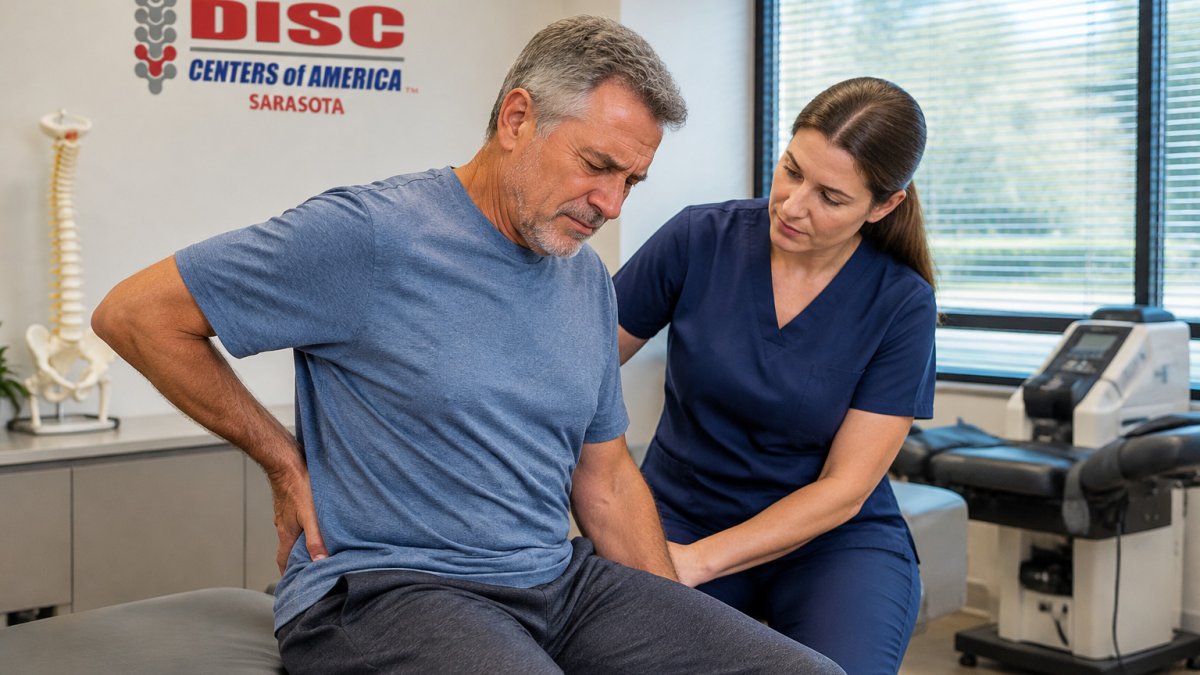
Recovering from back injury naturally starts with what you do in the first two days. Waiting too long to get help can make recovery harder, so the early steps matter. Most minor back strains improve on their own with the right care, but the first 48 hours set the tone for everything that follows.
Stop the activity that caused the pain. Avoid heavy lifting, twisting, and bending. Rest for a short time, but do not stay in bed all day. Lying still for too long can make stiffness worse.
Use simple pain relief. Ice or heat can help, and over-the-counter options may ease discomfort. Ask a pharmacist or doctor if you have questions about medicine.
Move gently every hour or two. Short walks around the house are usually better than complete rest. Gentle movement helps blood flow and keeps joints from stiffening.
Watch for these signs right away:
- Numbness or tingling in the legs or groin
- Weakness in one leg or foot
- Loss of bladder or bowel control
- Fever with back pain
If you notice any of these, seek medical care immediately.
How to Choose Between Ice and Heat for Back Pain
Ice and heat do different jobs, and picking the wrong one at the wrong time can leave you feeling worse. A common rule of thumb: cold for a fresh injury, heat for lingering stiffness.
Use ice when the injury is new or angry. In the first 48 to 72 hours after a strain, cold narrows blood vessels, which can limit swelling and dull the sharp edge of pain. Apply a cold pack wrapped in a thin towel for 15 to 20 minutes, then leave the skin alone for at least an hour before reapplying. A bag of frozen peas works as well as a gel pack because it molds to the curve of the lower back.
Use heat when the tissue feels tight, not swollen. Once the first few days pass and the pain turns into a dull ache or a feeling of stiffness, warmth is the better tool. Heat relaxes muscle fibers, increases blood flow, and makes stretching more comfortable. A warm pack, a hot shower, or a heating pad on the low setting for 15 to 20 minutes is enough.
How to tell which you need right now. Press gently on the sore area. If it feels hot, puffy, or newly irritated, choose ice. If it feels tight and hard but not swollen, choose heat. If you are unsure, start with ice for the first two days and switch to heat after that.
Alternating can help in the middle stage. Some people find relief by using ice after activity and heat before gentle stretching. Keep each session short and give the skin a rest in between.
Watch out: never fall asleep on a heating pad or apply ice directly to bare skin. Both can cause burns or frostbite-style injury, and numbness from the cold can hide damage. Check the skin every few minutes and stop if it turns bright red, blanched white, or blistered. People with diabetes, poor circulation, or reduced sensation should ask a clinician before using either therapy at home.
Neither ice nor heat fixes the underlying strain. They buy comfort so you can keep moving gently, which is what actually drives recovery.
How to Heal a Pulled Back Muscle at Home
A pulled back muscle, also called a back strain, often heals within a few weeks. Home care focuses on easing pain, keeping movement gentle, and slowly returning to normal activity.
Begin with short periods of rest, followed by light walking. Avoid the movements that caused the strain. Sit with good back support, and change positions often.
Limit heavy lifting until you feel steady. If home care has not helped and you want to know which professional, non-invasive back treatments to consider next, read how to choose non-invasive back treatment that works. When you do lift, bend at the hips and knees, keep objects close to your body, and avoid twisting.
For home-based recovery, many people use these steps:
- Rest briefly, then move lightly several times a day
- Apply ice or heat for short sessions
- Use over-the-counter pain relief as directed
- Sleep on your side with a pillow between your knees, or on your back with a pillow under your knees
A common mistake is waiting for pain to vanish before moving at all. Gentle movement usually speeds healing more than bed rest does.
Gentle Stretching and Exercises for Lower Back Injury Recovery
Once acute pain eases, gentle exercise supports lower back injury recovery. Stretching and light strengthening help restore mobility and protect the spine from future strain.
CALL TODAY TO SCHEDULE YOUR FREE CONSULTATION →
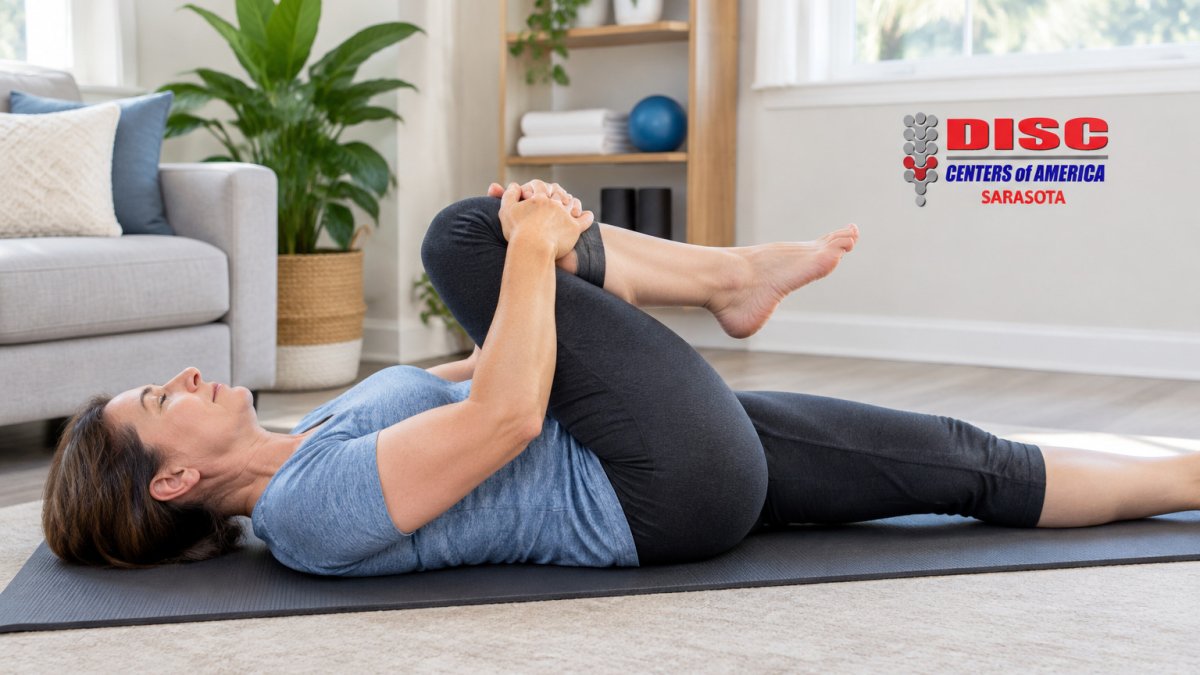
Try these simple movements, going slowly and stopping if pain increases sharply:
- Knee-to-chest stretch: Lie on your back and gently pull one knee toward your chest. Hold for 20 to 30 seconds, then switch sides.
- Pelvic tilts: Lie on your back with knees bent. Gently flatten your lower back against the floor, then relax.
- Cat-cow stretch: On hands and knees, slowly arch and round your back for several repetitions.
Build up gradually. Pain that lasts more than a short time after exercise may mean you need to ease back.
A Staged Recovery Timeline: How Long Back Injury Recovery Takes
Most uncomplicated back strains improve within two to six weeks, but the path is not a straight line. A staged plan with clear milestones helps you know when to push and when to hold back.
Days 1 to 3: calm the injury. The goal is pain control and gentle motion, not bed rest. Walk short distances every hour or two, change positions often, and use ice as described above. Avoid bending, twisting, and lifting anything heavier than a gallon of milk. Milestone: you can sit, stand, and walk to the bathroom without a sharp spike in pain.
Days 4 to 14: restore easy movement. Continue short walks and add light daily activity as comfort allows. Begin gentle stretching once sharp pain fades. Milestone: you can walk for 10 to 15 minutes and get in and out of a chair without guarding. If pain is unchanged or worse at this point, that is a signal to get evaluated rather than push harder.
Weeks 2 to 6: rebuild strength and tolerance. Add gentle strengthening for the hips, glutes, and core, and gradually return to routine tasks. Increase one variable at a time, such as walk duration or resistance, rather than several at once. Milestone: you can complete normal household tasks and a full workday with only mild, fading soreness.
Beyond 6 weeks: reassess. Many people are largely back to normal by now. If pain persists, keeps returning, or limits function, see a qualified provider. Persistent symptoms can point to causes beyond a simple strain, and a professional examination can help clarify the cause.
What stalls recovery most often. A common pattern is doing too much on a good day and then spending two days recovering. Pacing beats heroics. Another is fear of movement: avoiding all activity because it once hurt can prolong stiffness and weaken supporting muscles. Gentle, graded movement is usually the faster route.
Watch out: do not use the timeline to override your body. Sharp pain, pain that travels down the leg, or new weakness means stop and seek care, regardless of which week you are in. Progress is rarely linear, and a bad day inside a stage is normal as long as the overall trend is toward more function.
The article breaks recovery into stages, each with a clear milestone to help you judge your progress.
| Stage | Focus | Milestone |
|---|---|---|
| Days 1 to 3 | Calm the injury | Sit, stand and walk to the bathroom without a sharp pain spike |
| Days 4 to 14 | Restore easy movement | Walk 10 to 15 minutes and rise from a chair without guarding |
| Weeks 2 to 6 | Rebuild strength and tolerance | Finish household tasks and a full workday with fading soreness |
| Beyond 6 weeks | Reassess | Seek a qualified provider if pain persists or limits function |
Red-Flag Symptoms That Mean You Need Medical Care Now
Certain symptoms call for urgent evaluation rather than home care. Seek medical attention right away if you have:
- Numbness in the saddle area, or loss of bladder or bowel control
- Progressive leg weakness
- Severe pain that does not ease with rest
- Back pain after a serious fall or accident
- Fever, unexplained weight loss, or a history of cancer with new back pain
These signs can point to a condition that needs prompt care, and no natural approach replaces an urgent exam.
Booking Your Consultation at Sarasota Disc Center
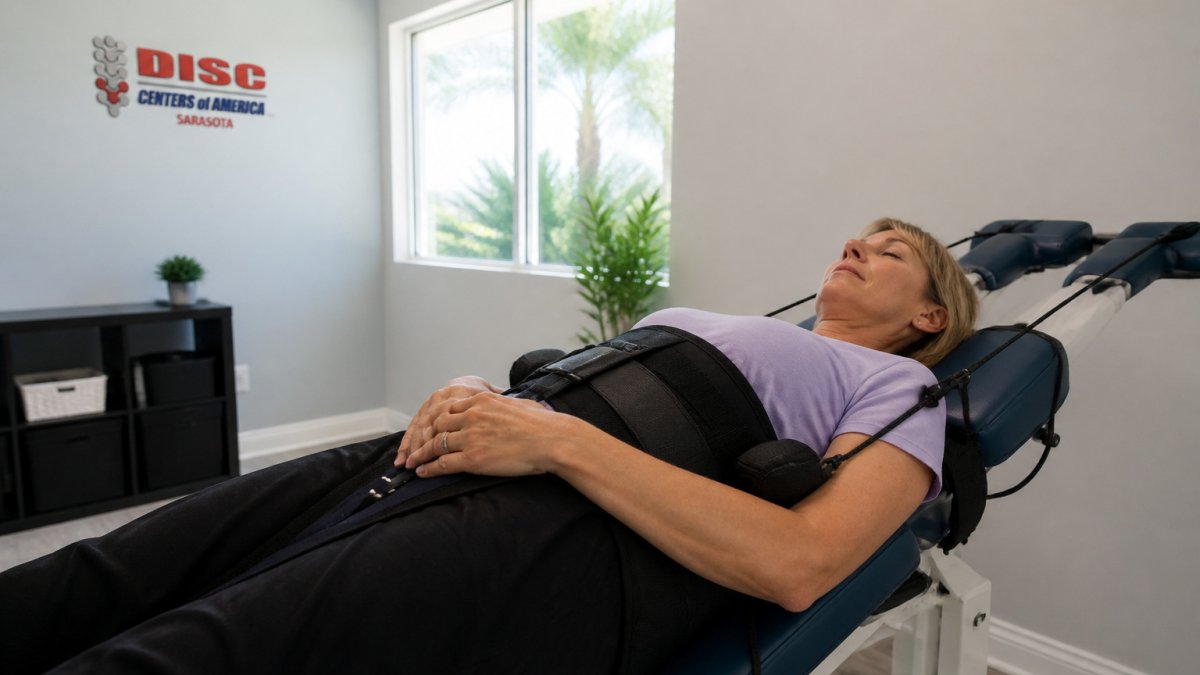
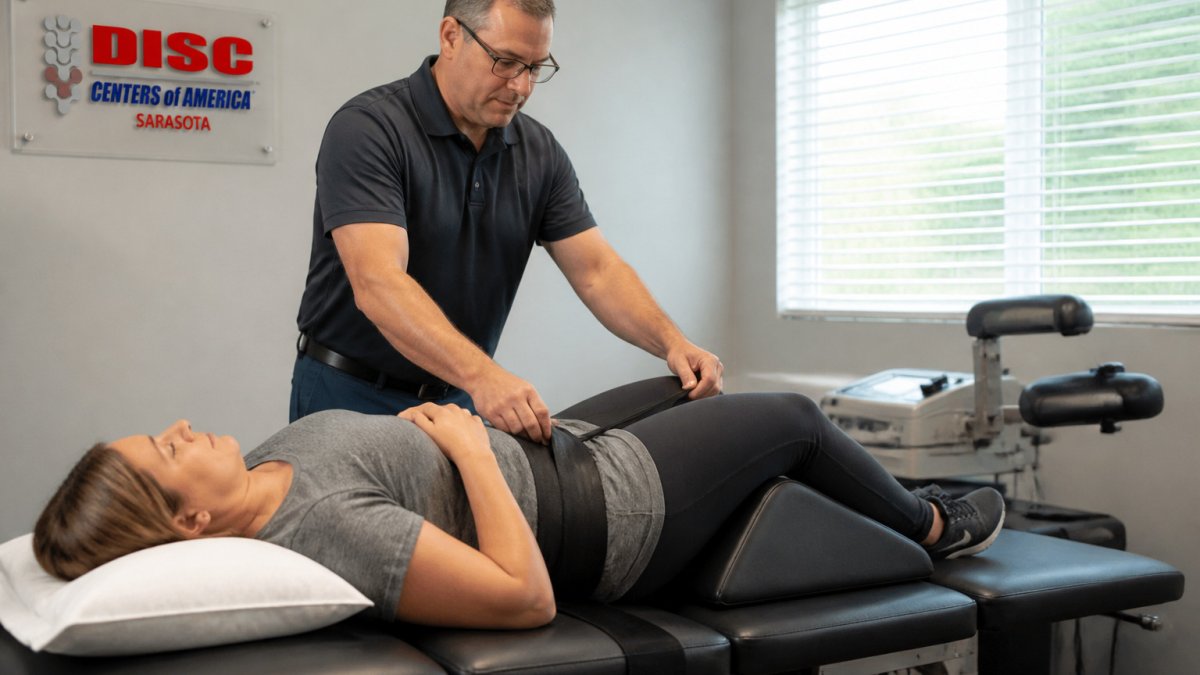
If your back pain lingers despite home care, or you have been told you may need more than rest, a consultation can help you understand your options. Sarasota Disc Center focuses on non-surgical spinal decompression for chronic back pain, neck pain, herniated discs, and sciatica. Dr. David Cifra leads a personalized, conservative approach for patients who want to avoid surgery.
A FREE MRI review and consultation is available. To learn more about the process, book a spinal decompression consultation step by step. When you are ready to reach out, contact Disc Centers of America Sarasota FL by phone, email, or directions to the clinic.
For work-related spinal injuries, you can also review workplace injury treatment options in Sarasota.
Call today to ask about your FREE MRI review and consultation. Contact Sarasota Disc Center to discuss whether a consultation is right for you.
Frequently Asked Questions
How much time should I take off work for a back injury?
Many people with a mild back strain can keep working with modifications, such as sitting breaks, avoiding heavy lifting, and adjusting their posture. If your job requires lifting, bending, or long periods of driving, or if pain keeps you from sleeping or moving safely, a short leave may be wiser. Talk with a qualified clinician about your specific job demands and work restrictions, and ask your employer about options under your workplace policies or any applicable leave programs in the United States.
Do you ever fully recover from a back injury?
Many back injuries, including most muscle strains, improve substantially over several weeks as tissues heal and movement returns. Some people continue to have recurring pain, and disc-related problems can take longer to settle. Recovery depends on the type and severity of the injury, your health history, and how gradually you return to activity. A consultation with a qualified professional can help clarify what outcome to expect in your case.
What should I do when I tweak my lower back?
Stay as active as your pain allows, since short walks and light movement generally help more than prolonged bed rest. Use ice for the first day or two if the area feels inflamed, then switch to heat if stiffness is the main problem. Avoid movements that sharply increase pain, and be cautious with heavy lifting. If pain is severe, worsens, or spreads into a leg, seek medical care promptly.
When should I seek medical care for a back injury?
Seek care promptly if you have numbness or weakness in a leg, pain that spreads down a leg below the knee, loss of bladder or bowel control, numbness in the groin area, fever with back pain, pain after a serious fall or accident, or pain that is severe and not improving after a few days of home care. These red flags can signal problems that need urgent evaluation. For ongoing pain that lasts beyond a few weeks, a professional assessment can help identify the cause.