 how-to
Non Surgical Herniated Disc Treatment: A 2026 Guide
Table of Contents
- What Non Surgical Herniated Disc Treatment Actually Involves
- Spinal Decompression Therapy Benefits for Herniated Discs
- The Herniated Disc Recovery Timeline: What to Expect
- Exercises for Herniated Disc Relief You Can Do at Home
- How to Reduce Disc Bulge Pressure Naturally
- What Not to Do with a Herniated Disc
- Frequently Asked Questions
Last Updated: September 27, 2026
What Non Surgical Herniated Disc Treatment Actually Involves
Non surgical herniated disc treatment is a structured plan of conservative care that eases nerve pressure without an operation. It combines physical therapy, spinal decompression, targeted exercise, and pain management.
How a Herniated Disc Causes Pain
A herniated disc happens when the soft inner core of a spinal disc pushes through its tougher outer ring. That bulge can press on nearby nerve roots, a problem doctors call nerve root compression.
Common signs include:
- Shooting pain down one leg or arm
- Numbness or tingling in the hands or feet
- Muscle weakness in the affected limb
- Pain that worsens with sitting, coughing, or bending
Why Conservative Care Is Often Tried First
Doctors usually recommend conservative treatment before surgery, and for good reason. Many herniated discs improve on their own through a process called disc resorption, where the body gradually breaks down the bulging tissue.
Spinal Decompression Therapy Benefits for Herniated Discs
Spinal decompression therapy is a non-invasive treatment that gently stretches the spine to relieve pressure on discs and nerves. It's one of the most studied options for a herniated disc treatment plan that avoids surgery.
How the Table Actually Unloads a Disc
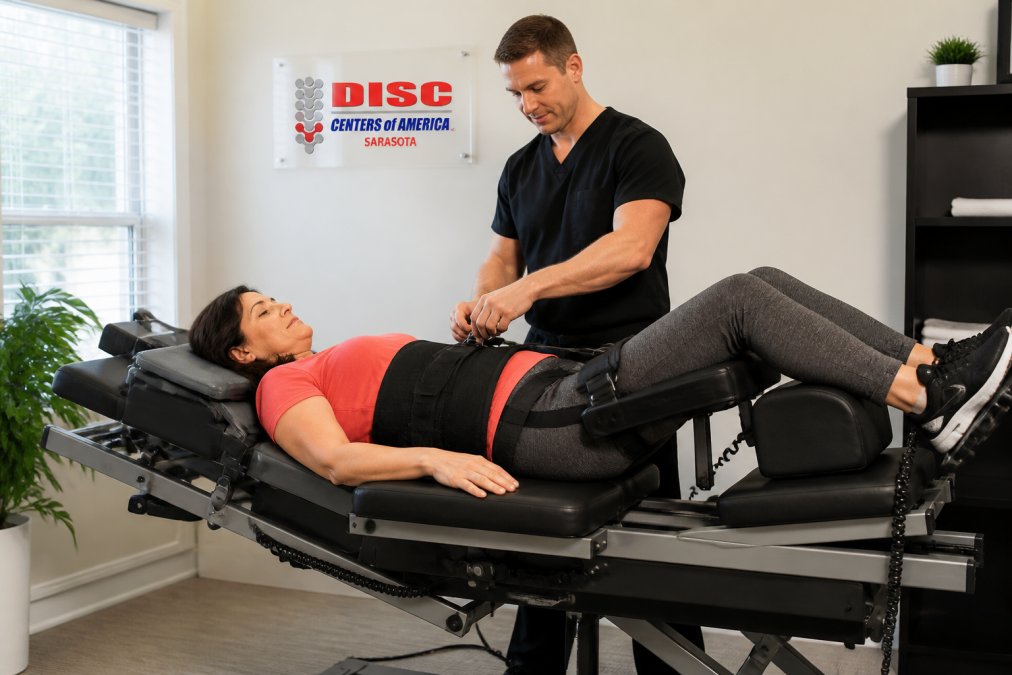
During a session, a motorized table applies a slow, controlled pull to the spine while the patient lies supine or prone, secured with harnesses around the pelvis and upper torso. The pull is not constant. It cycles between a hold phase and a partial-release phase, and that oscillation is the point: it creates negative intradiscal pressure, the opposite of the compressive load that gravity and posture place on a bulging disc all day.
What a Typical Course Looks Like
Most practitioners structure decompression as a series of sessions rather than a one-time fix. A common pattern is:
- Frequency: three to five sessions per week during the acute phase
- Session length: roughly 20 to 45 minutes on the table, depending on the level treated and the patient's tolerance
- Total course: often 20 to 30 sessions over six to eight weeks, reassessed at intervals
- Angle: cervical traction for neck discs, lumbar positioning for lower-back discs
The Main Benefits
- Reduced pressure on compressed nerve roots
- Better nutrient and fluid flow to the disc
- Less muscle tension around the injured area
- Improved range of motion over time
- A non-surgical option for patients who have not responded to physical therapy or chiropractic care alone
Who Tends to Respond, and Who Should Not Try It
- Spinal fracture or significant spinal instability
- Advanced osteoporosis or other conditions that weaken bone
- A tumor or infection in the spine
- Pregnancy, due to harness positioning and table mechanics
- Prior spinal fusion at the affected level, in many cases
- Severe cauda equina symptoms, which are a surgical emergency, not a decompression case
Sarasota Disc Center specializes in this approach, using advanced technology to target the source of disc and nerve pressure. For patients who've failed physical therapy or chiropractic care, it offers a different path. The goal is natural healing, not a temporary fix.
The Herniated Disc Recovery Timeline: What to Expect
The herniated disc recovery timeline varies by person, but most people notice change in stages. A typical conservative plan looks like this:
| Phase | Typical Timeframe | What Happens | What Progress Looks Like |
|---|---|---|---|
| Acute phase | First 1-2 weeks | Rest, pain control, gentle movement | Pain is present but not escalating; you can find a comfortable position |
| Early recovery | Weeks 2-6 | Physical therapy, decompression begins | Shooting pain shortens, it travels less far down the leg or arm |
| Strengthening | Weeks 6-12 | Core stabilization, mobility work | You can sit, stand, and walk longer before symptoms return |
| Maintenance | Month 3 onward | Postural correction, lifestyle habits | Symptoms are occasional, not daily; you know your triggers |
What the Research and Clinical Experience Suggest
Most people feel meaningful relief within four to six weeks of consistent care. Full recovery can take three months or longer. Age, fitness, and how long you've had the problem all affect your pace.
When Conservative Care Is Not Enough
Most professional guidelines suggest trying non-invasive options for several weeks first. But 'several weeks' is not 'forever.' A reasonable checkpoint is around six to eight weeks. If there has been no meaningful improvement by then, or if symptoms are worsening, it is time to revisit the diagnosis and discuss other options, including surgical consultation.
Signs that warrant escalation sooner rather than later:
- Progressive weakness in the leg, foot, or arm
- Loss of bladder or bowel control, or numbness in the groin or saddle area, this is a medical emergency
- Pain that is unmanageable despite appropriate medication and therapy
- New or worsening neurological deficits on exam
Why Consistency Beats Intensity
That's why a patient-focused plan matters. At Sarasota Disc Center, we look at the whole picture, not just the disc.
CALL TODAY TO SCHEDULE YOUR FREE CONSULTATION →
Exercises for Herniated Disc Relief You Can Do at Home
Gentle, targeted movement is one of the most effective tools for exercises for herniated disc relief. The goal is to reduce pressure and build support around the spine, not to push through pain.
- Pelvic tilts - Lie on your back, flatten your lower back, hold 5 seconds. Repeat 10 times.
- Knee-to-chest stretch - Pull one knee toward your chest, hold 20 seconds. Switch sides.
- Cat-cow - On hands and knees, slowly arch and round your back. 10 slow reps.
- Bird-dog - Extend opposite arm and leg while on hands and knees. Hold 5 seconds each side.
- Bridge - Lie on your back, lift your hips, squeeze your glutes. Hold 5 seconds, 10 reps.
How to Reduce Disc Bulge Pressure Naturally
Reducing disc bulge pressure naturally comes down to daily habits that take strain off the spine. Small changes add up faster than most people expect.
Start with these:
- Fix your posture. Slouching loads the front of the disc. Sit tall with support at your lower back.
- Move often. Stand and stretch every 30 minutes if you sit for work.
- Sleep smart. A medium-firm mattress and a pillow that keeps your neck neutral help.
- Manage weight. Extra body weight raises load on the lumbar spine.
- Quit smoking. Smoking reduces blood flow to discs and slows healing.
Ergonomic Workspace Optimization
If you sit for a living, your desk setup matters. Set your screen at eye level. Keep your feet flat and your chair supporting your lower back. An ergonomic chair and a standing desk can cut hours of daily strain.
Dietary and Anti-Inflammatory Nutrition
What you eat affects inflammation, and inflammation affects pain. Focus on anti-inflammatory foods: fatty fish, leafy greens, berries, nuts, and olive oil. Cut back on processed sugar and refined carbs. Staying hydrated helps discs stay plump and cushioned.
Home-Based Diagnostic Self-Checks
You can track your own progress at home. Note when pain travels farther down the leg, when it shortens, and what movements trigger it. A simple daily log helps your clinician see patterns. This isn't a diagnosis, just useful data to bring to your appointment.
What Not to Do with a Herniated Disc
Certain habits slow healing or make a herniated disc worse. Avoiding them is as important as doing the right exercises.
Skip these:
- Heavy lifting with a rounded back. This spikes vertebral pressure.
- Long bed rest. More than a day or two weakens supporting muscles.
- High-impact activity. Running and jumping jar the spine during the acute phase.
- Ignoring worsening symptoms. New weakness or numbness needs a doctor.
- Aggressive stretching into pain. Sharp pain means stop, not push harder.
The Psychological Impact of Chronic Pain
Chronic pain wears on more than your back. It affects sleep, mood, and focus. Many people with ongoing sciatica or radiculopathy feel anxious about movement, which can slow recovery. Addressing stress through sleep, gentle activity, and support is part of care, not an afterthought.
Frequently Asked Questions
How long does a small herniated disc take to heal without surgery?
Many small herniated discs improve within 4 to 6 weeks with conservative care, though full recovery can take 3 to 6 months. The herniated disc recovery timeline depends on the size and location of the herniation, your age, and how consistently you follow your treatment plan. Non surgical herniated disc treatment often combines physical therapy, spinal decompression, and activity modification to support the body's natural healing process. Your doctor can give you a more specific timeline after reviewing your MRI.
Is spinal decompression therapy an effective alternative to surgery?
Spinal decompression therapy is a non-invasive option that creates negative pressure inside the disc, which may help retract herniated material and improve nutrient flow. Research suggests it can reduce pain and improve function for some patients with herniated discs or sciatica, especially when combined with other conservative treatments. However, it is not right for everyone. A qualified provider can review your MRI and health history to determine if you are a candidate for spinal decompression therapy benefits.
What should I avoid doing if I have a herniated disc?
Avoid activities that increase spinal pressure or twist your spine, such as heavy lifting, bending forward to pick up objects, prolonged sitting, and high-impact exercises like running or jumping. Also skip movements that cause sharp pain or numbness. Instead, focus on gentle exercises for herniated disc relief, like walking on flat ground or swimming, and practice good posture. If a movement makes your symptoms worse, stop and consult your healthcare provider.
How can I reduce disc bulge pressure naturally?
Natural ways to reduce disc bulge pressure include staying active with low-impact exercises, maintaining a healthy weight to lessen stress on your spine, practicing good posture, and using ergonomic furniture at work. Some people find relief with ice or heat, gentle stretching, and anti-inflammatory foods. Spinal decompression therapy is another non-surgical option that targets disc pressure directly. Always talk to a doctor before starting any new treatment, especially if you have neurological symptoms like weakness or numbness.