 how-to
How to Avoid Back Surgery: 7 Conservative Steps
Table of Contents
- Why Most Back Pain Doesn't Require Surgery
- Step 1: Get an Accurate Diagnosis Before You Decide Anything
- Step 2: Explore Conservative Treatment Options First
- Step 3: Chronic Neck Pain Treatment Options That Don't Involve Surgery
- Step 4: Non-Surgical Spinal Decompression Benefits for Disc Injuries
- Step 5: Lifestyle Changes That Support Herniated Disc Recovery Without Surgery
- Step 6: The Psychological Side of Chronic Pain
- Step 7: Understanding Insurance, Cost, and When Surgery Is Truly Necessary
- Frequently Asked Questions
Last Updated: October 7, 2026
Why Most Back Pain Doesn't Require Surgery
Most people with back pain can avoid back surgery, yet it is the option most patients hear first.
Learning how to avoid back surgery starts with what surgery solves: it removes or stabilizes a structural problem, but not the habits, posture, and muscle weakness that created it.
So the real question is not "can I avoid surgery?" but "what is causing my pain, and can conservative treatment reach it?" The seven steps below answer that in order.
Step 1: Get an Accurate Diagnosis Before You Decide Anything
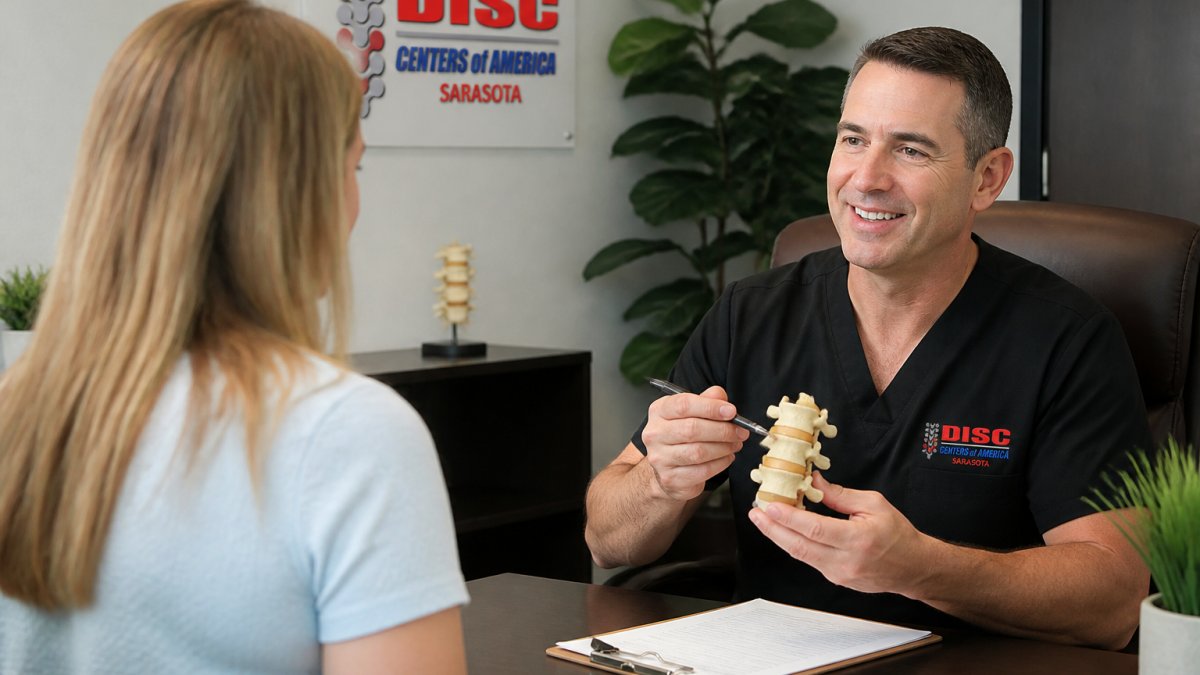
An accurate diagnosis is the foundation of every non-surgical path. Start with an orthopedic evaluation or spine specialist consultation: physical exam, symptom review, and imaging when appropriate.
Here is what a good workup looks for:
- Nerve compression, where a disc or bone is pressing on a nerve
- Muscular imbalances, weak or tight muscles pulling your spine out of alignment
- The source of your pain, disc, joint, muscle, or nerve
Bring your MRI and prior imaging to your consultation. A free MRI review is one of the simplest ways to get a second set of eyes on your case.
Step 2: Explore Conservative Treatment Options First
Conservative treatment means every non-surgical approach, tried in sensible order before anyone operates, and for most back or neck pain, this is where relief comes from. It usually combines physical therapy, chiropractic adjustment, and structured exercise.
Physical Therapy and Targeted Exercise
Physical therapy builds the core strength and functional mobility that protect your spine, targeting your specific weakness rather than a generic routine.
A common mistake is doing months of therapy without measuring progress. Ask your therapist what you are improving and how they track it.
Chiropractic Care and Spinal Decompression
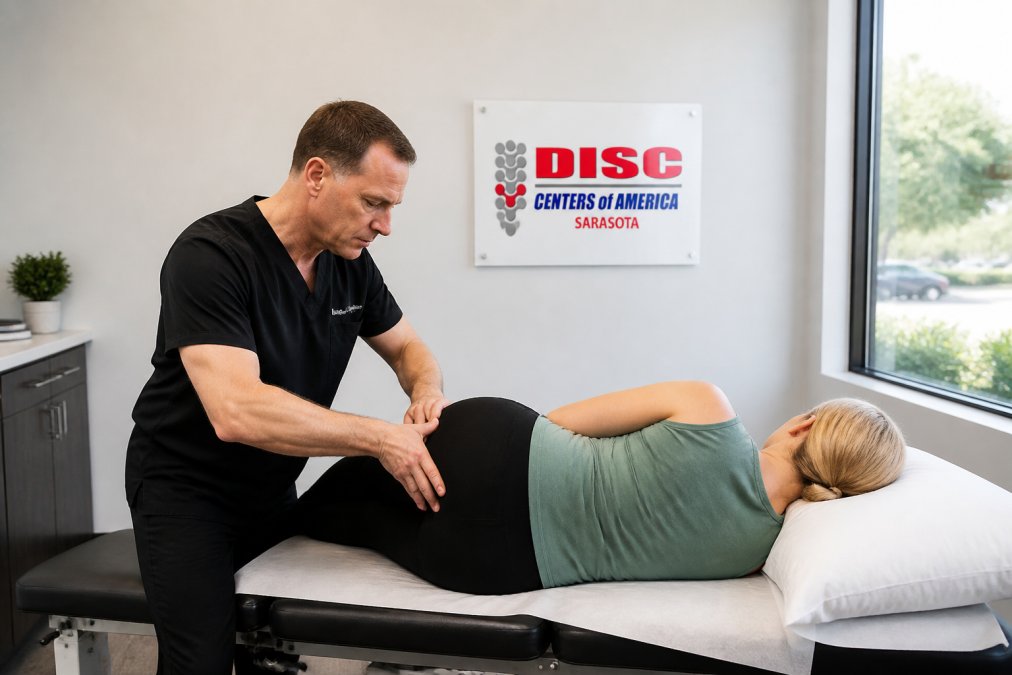
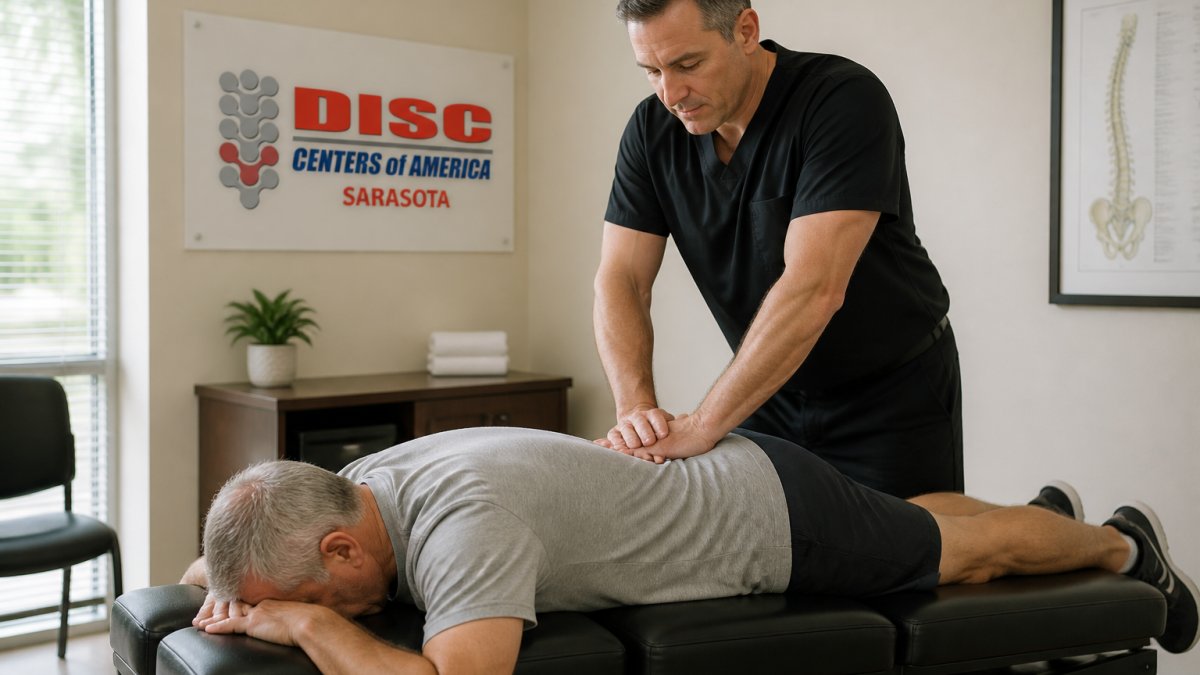
Chiropractic adjustment restores motion in stiff spinal joints; spinal decompression stretches the spine to reduce pressure on discs and nerves.
Step 3: Chronic Neck Pain Treatment Options That Don't Involve Surgery
Chronic neck pain treatment options include physical therapy, manual therapy, spinal decompression, and posture correction, all aimed at the root cause rather than the symptom.
Neck pain follows the same logic as back pain: identify whether it comes from a joint, disc, nerve, or muscle, and treatment follows.
For neck-related nerve pain, spinal decompression directly targets the disc and nerve pressure that cause radiating symptoms into the arm.
Other options worth discussing with your provider:
- Manual therapy and targeted stretching
- Posture correction for forward-head positioning
- Ergonomic changes at your desk
The right combination depends on your diagnosis, no single answer fits every neck.
Step 4: Non-Surgical Spinal Decompression Benefits for Disc Injuries
The non-surgical spinal decompression benefits are simple: it reduces pressure on discs and nerves without an incision, anesthesia, or surgical recovery time.
For herniated disc recovery without surgery, this matters: a herniated disc pushes outward and can press on a nerve, and decompression creates space that may let it retract and heal.
Decompression is not a one-visit fix, it works through a planned series of sessions, and consistency produces results.
At Sarasota Disc Center, Dr.
If you have had prior surgery and still have pain, decompression may still be worth a conversation.
Step 5: Lifestyle Changes That Support Herniated Disc Recovery Without Surgery
Daily habits decide whether conservative care holds. Lifestyle modification is part of treatment: every hour spent loading your spine the wrong way either helps a disc heal or keeps it irritated.

Ergonomics: The Eight-Hour Decision
Most desk workers spend more waking hours seated than sleeping, making chair, monitor, and keyboard position the largest controllable load on your spine.
The setup that works:
- Monitor top at or just below eye level. Looking down for hours loads the cervical discs. A stack of books under the monitor is a free fix.
- Elbows at roughly 90 degrees, wrists straight. Keyboard too high forces shoulder tension that pulls on the neck.
- Feet flat, knees at or slightly below hip level. A footrest helps if your chair is too tall.
The highest-value change for most desk workers is a lumbar support that keeps the natural curve of your lower back. It costs little and helps every hour you sit. Pair it with a standing break every 30 to 45 minutes and you have addressed the two biggest daily loads on your spine.
Sleep Hygiene for Spine Health
Sleep is when discs rehydrate and tissue repairs. Two variables matter more than any mattress claim: position and support.
CALL TODAY TO SCHEDULE YOUR FREE CONSULTATION →
- Back sleeping is the most neutral position for the spine. A pillow under the knees reduces lumbar curve and takes pressure off the lower back.
- Side sleeping is fine if the pillow fills the gap between your ear and shoulder so the neck stays neutral. A pillow between the knees keeps the pelvis aligned.
- Stomach sleeping is the worst position for the neck and lower back. If you cannot change it, use a very thin pillow or none, and place a pillow under the pelvis to reduce lumbar extension.
Many patients do everything right during the day and undo it with eight hours of poor sleep posture. Fixing the sleep setup is often the cheapest intervention here.
Body Mechanics: Lifting, Twisting, and the Small Stuff
The mechanism behind many disc injuries is a flexed spine under load with rotation, the position to avoid.
- Lift with your legs, not your spine. Hinge at the hips, keep the load close to your body, and keep your back neutral rather than rounded.
- Do not twist under load. Turn your feet instead of your torso when carrying something heavy.
- Push, do not pull. Pushing a heavy object loads the spine less than pulling it.
Smoking Cessation and Weight Management
Two systemic factors slow disc healing more than most patients realize.
Smoking constricts blood vessels and reduces blood flow to the discs, already the least vascularized tissue in the spine, and nicotine impairs the nutrient exchange that keeps discs hydrated.
Weight management matters because every extra pound adds load to the lumbar spine, magnified during bending and lifting.
None of these changes is dramatic alone, but together they determine whether conservative care holds or fails.
Step 6: The Psychological Side of Chronic Pain
Chronic pain is not just physical. Pain intensity is shaped by stress, sleep, fear, and mood.
Patients who fear movement move less, weakening the muscles that protect the spine, a cycle that worsens pain.
What helps:
- Patient education about what pain does and does not mean
- Gradual return to activity instead of rest
- Stress management and better sleep
Addressing the mental side does not mean your pain is "in your head", it means treating the whole problem.
Step 7: Understanding Insurance, Cost, and When Surgery Is Truly Necessary
Surgery is sometimes the right answer. Knowing when, and how to pay for the alternative, keeps most people out of the operating room.
When Surgery Is Truly Necessary
Surgical candidacy usually involves specific findings. The clearest cases are:
- Cauda equina syndrome, loss of bladder or bowel control, saddle numbness, or rapidly progressing weakness in both legs. This is a medical emergency. Go to an emergency department, not a clinic.
- Progressive neurologic deficit, measurable weakness, foot drop, or worsening reflex loss that continues despite conservative care.
- Failed conservative care, pain that has not improved after a genuine trial, typically six to twelve weeks of structured physical therapy, activity modification, and appropriate medication.
Outside those categories, the decision is rarely urgent. A herniated disc, spinal stenosis, or degenerative disc disease can often be managed without an operation, even when imaging looks dramatic. Many people with visible disc herniations on MRI have no pain at all, the image alone should never drive the decision.
If a surgeon recommends an operation on the first visit, before a full course of conservative care and a second opinion, slow down. Ask exactly which structure is being operated on, what the expected success rate is for your specific diagnosis, and what happens if you wait three months. A surgeon who cannot answer those questions clearly is not the right one to operate on your spine.
How Insurance Actually Decides
Insurance coverage for conservative care is where most patients get stuck. The rules follow a step-therapy logic you can plan around.
Most commercial and Medicare Advantage plans require conservative care to be tried and documented before they will authorize surgery. That same documentation unlocks coverage for physical therapy, chiropractic, and, in some plans, spinal decompression. But the paths are not treated equally:
- Physical therapy is usually covered, but visit counts are capped. A common pattern is 20 to 30 visits per calendar year, sometimes with a copay per visit and sometimes with a deductible first.
- Chiropractic is covered by many plans but often capped lower, frequently 12 to 20 visits per year, and Medicare Part B covers manual manipulation of the spine but not the imaging or the exam that leads to it.
- Spinal decompression is frequently classified as investigational or not medically necessary by commercial payers, which means it is often paid out of pocket even when a physician orders it. Medicare does not have a national coverage determination for it, so coverage varies by Medicare Administrative Contractor.
That asymmetry is the practical problem: the cheapest path for your insurer is often the one you least want.
What to Ask Before You Commit
Before you start any treatment plan, get answers in writing where you can:
- What is my deductible, and has it been met this year? A plan with a $3,000 deductible and a $6,000 out-of-pocket maximum behaves very differently in January than in November.
- Is this provider in network? Out-of-network physical therapy or chiropractic can cost two to three times the in-network rate.
- How many visits are approved, and what happens when I hit the cap? Ask for the authorization number and the approved visit count.
The Cost-Benefit Reality
A single lumbar fusion typically runs into the tens of thousands of dollars before insurance, while a full course of physical therapy, chiropractic, or decompression usually costs a fraction of that. The decision to avoid surgery is partly clinical and partly financial, and pretending otherwise leaves patients unprepared.
Ask your insurer for a predetermination or pre-service coverage decision before starting an expensive conservative program. It is not a guarantee of payment, but it tells you in advance whether the treatment is considered medically necessary under your plan, which is the difference between a covered course of care and a surprise bill.
The strongest position before any surgical decision is a clear diagnosis, a full trial of conservative care, and an honest look at cost. Get the diagnosis in writing, get the conservative care documented, and get the coverage answer before you commit. That combination answers the question of whether surgery is truly necessary for you, and whether you can afford the alternative.
Frequently Asked Questions
What are the most effective non-surgical treatments for chronic back pain?
The most effective non-surgical approaches combine several methods: physical therapy to build core strength and correct muscular imbalances, spinal decompression to relieve nerve compression, and posture correction. Chiropractic adjustment and injection-based therapy may also help. A thorough orthopedic evaluation identifies which combination suits your specific condition. Conservative management works best when started early and followed consistently, rather than as a last resort.
When is back surgery considered medically necessary?
Surgery becomes medically necessary when there is severe or progressive nerve compression causing loss of bowel or bladder control, significant muscle weakness, or when conservative treatment has failed after several months and pain severely limits functional mobility. Most cases of chronic back pain, herniated discs, and sciatica improve with non-surgical alternatives. An orthopedic evaluation and MRI review help determine whether you are a surgical candidate or whether conservative care still offers a realistic path forward.
How does spinal decompression therapy work to relieve disc pressure?
Spinal decompression uses a motorized table to apply gentle, controlled traction that creates negative pressure inside the disc. This negative pressure can draw a herniated or bulging disc material back toward its center, reducing nerve compression and inflammation. Sessions typically last 30 to 45 minutes. Many patients report reduced pain intensity and improved functional mobility over a course of treatment. It is a non-surgical alternative for those who have not found relief through physical therapy or medication alone.
What lifestyle changes can help prevent the need for spinal surgery?
Key lifestyle modifications include quitting smoking, which impairs disc nutrition and healing; maintaining a healthy weight to reduce load on the spine; and practicing consistent posture correction and body mechanics at work. Regular low-impact exercise builds core strength and supports spinal health. Sleep hygiene matters too, since poor sleep increases pain sensitivity and slows tissue recovery.