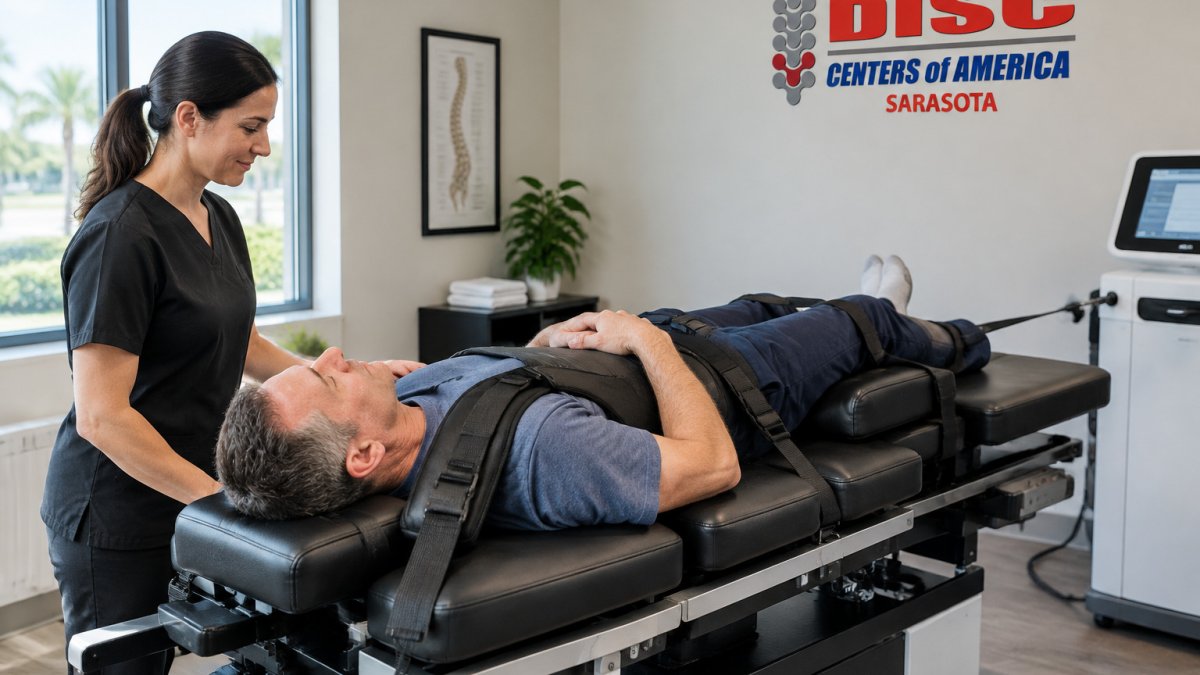
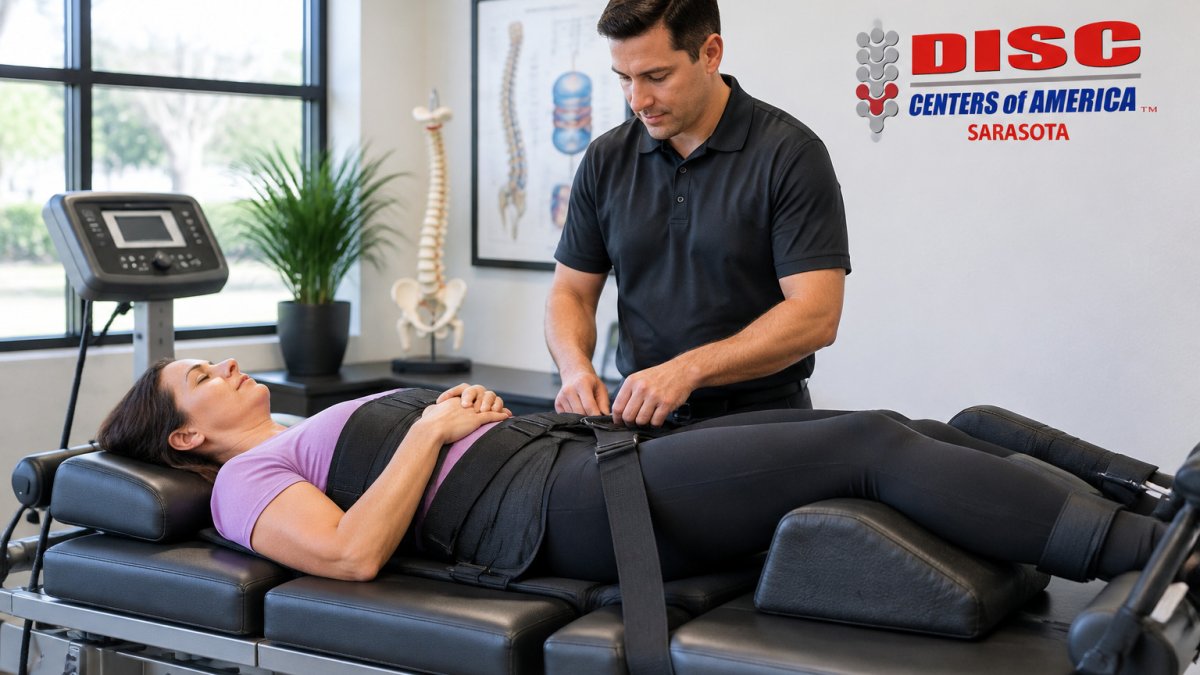
 How-to
7 Steps to Prepare for Spinal Decompression Therapy
Quick Summary
To prepare for spinal decompression therapy, gather your MRI or CT reports, X-ray results, past treatment history, symptom notes, and a full medication list, including any blood thinners. Wear loose clothing, eat a light meal, and tell your clinician about any conditions or recent injections before your first session.
- Request MRI or CT reports several days early, since copies can take time.
- List past treatments with dates and whether each one helped.
- Disclose blood thinners, pregnancy, osteoporosis, recent injections, and prior spine surgery.
- Wear loose clothing and leave jewelry and bulky belts at home.
- Avoid heavy lifting or strenuous exercise right after your first session unless your provider says otherwise.
Table of Contents
- What Spinal Decompression Therapy Is and How It Differs From Surgery
- Gathering Your Medical History and Imaging Before Your First Visit
- What to Wear to Spinal Decompression Therapy
- What to Expect During Your Spinal Decompression Therapy First Session
- How Long a Spinal Decompression Therapy Session Lasts and How Many You May Need
- Eating, Medications and Day-of Preparation Checklist
- Questions to Ask Your Provider Before Starting Spinal Decompression Therapy
- Booking Your Free MRI Review and Consultation at Sarasota Disc Center
- Frequently Asked Questions
What Spinal Decompression Therapy Is and How It Differs From Surgery
Last Updated: November 22, 2026
Spinal decompression therapy is a nonsurgical way to ease pressure on the discs and nerves in your back or neck (the NIH). At Sarasota Disc Center, we use it as a conservative option for people with chronic back pain, neck pain, herniated discs, and sciatica. Many people with these conditions look for options after physical therapy or medication has not provided the relief they hoped for.
The treatment uses controlled traction. You lie on a specialized table, and it gently stretches the spine. Traction is intended to change the pressure within the spine, which may ease pressure on nearby discs and nerves in some people.
Decompression surgery is a very different thing. A surgeon cuts into the body to remove or reshape tissue that is pressing on a nerve. Spinal decompression therapy is a nonsurgical treatment that does not involve cutting into the body.
- Therapy: Nonsurgical, uses gentle traction on a treatment table
- Surgery: Invasive, involves cutting and removing or reshaping tissue
Knowing this difference helps you set the right expectations before your first visit.
Gathering Your Medical History and Imaging Before Your First Visit
Before your first appointment, collect your medical records and any imaging you already have. This gives your provider a clear picture of your condition and helps determine whether nonsurgical decompression is appropriate for you. Preparation helps your clinician review your history when deciding whether traction is appropriate for you. Our guide to insurance coverage for spinal decompression explains what to check before you book.
Bring the following items with you:
- MRI or CT scan reports: Ask for the written report and the images on a disc or through an online portal. The radiologist's written interpretation often matters as much as the images themselves.
- X-ray results: Include any recent films of your spine, especially flexion and extension views if they were ordered.
- A list of past treatments: Write down physical therapy, chiropractic care, injections, and medications you have tried, with dates and whether each helped.
- A symptom history: Note when your pain started, where it hurts, whether it travels into an arm or leg, and what makes it better or worse.
- Current medication list: Include doses, how often you take each one, and any blood thinners such as warfarin, apixaban, or rivaroxaban.
- Surgical history: List any prior spine surgery, joint replacement, or implanted device, including spinal cord stimulators, pain pumps, and hardware such as screws or cages.
- Allergies: Include medication allergies and any reaction to adhesives or straps.
A simple tip: write down the movements that worsen your symptoms, such as bending forward or sitting for long periods, and the movements that bring relief. This information can help your provider understand your condition during your consultation.
Your clinician will also want to know about conditions that can affect suitability for traction therapy. Be ready to disclose:
- Pregnancy or possible pregnancy
- Osteoporosis or low bone density
- Spinal fracture, tumor, or infection, now or in the past
- Severe disc herniation with progressive weakness or numbness
- Abdominal or inguinal hernia
- Uncontrolled high blood pressure or heart conditions your provider should know about
- Recent steroid injections or recent surgery
These are discussion points, not automatic disqualifiers. Eligibility and precautions must be confirmed by a qualified clinician after an examination, and clinic-specific instructions take priority over general advice.
Watch out: Do not wait to gather your records until the day of your visit. Requesting imaging reports and having discs copied can take several days, so start early and confirm the clinic received them before your appointment.
Here is a quick reference for the records to bring and the conditions to disclose before your first visit.
| Item | Why it matters | Timing |
|---|---|---|
| MRI or CT scan reports | Radiologist's written interpretation guides review | Request several days early |
| X-ray results | Includes flexion and extension views if ordered | Bring recent films |
| Past treatments | Shows what was tried and whether it helped | List with dates |
| Current medications | Includes blood thinners such as warfarin | Bring full list and doses |
| Surgical history | Covers prior spine surgery and implanted hardware | Note all devices |
| Allergies | Includes medications and adhesives or straps | Share at intake |
What to Wear to Spinal Decompression Therapy
Wear loose, comfortable clothing that does not restrict movement. You will lie down on a treatment table, so simple clothes work best.
- Pants: Loose-fitting pants or athletic shorts
- Top: A comfortable shirt that does not have buttons, zippers, or metal details
- Shoes: Slip-on shoes or sneakers you can remove easily
Avoid these items on the day of your session:
- Bulky belts or thick belt buckles
- Jewelry, especially necklaces and large rings
- Tight clothing with rivets or hard seams
Leave valuables at home when you can. Taking off extra layers before your session makes the process smoother and more comfortable.
What to Expect During Your Spinal Decompression Therapy First Session
Your first visit typically begins with a review of your records and a conversation with a clinician before any treatment begins. Our detailed walkthrough of the first session explains each step from positioning to recovery.
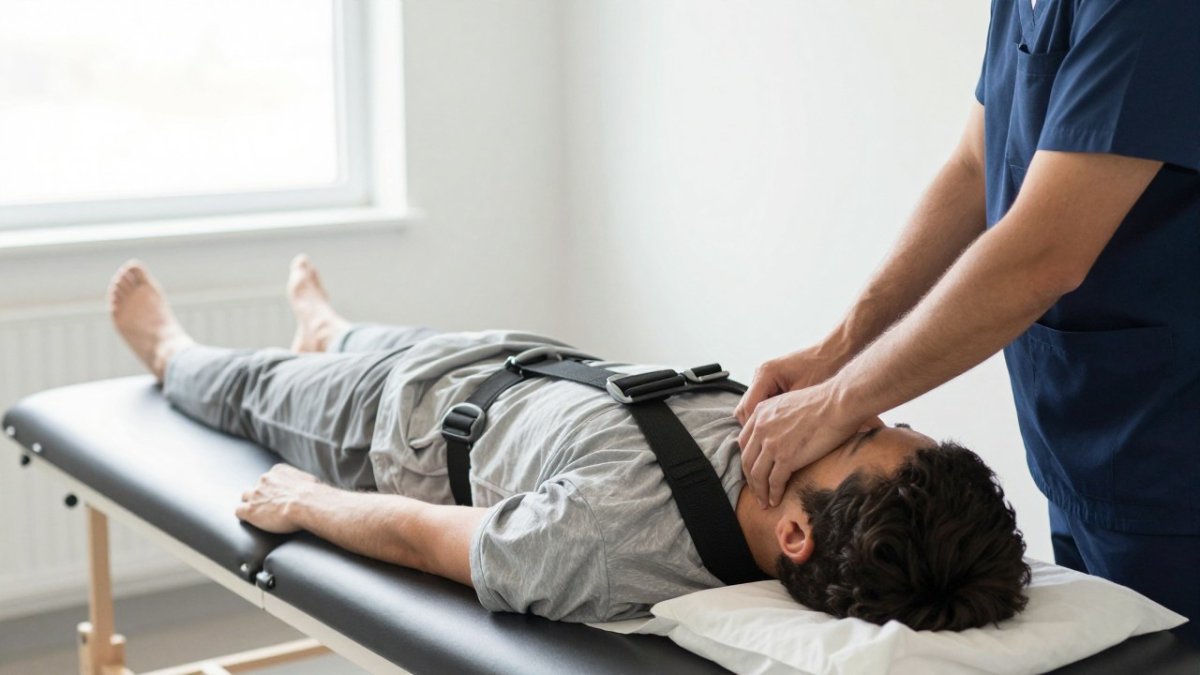
The steps usually look like this:
- Review: Your provider checks your history, imaging reports, medications, and prior treatments, and performs a brief physical exam.
- Positioning: You lie on the treatment table in a comfortable position, often face down or on your back, with supports placed under your body.
- Harness fitting: Straps are fitted around your pelvis or shoulders, depending on the area being treated. Tell the clinician if any strap feels too tight or pinches.
- Traction: The table applies gentle, controlled pulls. You may feel a slow stretching sensation, and the angle and force are adjusted to your comfort.
- Check-in: Your clinician asks how you feel during and after the pull and adjusts the settings if needed.
- Recovery: You sit up slowly, and the clinician checks your symptoms before you leave.
Many people describe the sensation as a gentle stretch. Individual experiences vary, and changes, if any, may develop over several visits. Tell your clinician right away if anything feels uncomfortable, and they will adjust the treatment.
A few practical points help the first visit go smoothly:
-
Eating: A light meal is fine; a heavy meal right before lying on the table can feel uncomfortable.
-
Medications: Take your regular medications unless your provider tells you otherwise, and bring your full list.
-
Transportation: Most people drive themselves home, but arrange a ride if you feel tired or sore after the session or if your provider advises it.
-
Afterward: You can usually return to normal activity, but avoid heavy lifting or strenuous exercise right after your first session unless your provider says otherwise.
Tell your clinician right away if you feel sharp pain, numbness, tingling that spreads, dizziness, or any new weakness. Seek prompt medical care for new loss of bladder or bowel control, sudden severe pain, or progressive weakness in an arm or leg, and do not wait for your next scheduled visit.
How Long a Spinal Decompression Therapy Session Lasts and How Many You May Need
Session length varies by treatment plan. Ask your provider how long your sessions are expected to take. For a broader view, see how long spinal decompression takes overall.
The number of sessions depends on your condition and history and is determined by your provider after evaluation. Your provider will explain the expected schedule after your evaluation.
Ask your provider for a realistic timeline based on your needs.
Eating, Medications and Day-of Preparation Checklist
Use this checklist the morning of your appointment:
- Eat a light meal, and avoid a heavy one just before your session
- Take your regular medications unless your provider tells you otherwise
- Bring your list of medications and any allergies
- Bring your imaging reports and symptom notes
- Wear loose clothing and leave jewelry at home
- Arrive a few minutes early to complete any paperwork
- Plan transportation, since you may feel tired afterward
Tell your provider about any blood thinners, recent injections, or new symptoms before your session. This helps your clinician decide if decompression is safe for you.
Questions to Ask Your Provider Before Starting Spinal Decompression Therapy
A good consultation gives you the answers you need to make a confident decision. Consider asking:
- Is my condition a good match for spinal decompression therapy?
- How many sessions will I likely need, and how often?
- What outcomes are reasonable to discuss for my condition?
- What side effects or risks should I know about?
- What should I do if my symptoms get worse or I notice unusual symptoms?
- How will we measure whether the treatment is working?
- Ask our office about current pricing and how billing is handled for your situation.
Many people also wonder how this option compares with other treatments. Your provider can discuss the options that fit your situation.
If you notice new numbness, weakness, loss of bladder or bowel control, or sudden severe pain, seek medical care right away.
Booking Your Free MRI Review and Consultation at Sarasota Disc Center
Ready to find out if spinal decompression therapy could help you? Call Sarasota Disc Center for a FREE MRI Review and Consultation with Dr. David Cifra to talk through your options. Our step-by-step guide to booking a consultation walks you through each stage of scheduling. Bring your records and symptom notes to make the most of your visit.
Frequently Asked Questions
Does spinal decompression therapy hurt? Most patients feel a gentle stretching sensation rather than pain. Tell your clinician if anything feels uncomfortable so they can adjust the treatment.
Do I need to stop my medications before a session? Usually not. Keep taking your regular medications unless your provider tells you otherwise, and share your full list at your first visit.
Can I eat before my appointment? Yes, but keep your meal light. A heavy meal right before lying on the table can feel uncomfortable.
What if I have had back surgery before? Tell your provider about any past surgeries. Your clinician will review your history to decide whether decompression is a good fit for you.
Frequently Asked Questions
What should I wear to spinal decompression therapy?
Wear loose-fitting pants, a comfortable shirt and clothing without metal zippers or buttons on the lower back. Avoid bulky accessories, belts and jewelry that could interfere with positioning on the treatment table. Your provider can confirm any specific clothing requirements before your appointment.
Do I need to do anything before a spinal decompression therapy session?
Preparation usually begins before your first visit, with gathering your symptom history, current medications and any MRI, CT scan or X-ray reports. Bring these to your consultation so the provider can review whether spinal decompression therapy suits your condition. Follow any preparation instructions your provider gives, such as guidance on eating or medications. Ask about these steps during your initial call or visit.
How long does a spinal decompression therapy session take?
Session length varies by clinic and by the treatment plan a provider recommends, so confirm the expected duration when you schedule. Your first visit often includes a consultation and review of imaging, which can add time beyond the treatment itself. Ask your provider how long a session and a treatment plan are expected to take.
Is spinal decompression therapy right for everyone?
Suitability for spinal decompression therapy depends on your medical history, imaging results and symptoms. A qualified provider should evaluate whether it is appropriate for your condition. Tell your provider about any prior surgeries, medications or conditions that could affect treatment. If your symptoms worsen or you develop unusual symptoms, contact your provider promptly rather than waiting for your next appointment.