 How-to
What to Expect During Your First Spinal Decompression Session
Last Updated: November 19, 2026
Quick Summary
Your first spinal decompression session begins with a clinical evaluation covering health history, symptoms, a physical and neurological exam, and imaging review before any treatment starts. If you are a candidate, the harness is fitted and the table applies slow, controlled traction that cycles between pull and rest, usually at a conservative force setting. The first visit typically runs about 75 to 85 minutes.
- Bring your actual MRI or X-ray disc, not just the written report.
- Tell your provider about red flags like new weakness or loss of bladder control before treatment.
- Agree on a stop signal before the harness is fitted so you can pause the table.
- Avoid strenuous activity for the rest of the day after your session.
- Mild soreness afterward usually fades within 24 to 48 hours.
Table of Contents
- What Happens Before Your First Spinal Decompression Session
- What Does Spinal Decompression Feel Like?
- How Long Does Spinal Decompression Take?
- What to Do After Spinal Decompression
- Spinal Decompression Treatment Plan and Timeline
- Common Mistakes to Avoid During Your First Session
- Schedule Your Free MRI Review and Consultation
- Frequently Asked Questions
What Happens Before Your First Spinal Decompression Session
Your first visit starts with a conversation, not a machine. A spinal decompression session should begin with a clinical evaluation so treatment matches your actual problem. Expect questions about medical history, pain pattern, and any imaging you have. Settings, harness placement, and candidacy generally depend on what the exam and imaging show.
Here is the typical order of events:
- Health history review. We ask about prior injuries, surgeries, medications, and past treatments like physical therapy or chiropractic care.
- Symptom assessment. You describe where the pain starts, where it travels, and what makes it worse.
- Physical and neurological exam. We check reflexes, sensation, range of motion, and muscle strength.
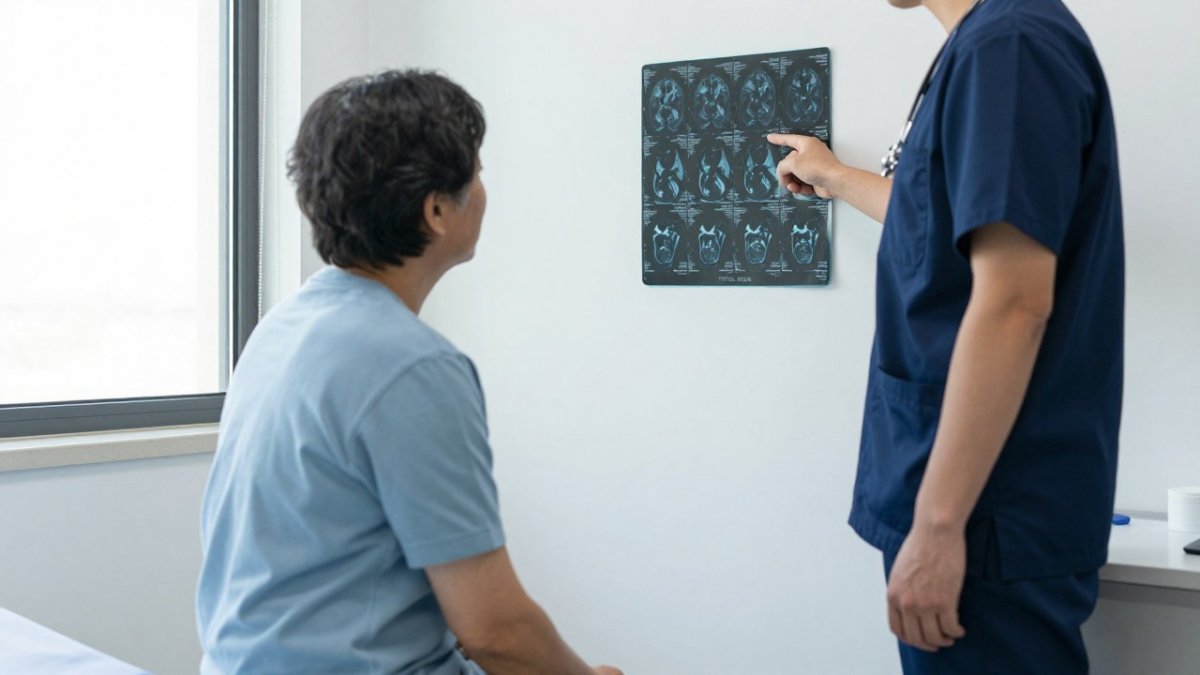
- Imaging review. We look at any MRI or X-ray you bring, and we can order imaging if needed.
- Candidacy decision. We explain whether decompression fits your case, and what else might work better.
The American Association of Neurological Surgeons patient guide on herniated discs is a useful primer on how disc pressure causes nerve symptoms, and it helps explain why a proper exam comes before any table time.
Who May Not Be a Candidate
Spinal decompression is not appropriate for every spine. A provider should screen for conditions where traction could be unsafe or ineffective, and you should disclose them even if you are not asked directly. Common reasons a provider may decline or delay treatment include:
- Pregnancy. Traction positioning and force are generally avoided during pregnancy unless cleared by the treating obstetric provider.
- Recent spinal fracture, surgery, or fusion. Hardware and healing tissue change how force is distributed, so timing and clearance matter.
- Severe osteoporosis or bone weakening. Reduced bone density raises concern for injury under traction.
- Spinal tumor, infection, or inflammatory disease. These require medical workup before any mechanical treatment.
- Abdominal aortic aneurysm or severe vascular disease. Positioning and force can be risky in these cases.
- Uncontrolled high blood pressure or certain heart conditions. Lying in traction positions can affect blood pressure and circulation.
- Severe disc herniation with progressive neurological loss. Weakness, foot drop, or bowel and bladder changes need urgent medical evaluation, not a table session.
Ask directly: "Are there any findings in my history or imaging that make traction unsafe for me?" If the answer is vague, get a second opinion.
Red Flags to Report Before Treatment
Some symptoms should pause the plan and trigger a medical review. Tell your provider before the first session if you have:
- New or worsening weakness in an arm or leg
- Numbness in the groin or inner thighs
- Loss of bladder or bowel control
- Pain that wakes you at night or does not change with position
- Unexplained weight loss, fever, or chills alongside back pain
- A history of cancer, even if treated years ago
These don't automatically rule out decompression, but they change the order of evaluation. A provider who rushes past them is skipping a step that protects you.
How to Signal Discomfort During Treatment
You are not expected to endure a session silently. Before the harness is fitted, agree on a simple signal: raise your hand, say "stop," or use a call button if one is provided. Ask the provider to pause the table immediately if you feel sharp pain, numbness, tingling that spreads, dizziness, or nausea. Mild stretching is expected; sharp or radiating pain is not. A provider should check in during the session and adjust force or position rather than telling you to push through.
What Does Spinal Decompression Feel Like?
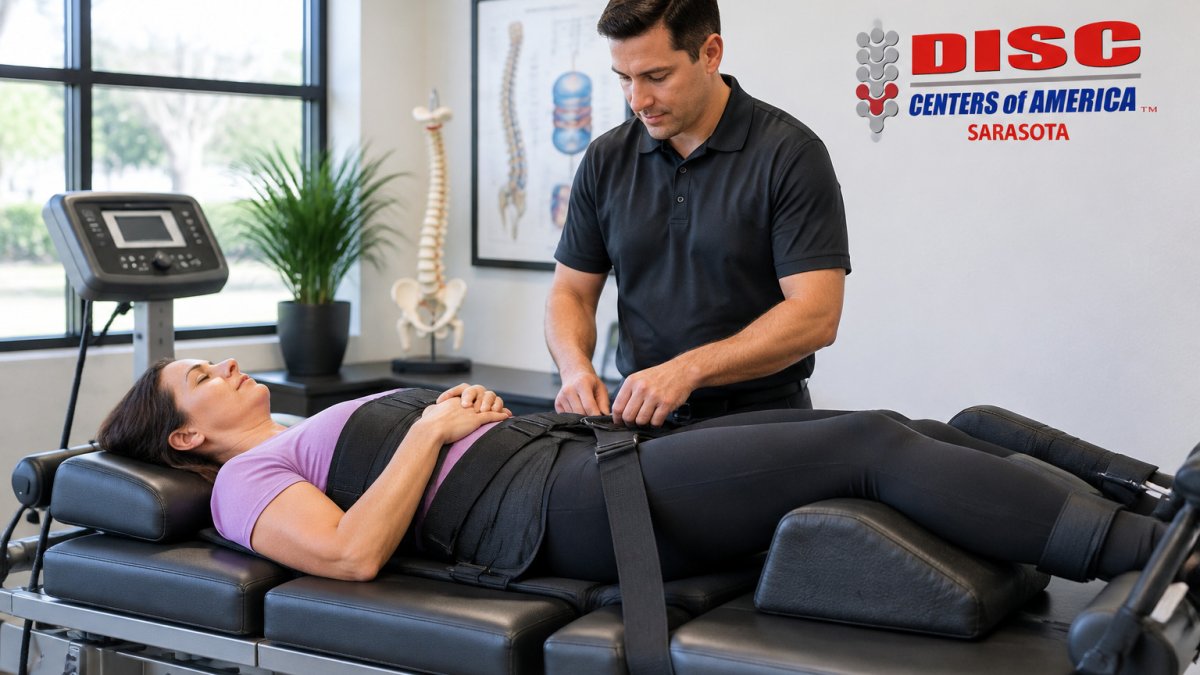
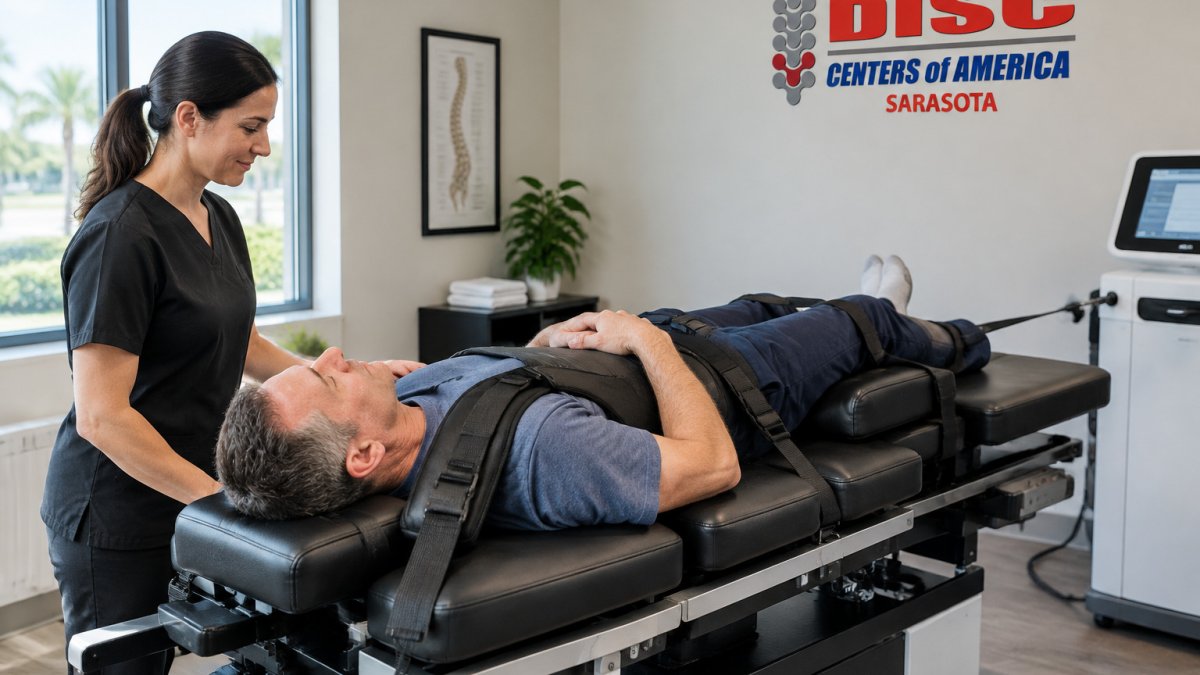
You lie fully clothed on a motorized table while a harness holds your hips or upper body, and the table applies slow, controlled traction that cycles between pull and rest.
What you actually notice:
- A mild stretch through the lower back or neck, similar to a firm tug
- A gentle rise and fall as the traction cycles repeat
- Relaxation in tight muscles as the session continues
- Occasional mild soreness in the hours afterward, usually fading within 24 to 48 hours
Many patients bring headphones or simply rest.
Want to hear how it went for people who were once in your position? Read the patient testimonials from others who came in skeptical and left with a plan.
How Long Does Spinal Decompression Take?
For a closer look, see our breakdown of how long spinal decompression takes.
A Minute-by-Minute Walkthrough of the First Visit
First visits run longer than follow-up sessions because the evaluation and setup happen once. A realistic first appointment often looks like this:
- Minutes 0-10: Check-in and paperwork. Complete intake forms, list medications, and hand over any imaging discs or reports. Bring the actual MRI or X-ray disc, not just the written report.
- Minutes 10-25: Consultation and history. The provider reviews symptoms, prior treatments, and goals. Mention red flags, prior surgeries, and any condition on the contraindication list.
- Minutes 25-35: Physical and neurological exam. Reflexes, sensation, strength, and range of motion are checked, along with how you sit, stand, and walk.
- Minutes 35-45: Imaging review and candidacy discussion. The provider reviews your MRI or X-ray and states whether decompression is appropriate. Ask what the goal is and what improvement would look like.
- Minutes 45-55: Harness fitting and table setup. The harness is fitted and the provider sets angle, force, and cycle pattern. Breathe and ask questions.
- Minutes 55-75: Treatment on the table. Traction cycles between pull and rest, usually at a conservative force setting on the first session.
- Minutes 75-85: Post-session check and instructions. The provider notes any soreness and gives aftercare instructions. You leave with a schedule and what to watch for.
Times vary by clinic and history complexity. Ask when you schedule: "How long should I block out for the first visit?"
What Changes on Follow-Up Visits
The provider may adjust force, angle, or harness position based on your response. If symptoms aren't changing after a defined block of visits, the protocol should be reassessed rather than repeated.
First visits run longer than follow-up sessions because the evaluation and setup happen once, so here is a realistic minute-by-minute breakdown.
| Time | What happens |
|---|---|
| Minutes 0-10 | Check-in and paperwork; hand over imaging discs or reports |
| Minutes 10-25 | Consultation and history; review symptoms, prior treatments, goals |
| Minutes 25-35 | Physical and neurological exam; reflexes, sensation, strength, range of motion |
| Minutes 35-45 | Imaging review and candidacy discussion |
| Minutes 45-55 | Harness fitting and table setup; angle, force, cycle pattern set |
| Minutes 55-75 | Treatment on the table; traction cycles between pull and rest |
| Minutes 75-85 | Post-session check and aftercare instructions |
What to Do After Spinal Decompression
The hours after your session matter more than most people expect. Your spine has just been unloaded, and the surrounding muscles need a chance to settle.
A simple post-session routine:
- Move gently. A short walk keeps blood flowing without loading the spine.
- Avoid strenuous activity for the rest of the day, especially bending, twisting, and overhead lifting.
- Use heat if needed. A warm pack on tight muscles can ease mild soreness.
- Log your symptoms. Note your pain level that evening so your provider can track your treatment response.
Spinal Decompression Treatment Plan and Timeline
Decompression does not suit every diagnosis, and some patients need additional care or other options.
Cost is a fair question. Insurance coverage for spinal decompression varies by plan, and many patients pay out of pocket. Our guide on whether insurance covers spinal decompression walks through what to check before you start.
Common Mistakes to Avoid During Your First Session
Arriving tense and uninformed can make the session harder, so it helps to ask questions beforehand. Tell your provider if the pull feels wrong, if you feel numbness, or if anything sharpens rather than eases, during the session, not after.
Other common missteps:
-
Eating a heavy meal right before. Lie down on a full stomach and you will be miserable.
-
Skipping the imaging review. Treatment without a clear diagnosis is guesswork.
-
Ignoring red flags. New weakness, loss of bladder control, or worsening nerve pain needs urgent medical attention, not another session.
If you have lingering questions before your first visit, our clinic resources answer the practical ones patients ask most.
Schedule Your Free MRI Review and Consultation
At Sarasota Disc Center, Dr. David Cifra offers a consultation with a free MRI review. We have served Sarasota and Manatee Counties since 1992, focusing on conservative care for people who want to avoid surgery.
To get started, call to request your free MRI review and consultation.
If you are ready to book, our step-by-step guide to scheduling your consultation covers what to bring and what to expect. For general background on disc injuries and treatment options, the National Institute of Arthritis and Musculoskeletal and Skin Diseases is a solid, unbiased place to read more. You can also review FDA information on how medical devices are cleared for market if you want to understand how decompression tables are regulated.
Chronic back or neck pain wears you down, and the fear of surgery makes every decision harder. At Sarasota Disc Center, we offer non-surgical spinal decompression, led by Dr. David Cifra. Our clinic uses advanced technology targeting disc and nerve pressure with a personalized, patient-focused approach. Call Sarasota Disc Center for a FREE MRI Review and Consultation.
Frequently Asked Questions
How painful is spinal decompression?
Decompression is generally described as a gentle stretching sensation. You can communicate with your provider throughout the session.
What should I wear to a spinal decompression appointment?
Wear comfortable, loose-fitting clothing that allows easy movement and access to your back or neck. Avoid restrictive garments, belts, or heavy jewelry. Your provider may ask you to change into a gown for proper harness fitting. Comfortable shoes are also recommended.
Can spinal decompression make symptoms worse?
If pain worsens significantly or persists after treatment, contact your provider. Spinal decompression is not appropriate for everyone, which is why a thorough screening is essential.
How many spinal decompression sessions might I need?
The number of sessions varies based on your condition, response to treatment, and treatment plan. Your provider will reassess your progress and adjust the plan as needed. Adhering to the recommended frequency is key to seeing results.