 blog
What Are the Best Alternatives to Steroid Injections for Sciatica?
Last Updated: October 25, 2026
Quick Summary
Alternatives to steroid injections for sciatica include physical therapy, targeted home exercises, over-the-counter medications, heat and ice therapy, and non-surgical spinal decompression. Most acute sciatica improves within 4-6 weeks with consistent conservative treatment, while spinal decompression may help if physical therapy hasn't resolved pain after 6-8 weeks.
- Physical therapy typically involves 2-3 sessions per week for 4-8 weeks with home exercises between sessions.
- Most acute sciatica episodes improve within 4-6 weeks with conservative treatment like physical therapy and home remedies.
- Non-surgical spinal decompression uses specialized equipment to gently stretch the spine and may help relieve pressure from herniated discs.
- Perform home stretches and exercises 4-5 days per week, holding stretches for 20-30 seconds without bouncing.
- If pain persists beyond 2-3 weeks despite consistent home care, professional evaluation becomes important.
Table of Contents
- Understanding Sciatica and Why Alternatives Matter
- Physical Therapy for Sciatica: Evidence and Outcomes
- Sciatica Exercises and Stretches You Can Do at Home
- Home Remedies for Sciatica Pain Relief
- Medications and Over-the-Counter Options
- How Long Does Sciatica Last Without Injections?
- Non-Surgical Spinal Decompression: A Different Approach
- Deciding Your Next Step in Sciatica Treatment
- Frequently Asked Questions
Understanding Sciatica and Why Alternatives Matter
Sciatica causes pain that radiates down the leg when the sciatic nerve becomes compressed or inflamed. The pain often starts in the lower back and travels through the buttocks into the leg, sometimes reaching the foot.
For years, steroid injections have been a standard treatment for sciatica. These injections deliver corticosteroids directly to the area around the inflamed nerve to reduce swelling. But steroid injections aren't the only option, and for many patients, they're not the best first step.
At Sarasota Disc Center, we work with patients who want to explore alternatives to steroid injections for sciatica. Some patients worry about repeated injections. Others prefer to address the root cause rather than mask symptoms temporarily. Explore non-surgical sciatica pain relief methods that work as alternatives to injections.
The good news: multiple evidence-based alternatives exist. Physical therapy, targeted exercises, home remedies, and non-surgical spinal decompression can all reduce sciatic pain. The challenge is knowing which approach fits your situation, and when to seek professional care.
Physical Therapy for Sciatica: Evidence and Outcomes
Physical therapy remains one of the most researched treatments for sciatica. A qualified physical therapist designs exercises that reduce nerve compression, strengthen supporting muscles, and improve flexibility. The goal isn't just pain relief, it's restoring function so you can move without limitation.
Here's what makes physical therapy effective:
- Targets the underlying cause, not just symptoms
- Builds strength in core and lower back muscles
- Improves spinal alignment and posture
- Reduces inflammation naturally over time
- Works for both acute and chronic sciatica
Physical therapy typically involves 2-3 sessions per week for 4-8 weeks, though timelines vary. You'll also perform exercises at home between sessions. Consistency matters, patients who stick with their home exercise program see better results than those who skip sessions.
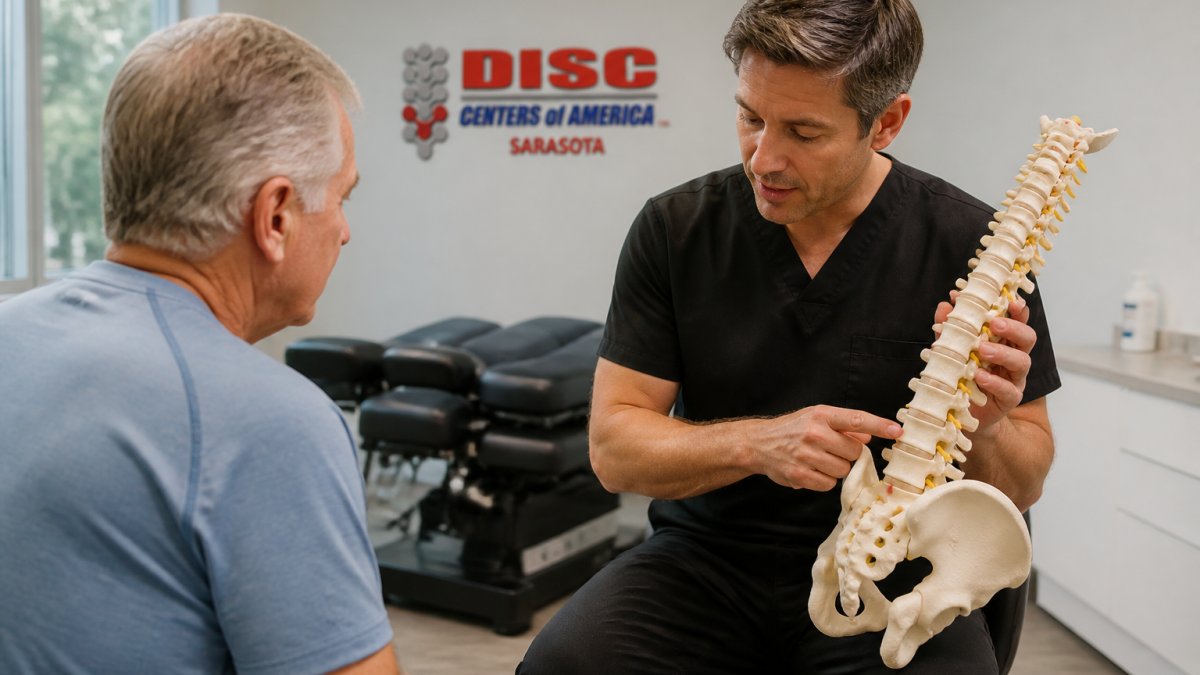
One common question we hear: "I tried physical therapy for six months and it didn't help. How is spinal decompression actually different?" The answer lies in how these treatments work. Physical therapy strengthens muscles and improves movement patterns. Spinal decompression uses specialized equipment to gently stretch the spine, creating negative pressure that may help pull herniated disc material away from the nerve and relieve pressure. If your sciatica stems from a herniated disc pressing directly on the nerve, decompression targets that mechanical problem.
For many patients, physical therapy is the right first step. But if nerve compression is severe or physical therapy hasn't resolved your pain after 6-8 weeks, exploring alternatives like spinal decompression therapy makes sense.
Sciatica Exercises and Stretches You Can Do at Home
Gentle movement is one of the most powerful tools for managing sciatic pain. The right exercises reduce nerve compression, strengthen muscles that support your spine, and improve flexibility.
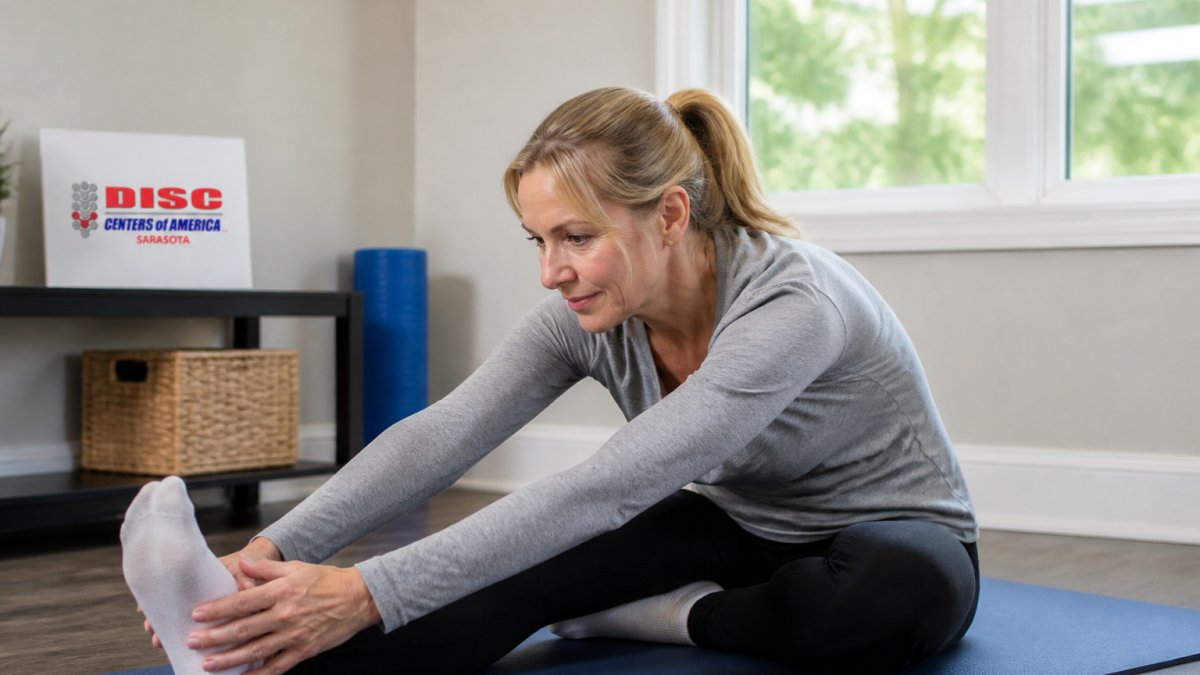
Start with these foundational stretches and exercises:
Hamstring Stretch (Seated) Sit on the floor with one leg extended. Lean forward gently toward your toes. Hold for 30 seconds. This stretch reduces tension on the sciatic nerve.
Piriformis Stretch Lie on your back. Cross one ankle over the opposite knee and pull the bottom leg toward your chest. Hold 30 seconds.
Knee-to-Chest Stretch Lie on your back. Pull one knee toward your chest while keeping the other leg extended. Hold 20-30 seconds. This gently decompresses the lower spine.
Glute Bridges Lie on your back with knees bent. Push through your heels to lift your hips. Hold 2 seconds at the top. Do 10-15 reps.
Cat-Cow Stretch On hands and knees, alternate between arching your back (cow) and rounding it (cat). Move slowly and controlled. Do 10-12 reps. This mobilizes your spine and reduces stiffness.
Perform these exercises 4-5 days per week. Hold stretches for 20-30 seconds. Avoid bouncing or forcing movement, gentle, sustained stretching works better. If any exercise increases pain, stop immediately and try a different movement.
Walking is also excellent for sciatica. A 20-30 minute walk at a comfortable pace reduces inflammation and keeps you mobile.
Home Remedies for Sciatica Pain Relief
Before reaching for medication or considering injections, many effective home remedies can reduce sciatic pain.
Ice Therapy Cold reduces inflammation and numbs pain.
Heat Therapy After the first few days, heat relaxes tight muscles and increases blood flow. Use heating pads for 15-20 minutes at a time.
Rest and Activity Modification Avoid activities that aggravate your pain, heavy lifting, prolonged sitting, or intense exercise. But don't stay completely inactive.
Posture and Ergonomics Poor posture increases pressure on the sciatic nerve. Sit with your back against the chair, feet flat on the floor.
Massage and Foam Rolling Tight muscles around the sciatic nerve increase compression. Self-massage with a foam roller or massage stick can release tension.
Sleep Position Sleep position can be a factor. Side sleepers should place a pillow between their knees to keep their spine aligned.
These home remedies work best for mild to moderate sciatica. If pain persists beyond 2-3 weeks despite consistent home care, professional evaluation becomes important.
Medications and Over-the-Counter Options
Medication can reduce pain and inflammation while other treatments address the underlying cause. Over-the-counter options are often a good starting point.
CALL TODAY TO SCHEDULE YOUR FREE CONSULTATION →
Over-the-Counter NSAIDs Ibuprofen and naproxen reduce both pain and inflammation. Take as directed on the package. Many people find that regular dosing for 7-10 days provides better relief than occasional use. NSAIDs may work well combined with stretching and activity modification.
Acetaminophen Acetaminophen reduces pain but doesn't address inflammation. It's an option if you cannot tolerate NSAIDs, though it's generally less effective for nerve pain.
Prescription Medications For moderate to severe pain, doctors sometimes prescribe:
- Gabapentin or pregabalin: These nerve pain medications work directly on nerve signals. They're particularly effective for radiating leg pain.
- Muscle relaxants: Medications like cyclobenzaprine reduce muscle tension that contributes to nerve compression.
- Duloxetine: This antidepressant also reduces chronic pain by affecting neurotransmitters.
- Nortriptyline: Another medication that addresses nerve pain, especially at night.
Prescription medications can provide significant relief, but they work best as part of a broader treatment plan that includes physical therapy and exercise. Medication alone may not resolve sciatica long-term.
Watch out: Never combine medications without consulting your doctor. Some combinations increase side effects or reduce effectiveness.
Several medication options can help manage sciatic pain while other treatments address the underlying cause.
| Medication Type | Examples | Best For | Key Consideration |
|---|---|---|---|
| Over-the-counter NSAIDs | Ibuprofen, naproxen | Pain and inflammation | Regular dosing for 7-10 days works better than occasional use |
| Acetaminophen | Acetaminophen | Pain relief | Less effective for nerve pain than NSAIDs |
| Nerve pain medications | Gabapentin, pregabalin | Radiating leg pain | Prescription required |
| Muscle relaxants | Cyclobenzaprine | Muscle tension | Prescription required |
| Antidepressants | Duloxetine, nortriptyline | Chronic nerve pain | Work by affecting neurotransmitters |
How Long Does Sciatica Last Without Injections?
Recovery timelines vary based on severity and treatment approach. Understanding realistic expectations helps you stay committed to your treatment plan.
Most acute sciatica episodes improve within 4-6 weeks with conservative treatment, physical therapy, home remedies, and activity modification. Some people recover faster. Others need 8-12 weeks of consistent care.
Chronic sciatica that has persisted for months or years typically requires longer treatment. But even long-standing pain often improves with the right approach. Recovery isn't always linear, you may have good days and difficult days. That's normal.
Several factors influence recovery speed:
- Severity of nerve compression: Mild compression resolves faster than severe compression.
- Treatment consistency: Patients who perform home exercises and stretches daily recover faster than those who skip sessions.
- Underlying cause: Sciatica from muscle tightness resolves faster than sciatica from a herniated disc.
- Age and overall health: Younger, healthier patients often recover more quickly, though age alone doesn't determine outcome.
- Lifestyle factors: Staying active, maintaining good posture, and managing stress all support faster recovery.
The key insight: patience combined with consistent action can be beneficial. You may not feel better after one stretch or one physical therapy session. But after consistent effort, many people notice meaningful improvement.
Non-Surgical Spinal Decompression: A Different Approach
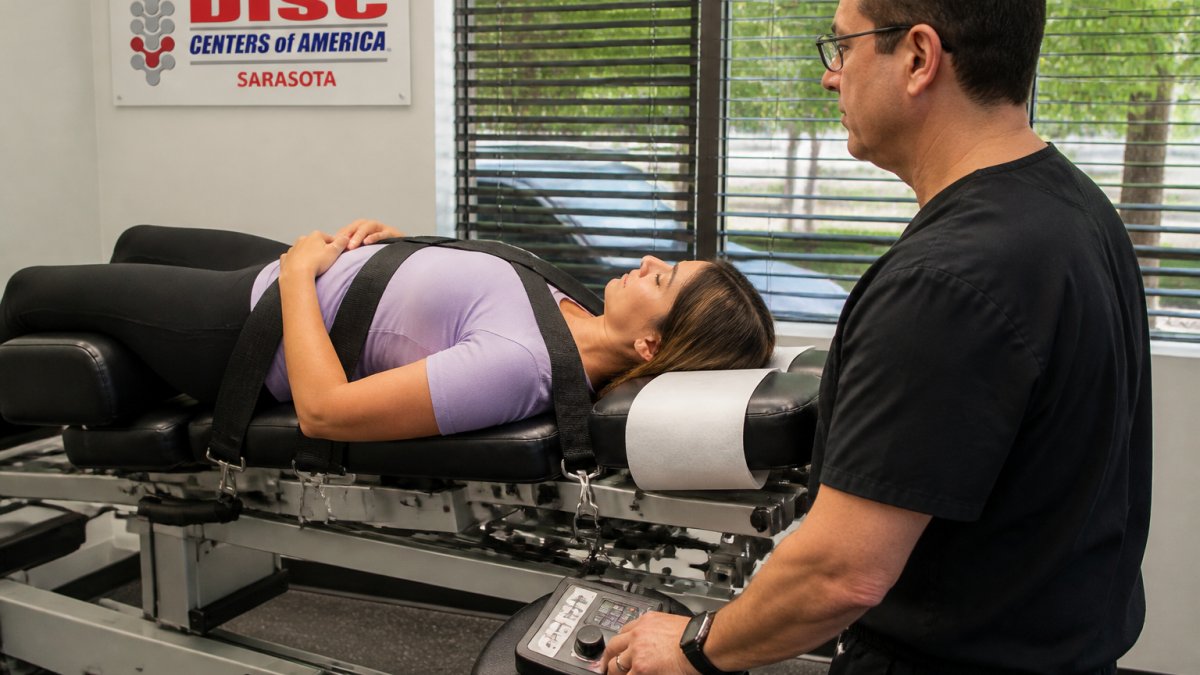
If physical therapy, exercises, and home remedies haven't resolved your sciatica after 6-8 weeks, non-surgical spinal decompression offers a different mechanism of relief. This treatment uses specialized equipment to gently stretch the spine, creating negative pressure that may help pull herniated disc material away from the nerve.
Unlike steroid injections, which reduce inflammation temporarily, decompression aims to address the mechanical problem. If a herniated disc is pressing on your sciatic nerve, decompression may help relieve that pressure and support the nerve's healing process.
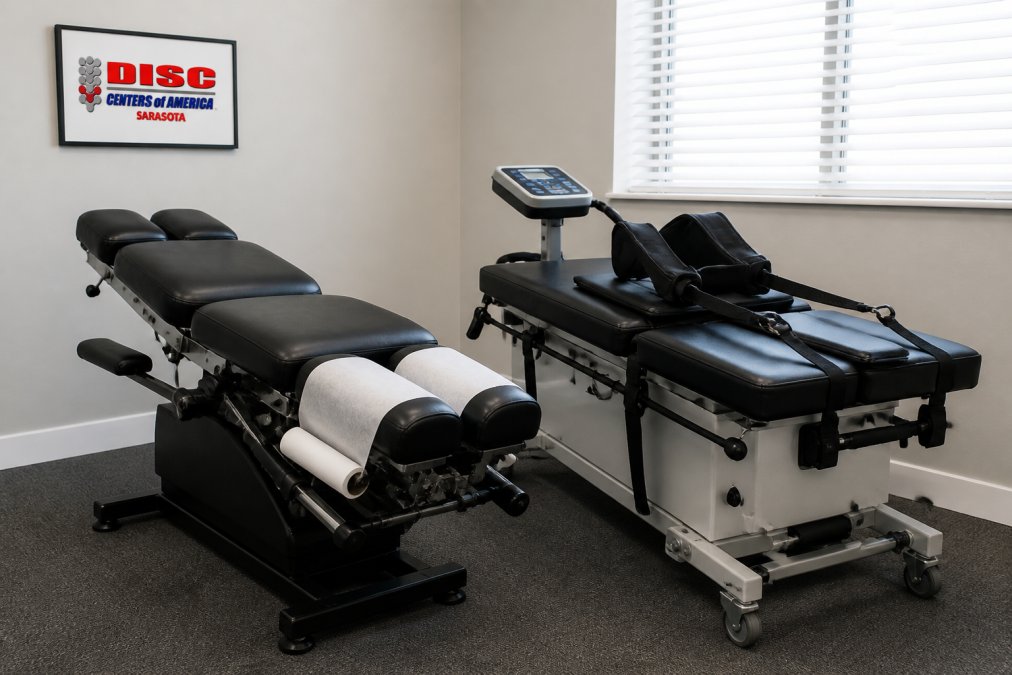
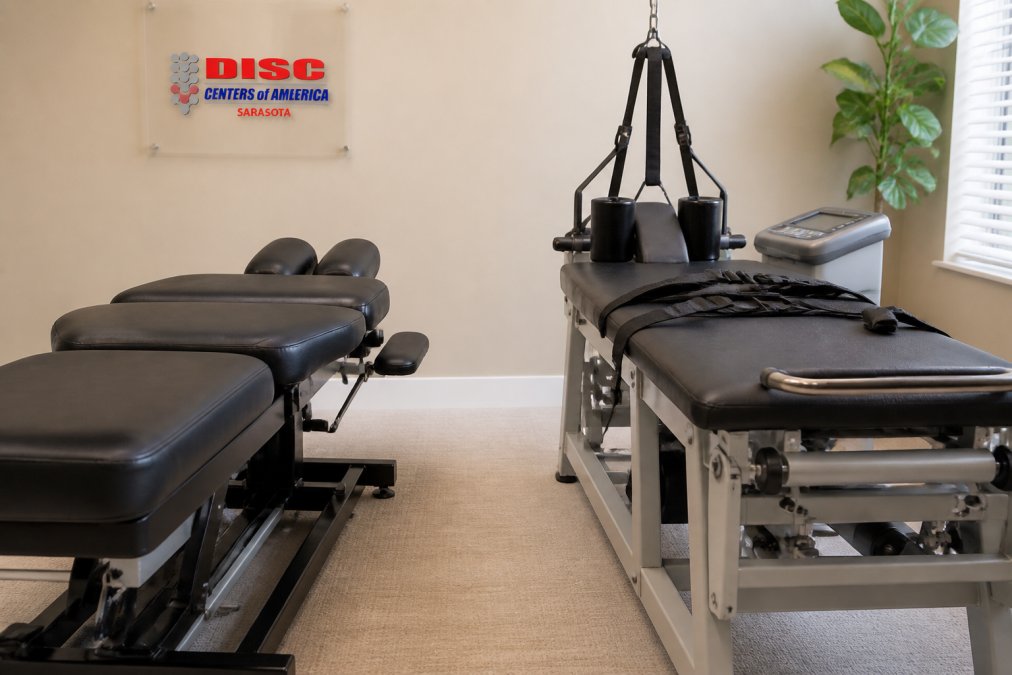
Decompression therapy involves lying on a computerized table that gently stretches your spine in a controlled, rhythmic pattern. Sessions typically last 20-30 minutes. Most treatment plans involve 15-30 sessions over 4-6 weeks.
The evidence supporting decompression continues to grow. Many patients who haven't found relief through physical therapy alone may see improvement with decompression. It may be particularly effective for sciatica caused by disc herniation or disc bulging.
One advantage over steroid injections: decompression doesn't involve injecting medication into your spine. For patients concerned about injection side effects or those who want to address the root cause rather than temporarily mask symptoms, decompression is worth considering.
Learn more about how spinal decompression works and what outcomes to expect to determine if this approach fits your situation.
Deciding Your Next Step in Sciatica Treatment
Choosing between alternatives to steroid injections means honestly assessing where you are in your recovery journey.
Start here if you have mild to moderate sciatica: Begin with physical therapy, home stretches, and over-the-counter medication. Give this approach 6-8 weeks of consistent effort.
Consider alternatives if initial treatment hasn't helped: After 6-8 weeks of physical therapy without meaningful improvement, explore non-surgical spinal decompression or other alternatives. Your pain pattern and imaging results guide this decision.
Seek professional evaluation if: Your pain is severe and limiting daily function. You have numbness or weakness in your leg or foot. Your symptoms are worsening despite home care.
At Sarasota Disc Center, we help patients navigate these decisions with a clear-eyed assessment of what's likely to work.
Many patients ask whether trying other options first makes surgery more complicated later. The answer: conservative treatment is generally not considered to make future surgery harder.
Ready to explore alternatives to steroid injections? Learn about booking a spinal decompression consultation to discuss which treatment path makes sense for your sciatica. You can also discover seven conservative steps to avoid back surgery for a comprehensive overview of non-surgical options.
Sciatic pain doesn't have to control your life, and steroid injections aren't your only path forward. Physical therapy, targeted exercises, home remedies, and non-surgical spinal decompression have helped many patients find relief.
Frequently Asked Questions
Does physical therapy help sciatica?
Physical therapy for sciatica is one of the most evidence-backed conservative treatments. A qualified therapist designs exercises to reduce nerve compression, strengthen supporting muscles, and improve flexibility. Most patients see meaningful improvement within 4-6 weeks of consistent therapy, though results vary based on the underlying cause and severity of nerve compression.
What can I use for sciatica pain relief at home?
Home remedies for sciatica pain include ice packs for the first 48 hours after acute pain onset, heat therapy after that to relax muscles, gentle stretching, and over-the-counter NSAIDs like ibuprofen. Walking at a comfortable pace, proper posture, and avoiding prolonged sitting also help. Many patients find benefit from combining several approaches rather than relying on one method alone.
How long does sciatica usually take to improve without injections?
How long sciatica lasts depends on the cause and treatment approach. Without intervention, acute sciatica often improves within 4-6 weeks. With active treatment like physical therapy or exercise, many patients see relief in 2-4 weeks. Chronic sciatica may take 8-12 weeks or longer to resolve. Some cases require more advanced options like spinal decompression if conservative care doesn't provide adequate relief.
Can spinal decompression help sciatica?
Non-surgical spinal decompression aims to gently stretch the spine to reduce pressure on the sciatic nerve and may help create space for herniated disc material to retract. This approach targets the source of nerve and disc pressure rather than just masking pain. It's designed for patients who haven't found relief through physical therapy, exercises, or medications, offering a non-invasive alternative to steroid injections or surgery.