 How-to
How to Choose a Spinal Decompression Clinic
Last Updated: October 25, 2026
Quick Summary
A spinal decompression clinic should have providers with appropriate licensure and specific training in decompression therapy, use motorized equipment rather than manual traction, and perform thorough clinical assessment including imaging review and nerve testing before treatment begins.
- Motorized decompression tables deliver precise, controlled pressure superior to traditional manual traction for targeted spinal treatment.
- Best candidates have clear nerve involvement confirmed by imaging that matches their symptoms, such as herniated discs or sciatica.
- Reputable clinics will not promise guaranteed results and will adjust treatment plans if you're not improving after initial sessions.
- Ask providers how many patients they've treated with your specific condition to gauge their experience level.
- Verify insurance coverage before starting treatment, as coverage varies widely by plan and diagnosis.
Table of Contents
- What Spinal Decompression Therapy Is and How It Works
- Understanding Spinal Decompression vs Traction
- Determining If You Are a Spinal Decompression Candidate
- Evaluating Provider Credentials and Scope of Practice
- What You Should Know About Spinal Decompression Therapy Risks
- Understanding Spinal Decompression Treatment Cost and Insurance
- Your Clinic Selection Checklist and Next Steps
- Frequently Asked Questions
What Spinal Decompression Therapy Is and How It Works
Spinal decompression therapy is a non-surgical treatment that gently stretches the spine to relieve pressure on compressed nerves and discs. The goal is to create space between vertebrae, allowing herniated or bulging discs to retract and reducing the nerve involvement that causes pain.
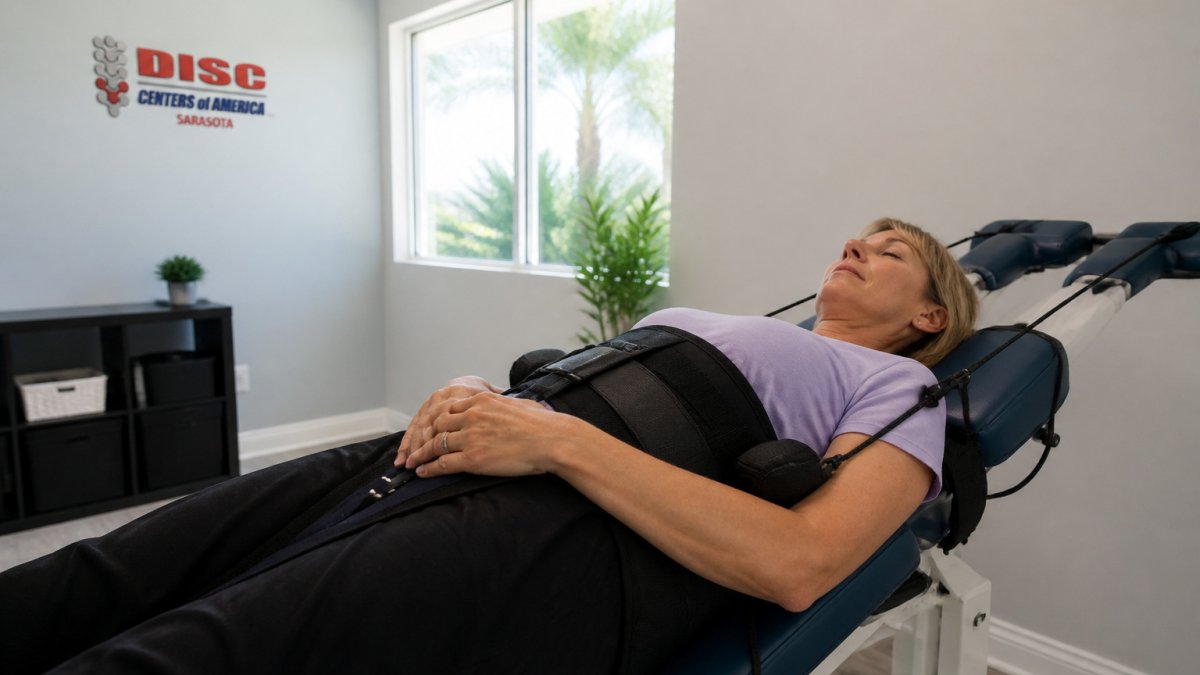
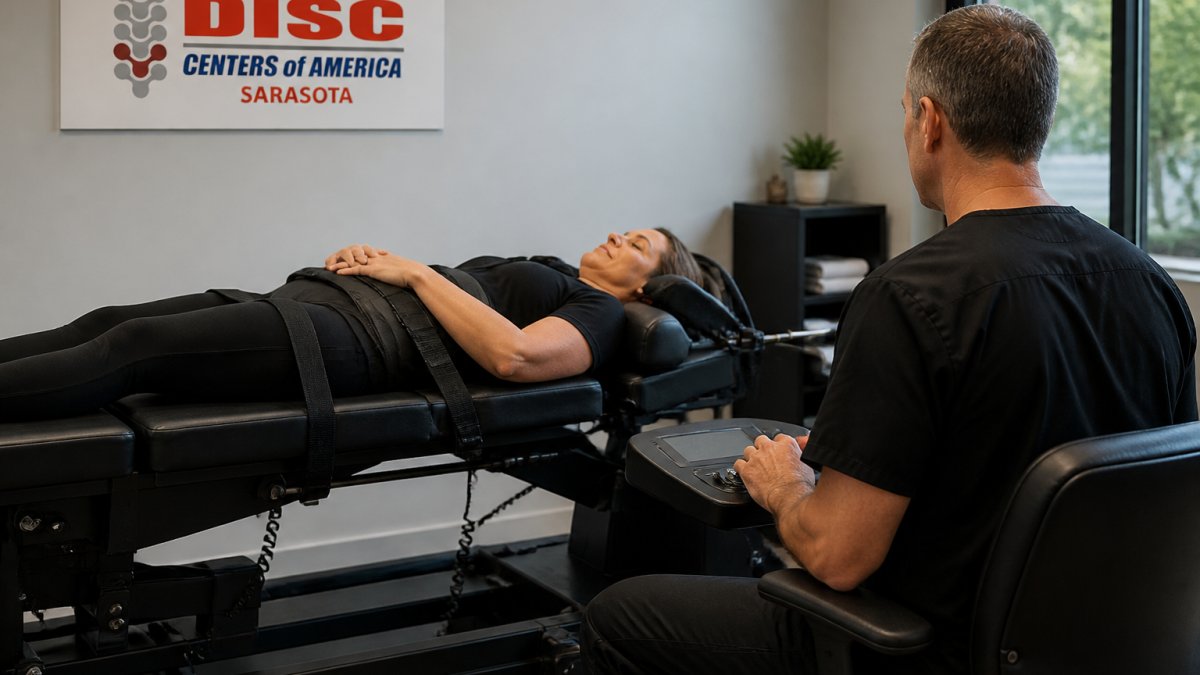
At Sarasota Disc Center, we use motorized traction tables that apply controlled, gradual force to decompress the spine. Unlike manual traction, which relies on a therapist's hands, motorized equipment delivers consistent, precise pressure.
The process works by changing the pressure inside the disc. When the spine is decompressed, negative pressure builds up inside the disc space (Influences of spinal decompression therapy and general traction therapy on the pain...).
Treatment typically involves lying on a traction table while the motorized system gently pulls your spine. Sessions usually last 20 to 30 minutes. Most treatment plans span several weeks, with sessions scheduled multiple times per week.
To understand whether spinal decompression is right for your situation, learn more about the evidence for spinal decompression therapy and realistic outcomes.
Understanding Spinal Decompression vs Traction
The terms "spinal decompression" and "traction" are sometimes used interchangeably, but they have important differences in how they work and what they're designed to treat.
Traditional traction applies steady, continuous force to stretch the spine. Manual traction uses a therapist's hands or simple pulley systems. The force is constant and doesn't change during the session.
Motorized spinal decompression therapy uses computerized equipment that applies force in cycles. The pressure increases and decreases in a controlled pattern.
The key difference comes down to control and specificity. Motorized decompression allows therapists to target exact spinal levels, adjust force gradually, and monitor how your spine responds. Traditional traction is more general and less precise.
For patients with herniated discs, nerve compression, or sciatica, motorized spinal decompression therapy often works better because it addresses the root cause.
Understanding this distinction matters when you're evaluating clinics. Ask whether they use motorized decompression tables or traditional traction. The technology makes a real difference in treatment outcomes and how your body responds to therapy.
Compare spinal decompression and traction approaches in detail to see which fits your clinical picture.
Determining If You Are a Spinal Decompression Candidate
Not everyone with back pain or neck pain is a good candidate for spinal decompression therapy. Your specific spinal condition, symptom severity, and health factors determine whether this treatment is appropriate for you.
Common conditions that respond well to spinal decompression include:
- Herniated discs pressing on nerves
- Bulging discs causing leg or arm pain
- Sciatica from disc pressure
- Degenerative disc disease with nerve involvement
- Chronic back or neck pain from disc problems
- Post-surgical pain from failed previous treatments
The best candidates typically have clear nerve involvement. This means imaging shows a disc problem, and your symptoms match that location.
Health factors that may disqualify you include:
- Severe osteoporosis or bone density problems
- Active infection in the spine
- Spinal fractures or instability
- Pregnancy
- Certain metal implants that conflict with imaging
- Severe stenosis (extreme narrowing of the spinal canal)
Your age alone doesn't determine candidacy. Patients in their 50s, 60s, and beyond can respond well to spinal decompression if their spinal condition is appropriate. What matters more is whether imaging shows a treatable disc problem and whether your symptoms match that problem.
Progressive nerve involvement is a key indicator. If your pain is getting worse, numbness is spreading, or weakness is developing, spinal decompression may help stop that progression. Early treatment often produces better results than waiting until nerve damage becomes severe.
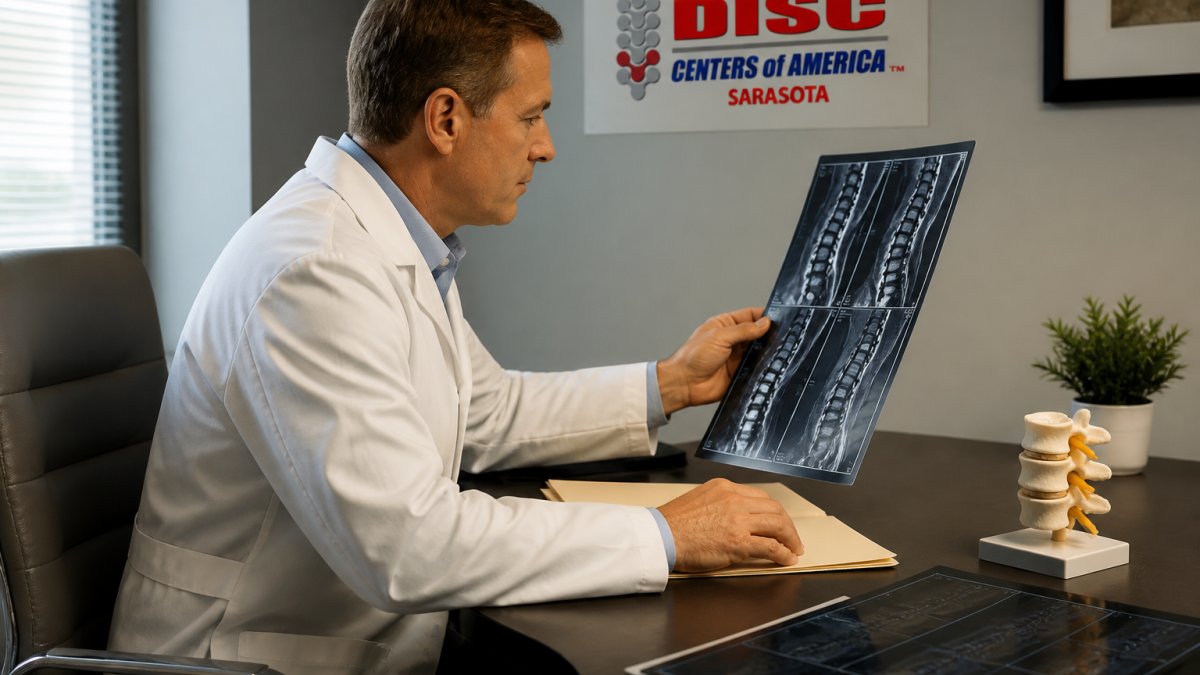
A qualified spinal decompression clinic will perform a thorough clinical assessment before starting treatment. This includes reviewing your imaging, testing your nerve function, and understanding your symptom history. This evaluation determines whether decompression is right for you or whether another approach would be more effective.
Evaluating Provider Credentials and Scope of Practice
Choosing the right provider is as important as choosing the right treatment. Not all clinics that offer spinal decompression are equally qualified to deliver it safely and effectively.
Look for these credentials and qualifications:
- Licensure appropriate to their profession (chiropractor, physical therapist, medical doctor, or orthopedic specialist)
- Specific training and certification in spinal decompression therapy
- Experience treating patients with conditions similar to yours
- Continuing education in spine care and decompression techniques
- Membership in relevant professional organizations
The provider's scope of practice matters. A chiropractor licensed in your state can legally perform spinal decompression, but their training and background vary widely. Ask how many patients they've treated with decompression and what their experience level is.
Understanding their clinical assessment process is critical. A reputable clinic will:
- Review your MRI or imaging carefully
- Perform orthopedic and neurological testing
- Assess nerve function and symptom severity
- Discuss your medical history and any contraindications
- Explain why decompression is appropriate for your situation
- Answer your questions about risks and expected outcomes
Avoid clinics that promise guaranteed results or claim spinal decompression works for every back pain condition. Honest providers acknowledge that treatment works well for some patients and less well for others. They're willing to discuss realistic expectations based on your specific clinical picture.
Ask about their approach to patients who don't improve. Do they monitor your progress? Will they adjust your treatment plan if you're not seeing results? Will they refer you to another specialist if decompression isn't working?
CALL TODAY TO SCHEDULE YOUR FREE CONSULTATION →
What You Should Know About Spinal Decompression Therapy Risks
Like any medical treatment, spinal decompression therapy carries potential risks and side effects. Understanding these helps you make an informed decision and know what to watch for during treatment.
Common, mild side effects include:
- Temporary muscle soreness after sessions
- Mild discomfort during initial treatments
- Fatigue or tiredness following therapy
- Slight increase in pain before improvement begins
These typically resolve within a few days. They don't signal that treatment is harmful, but they're worth monitoring.
More serious risks are uncommon but possible:
- Worsening of existing nerve damage if the condition is not properly assessed
- Disc rupture in rare cases of severe degeneration
- Cauda equina syndrome if a large disc extrusion goes undetected (this is a medical emergency)
- Increased pain if the spinal condition is misdiagnosed
Watch out: Severe, sudden pain during or after treatment, new numbness or weakness, loss of bowel or bladder control, or progressive neurological decline should prompt immediate medical attention.
Certain conditions make spinal decompression risky or inappropriate. Active spinal infection, severe osteoporosis, spinal fractures, and advanced stenosis all contraindicate treatment. This is why thorough clinical assessment before starting therapy is essential.
Your medical history matters. Patients with multiple prior spinal surgeries, severe degenerative changes, or advanced age may have higher risk, though age alone isn't a barrier. Patients with unstable spines or significant structural problems may not be suitable candidates.
The risk of serious complications is low when treatment is provided by a qualified provider to appropriate candidates. However, risk is never zero. Honest clinics discuss realistic risks and explain how they minimize them through careful patient selection and monitoring.
Understanding Spinal Decompression Treatment Cost and Insurance
Treatment cost varies based on several factors: the number of sessions needed, your specific treatment plan, the clinic's location and overhead, and whether your insurance covers the service.
Insurance coverage for spinal decompression is inconsistent. Some plans cover it fully or partially. Others don't cover it at all. Coverage depends on your specific plan, your diagnosis, and whether your provider is in-network.
Contact your insurance company before starting treatment. Ask whether spinal decompression is a covered service under your plan. If it is, ask what documentation they need and whether prior approval is required.
Questions to ask your clinic about cost:
- What is the total cost for a typical treatment plan?
- How many sessions are included?
- Are there additional fees for imaging, assessment, or follow-up?
- Do they offer payment plans if insurance doesn't cover treatment?
- What happens if you need more sessions than initially planned?
- Is there a refund or adjustment if you improve faster than expected?
For detailed cost information and insurance guidance, explore the spinal decompression treatment cost guide and learn what insurance typically covers.
Out-of-pocket costs are a real consideration. If your insurance doesn't cover treatment, you'll pay the full clinic fee. Some clinics offer financing options or discounted rates for self-pay patients.
Comparing cost across clinics is reasonable, but don't let price alone drive your decision. A cheaper clinic might use outdated equipment, employ less experienced providers, or deliver lower-quality care.
Your Clinic Selection Checklist and Next Steps
Choosing a spinal decompression clinic requires evaluating multiple factors. Use this checklist to compare options and make an informed decision.
| Evaluation Criteria | What to Look For | Why It Matters |
|---|---|---|
| Provider Credentials | Licensure + decompression training | Ensures qualified, trained staff |
| Clinical Assessment | Thorough imaging review + nerve testing | Confirms you're a good candidate |
| Equipment Quality | Motorized decompression table | Better precision and outcomes |
| Treatment Plan | Specific session count + timeline | Shows realistic expectations |
| Insurance Handling | In-network status + coverage verification | Reduces financial surprises |
| Progress Monitoring | Regular reassessment + plan adjustments | Ensures treatment is working |
| Risk Discussion | Honest talk about side effects + contraindications | Shows transparency and safety focus |
| Facility Cleanliness | Professional, clean environment | Reduces infection risk |
Steps to take now:
Start by gathering information about clinics in your area. Ask your primary care doctor or spine specialist for referrals. Check online reviews and testimonials from actual patients.
Call clinics and ask about their experience with your specific condition. Ask how many patients they've treated and what results they typically see. A clinic confident in their work will answer these questions directly.
Schedule a consultation. Bring your MRI or imaging if you have it. Ask the provider to explain why spinal decompression is appropriate for your situation. Ask about their treatment plan, expected timeline, and realistic outcomes.
Book a spinal decompression consultation with our team to discuss your specific situation and explore whether treatment is right for you. At Sarasota Disc Center, we provide a free MRI review and consultation. Dr.
Choosing the right spinal decompression clinic is one of the most important decisions in your treatment journey.
Frequently Asked Questions
What should I ask a spinal decompression clinic before starting treatment?
Ask about the provider's credentials, experience with your specific condition, how treatment will be customized to your clinical picture, expected timeline and frequency of visits, what outcomes are realistic for your situation, how progress will be monitored, costs and insurance coverage, and what safety screening they perform. Request information about their approach to contraindications and whether they refer patients to surgery when spinal decompression is not appropriate.
How long does spinal decompression treatment typically take?
Treatment duration varies based on your condition severity, location of disc problem, and response to therapy. Most treatment plans span several weeks to months with multiple sessions per week. Your clinic should provide a specific timeline during your initial assessment. Ask how frequently you need to attend and whether the schedule can be adjusted for your work or personal commitments.
Is spinal decompression covered by insurance?
Coverage varies by insurance plan and your specific diagnosis. Some plans cover nonsurgical spinal decompression when medically necessary, while others classify it as experimental or elective. Contact your insurer directly with your diagnosis and ask specifically about coverage for motorized traction therapy or spinal decompression. A reputable clinic can help you understand your benefits and discuss payment options if coverage is limited or unavailable.
Can spinal decompression help if I've already had back surgery?
Spinal decompression may be appropriate for some post-surgical patients still experiencing chronic pain, but this depends on your surgical history, current symptoms, and the location of remaining disc problems. A qualified provider will conduct a thorough clinical assessment and review your imaging to determine if you are a candidate. Some surgical complications or scar tissue may affect suitability, so honest disclosure of your surgical history is essential during your consultation.