 How-to
5 Spinal Decompression Facts Every Athlete Should Know
Quick Summary
Spinal decompression athletes use is a non-surgical treatment that gently stretches the spine to take pressure off discs and nerves. Sessions are done on a motorized table, usually fully clothed, with no injections or incisions. It is often considered for back pain, including herniated discs.
- Spinal decompression is non-surgical and involves no injections or incisions.
- Sessions are typically done on a motorized table with the patient fully clothed.
- Treatment is designed around the patient's diagnosis and comfort.
- The table should never be used by someone with an unstable spine or certain serious conditions.
- A proper evaluation should come before starting treatment.
Table of Contents
- What Spinal Decompression Is and How It Works
- Common Spinal Injuries in Athletes and Why Discs Are Vulnerable
- Spinal Decompression Exercises for Back Pain and Their Role in Care
- Nonsurgical Spinal Decompression for Herniated Disc: What to Expect
- Spinal Decompression Risks and Benefits for Active Adults
- Return to Sport After Back Injury: A Phased Progression
- Booking a Consultation to Review Your Spinal Imaging
- Frequently Asked Questions
What Spinal Decompression Is and How It Works
Spinal decompression is a non-surgical treatment that gently stretches the spine to take pressure off the discs and nerves, and it is one of the more common options considered by spinal decompression athletes dealing with back pain. This is a common question for athletes who have been told their back pain is "just a strain."
Key points about the treatment:
- It is non-surgical and does not involve injections or incisions
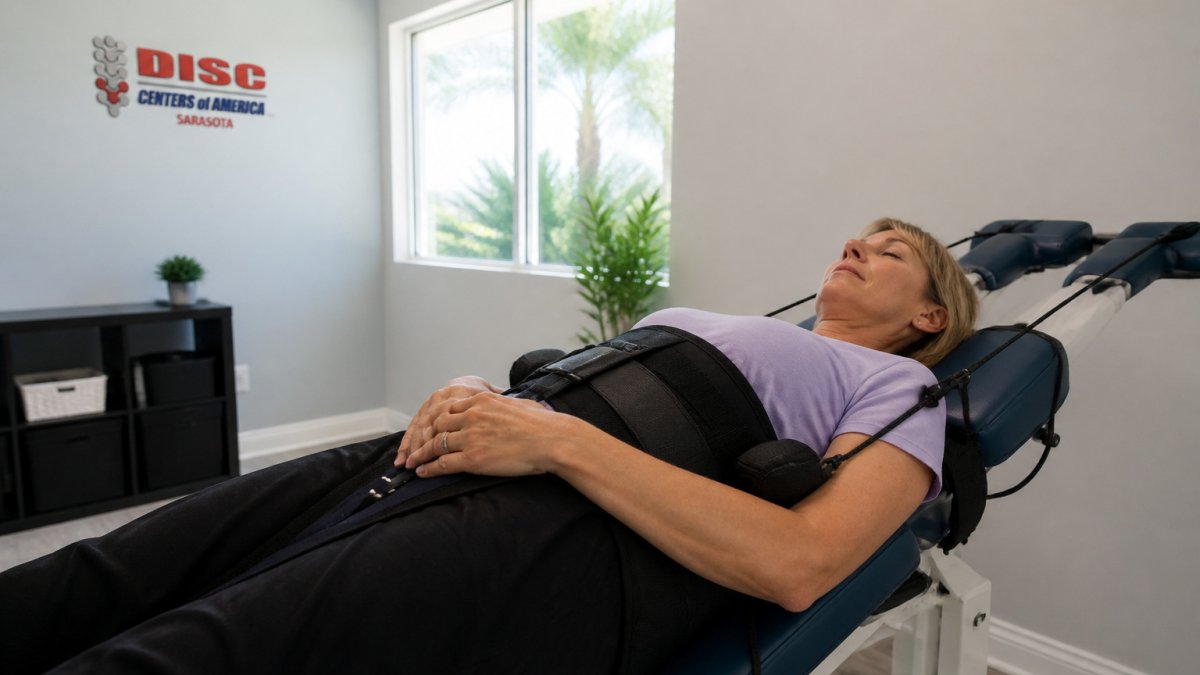
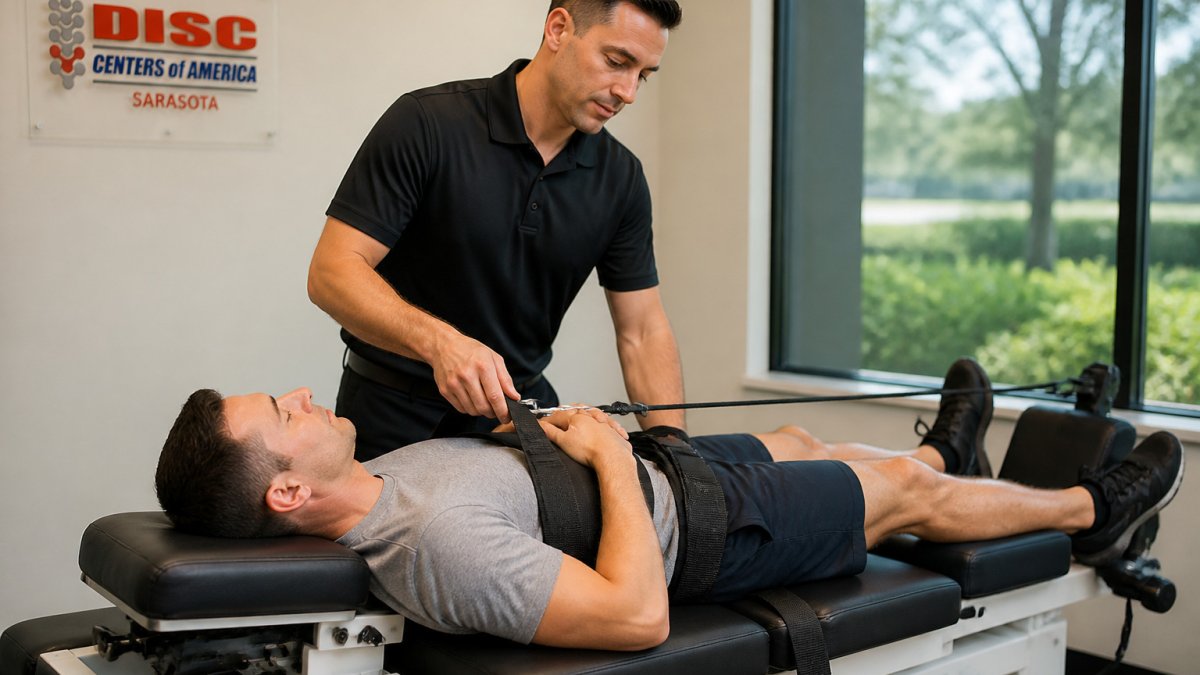
- Sessions are typically done on a motorized table
- The patient usually lies down fully clothed
- Each session is designed around the patient's diagnosis and comfort
How Motorized Traction Reduces Disc Pressure
Watch out: the table should never be used by someone with an unstable spine or certain serious conditions. A proper evaluation comes first.
Common Spinal Injuries in Athletes and Why Discs Are Vulnerable
Athletes put repeated load through the lower back, especially in sports that involve twisting, lifting, or sudden impact. Over time, this can wear down the discs between the vertebrae. Discs act like shock absorbers, and when they lose height or flexibility, they become more likely to bulge or tear.
Common problems include:
- Bulging discs from repeated flexion or rotation
- Herniated discs that press on nearby nerves
- Degenerative disc disease that develops gradually with age and use
- Sciatica, which causes pain that travels down the leg
Spinal Decompression Exercises for Back Pain and Their Role in Care
Many patients find that combining these steps with decompression leads to more lasting relief than either approach alone.
Nonsurgical Spinal Decompression for Herniated Disc: What to Expect
A herniated disc is one of the most common reasons athletes end up in a decompression clinic, and it is also the diagnosis where patients arrive with the most questions. Readers comparing options can review current non-surgical herniated disc treatments for a broader overview. The treatment aims to reduce pressure on the affected nerve root so the disc and surrounding tissue can calm down. What most articles skip is the practical detail: what actually happens before, during, and after a session. Here is the walkthrough competitors leave out.
Before the Session
Preparation is simple but worth doing:
- Wear loose, comfortable clothing; you stay fully clothed during treatment.
- Eat normally but avoid a heavy meal right before a session.
- Bring your imaging reports and a list of medications, including blood thinners.
- Note your baseline symptoms, pain location, what aggravates it, and any numbness or weakness, so progress can be measured against something concrete.
During the Session
The sensation is usually described as a gentle stretch rather than a pull. The clinician sets force and duration based on your body size, diagnosis, and response, there is no universal protocol, and any clinic that promises one should raise a question.
After the Session
Most athletes leave feeling looser, and some feel mild soreness for a day. A common pattern is to pair each session with light movement, a short walk, gentle mobility, or prescribed core work, rather than going straight back to training. Clinicians typically reassess symptoms at the next visit and adjust frequency, which often starts at two to three sessions per week and tapers as symptoms improve.
Tracking Progress Realistically
A common pattern is gradual improvement over four to six weeks, with the plan adjusted if there is no meaningful change. If symptoms worsen, especially new weakness, loss of bladder or bowel control, or saddle numbness, stop and seek urgent medical evaluation rather than continuing sessions.
Spinal Decompression Risks and Benefits for Active Adults
Honest expectations matter. A treatment that helps one person may not help another in the same way. You can see what the evidence says about spinal decompression outcomes before deciding.
Return to Sport After Back Injury: A Phased Progression
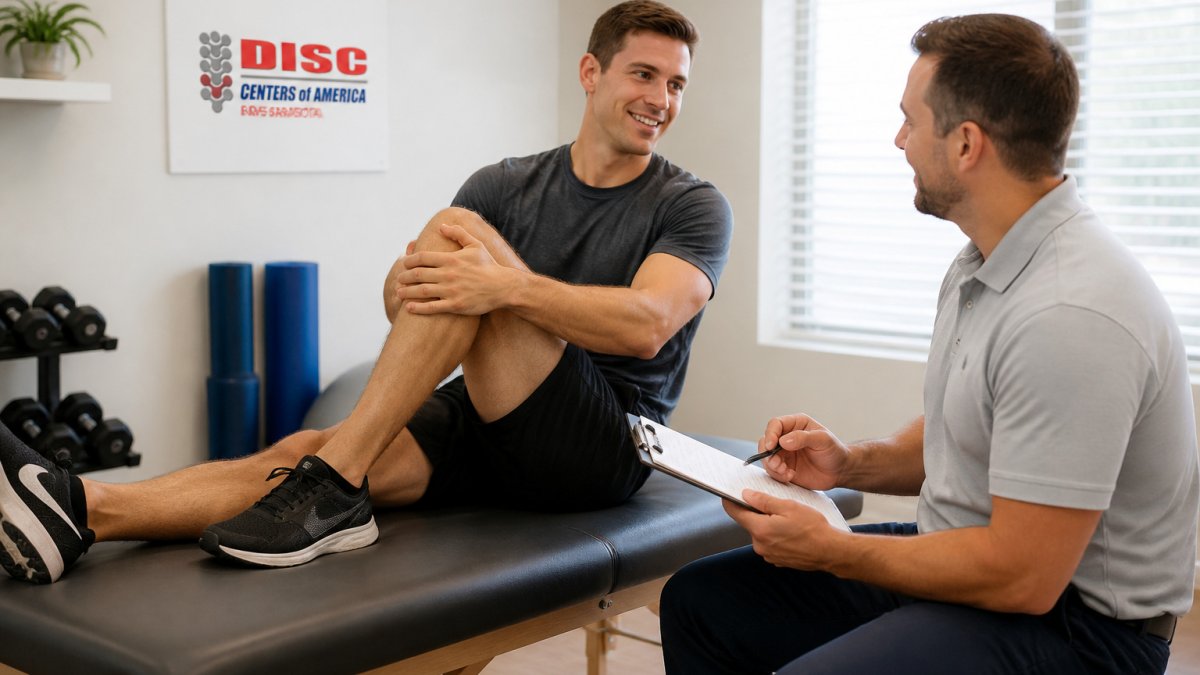
Returning to sport too quickly is one of the most common reasons a back injury flares again, which is why spinal decompression athletes benefit from a structured, phased plan rather than guesswork. A phased progression gives the spine time to adapt, but the phases only work if each one has clear entry criteria and objective benchmarks. General advice to 'listen to your body' is not enough for an athlete trying to get back to lifting, sprinting, or competing.
Phase 1: Symptom Control and Gentle Movement
Entry criteria: pain settling with daily activity, no progressive neurological symptoms.
CALL TODAY TO SCHEDULE YOUR FREE CONSULTATION →
Goals are walking tolerance, gentle mobility, and restoring sleep and sitting tolerance. Loading is limited to body-weight movement and short walks. A reasonable benchmark is walking 20 to 30 minutes without symptom increase.
Phase 2: Strength and Endurance Foundation
Entry criteria: walking tolerance established, pain stable for several days.
This phase builds the core and hip strength that supports the spine under load. Typical work includes dead bugs, bird dogs, planks, glute bridges, and light hip hinge patterning. Cardio moves to a stationary bike or elliptical to reduce spinal compression. A benchmark is completing prescribed sets with no symptom increase the following day.
Phase 3: Sport-Specific Loading
Entry criteria: strength benchmarks met, no pain with daily tasks, clinician clearance.
This is where the plan becomes sport-specific, and it is the phase most generic articles skip:
- Strength sports (powerlifting, Olympic lifting): reintroduce the hinge and squat pattern with an empty bar, then progress load weekly while monitoring next-day symptoms. Technique work comes before intensity.
- Running and field sports: interval walk-jog progressions before continuous running; change-of-direction drills at reduced speed before full-speed cutting.
- Rotational sports (golf, tennis, baseball): reintroduce rotation gradually, starting with half-speed swings or throws and building to full effort over multiple sessions.
- Contact sports: controlled contact drills come last, after full non-contact training is tolerated.
Phase 4: Full Training and Competition
Entry criteria: full-intensity sport-specific drills tolerated for at least a week without symptom flare, strength symmetrical to the uninvolved side within a reasonable margin, and clinician sign-off.
Full return is a progression, not a switch. Many athletes benefit from a reduced-volume first week of competition before returning to a normal schedule.
Handling Setbacks
Flares happen, and they are not automatic failures. A common approach is to drop back one phase for a few days, keep moving within pain tolerance, and progress again once symptoms settle. Pain that lasts more than a day or two after a session, or any new numbness or weakness, is a reason to check in with the clinician rather than push through.
The phased plan below gives each stage its entry criteria and the benchmark to check before moving on.
| Phase | Entry criteria | Benchmark |
|---|---|---|
| 1: Symptom control and gentle movement | Pain settling with daily activity | Walk 20 to 30 minutes without symptom increase |
| 2: Strength and endurance foundation | Walking tolerated, pain stable for several days | Complete prescribed sets with no next-day symptom increase |
| 3: Sport-specific loading | Strength benchmarks met, clinician clearance | Sport drills progressed without symptom flare |
| 4: Full training and competition | Full-intensity drills tolerated for a week, clinician sign-off | Strength near symmetrical with uninvolved side |
Booking a Consultation to Review Your Spinal Imaging
Call Sarasota Disc Center for a FREE MRI Review and Consultation to learn whether this approach fits your situation. If you are looking for non-surgical back pain treatment in Sarasota, FL, you can find local options here. Our step-by-step guide to booking a spinal decompression consultation walks you through what to prepare.
Frequently Asked Questions
Is spinal decompression successful for athletes?
Outcomes vary with the diagnosis, how long symptoms have lasted, and how consistently a treatment plan is followed. Research on spinal decompression is mixed, and some studies have small samples or short follow-up periods, so results should not be treated as guaranteed. Athletes should ask a qualified clinician to review their imaging and explain the realistic expected outcome for their specific condition before starting care.
Can spinal decompression help athletes with a herniated disc?
Nonsurgical spinal decompression is sometimes used as part of conservative care for herniated discs that cause back pain or sciatica. Whether it fits a particular athlete depends on the location and severity of the disc problem, neurological symptoms, and prior treatment. A clinical evaluation and review of MRI findings is the right first step to determine candidacy.
How soon can athletes return to training after spinal decompression therapy?
There is no single timeline. Athletes typically return in stages, beginning with light movement, then core and mobility work, then sport-specific drills, and finally full training. Progression should be guided by symptom response and by the treating clinician rather than by a fixed number of weeks. Any increase in leg pain, numbness, or weakness should pause training and prompt a medical review.
Is spinal decompression safe for athletes?
Spinal decompression is generally considered low-risk compared with surgery, but it is not appropriate for everyone. People with certain spinal fractures, tumors, infections, pregnancy, or severe osteoporosis may be advised against it. Mild temporary soreness can occur. Athletes should disclose their full medical history before treatment and seek urgent care for sudden loss of bladder or bowel control, progressive weakness, or severe numbness.