 How-to
Relief for Degenerative Disc Disease: 7 Proven Strategies
Last Updated: October 23, 2026
Quick Summary
Relief for degenerative disc disease typically involves a combination of conservative treatments including pain medications, heat or ice therapy, physical therapy, core strengthening, and posture correction. Advanced non-surgical options like spinal decompression therapy can help when basic strategies aren't enough, with most people improving through the right combination of treatments tailored to their specific pain pattern.
- The spine has 23 discs, each capable of developing degeneration that causes back, neck, or radiating pain.
- Physical therapy programs typically take 6-12 weeks to show real results when combined with daily home exercises.
- Spinal decompression therapy involves 15-30 sessions over several weeks using mechanical traction to reduce disc pressure.
- Sleeping position matters: back sleepers should use a pillow under their knees, while neck pain sufferers need proper cervical support.
- A staged approach works best: start with pain management, progress to active recovery over weeks 3-8, then maintain long-term with consistent exercise.
Table of Contents
- Understanding Degenerative Disc Disease and How It Causes Pain
- Strategy 1: Pain-Relief Medications and Anti-Inflammatory Drugs
- Strategy 2: Heat Therapy and Ice Packs for Immediate Soreness
- Strategy 3: Physical Therapy and Guided Strengthening Exercises
- Strategy 4: Core Strengthening and Posture Correction
- Non-Surgical Treatment for Degenerative Disc Disease
- How to Sleep with Degenerative Disc Disease
- Your Staged Self-Management Plan for Degenerative Disc Disease Pain Relief
- Frequently Asked Questions
Understanding Degenerative Disc Disease and How It Causes Pain
Degenerative disc disease occurs when the discs in your spine break down over time. These discs act as cushions between your vertebrae.
The spine has 23 discs (pubmed.ncbi.nlm.nih.gov). Each one can develop degeneration. Most people experience this as back pain or neck pain.
At Sarasota Disc Center, we help patients understand that relief for degenerative disc disease doesn't always require surgery. Many people manage their symptoms successfully with conservative treatment.
Degeneration happens for several reasons. Age is a major factor. The discs naturally lose water content as you get older.
The good news: you have multiple relief options. Most people improve with the right combination of treatments.
Strategy 1: Pain-Relief Medications and Anti-Inflammatory Drugs
Pain relief medications help you function while your body heals. Over-the-counter options include ibuprofen and naproxen. These reduce inflammation and soreness. Take them as directed on the label.
Acetaminophen is another option. It blocks pain signals but doesn't reduce inflammation. Some people respond better to one type than another. Try different options to see what works for you.
Your doctor may prescribe stronger medications if over-the-counter options aren't enough. Muscle relaxers ease tension in tight muscles around the damaged disc.
Important considerations:
- Take medications with food to protect your stomach
- Don't combine different pain relievers without asking your doctor
- Use the lowest effective dose for the shortest time needed
- Report side effects to your doctor immediately
Medications work best when combined with other treatments. They provide relief while you work on strengthening and healing.
Strategy 2: Heat Therapy and Ice Packs for Immediate Soreness
Heat and ice are simple tools that work quickly. Heat therapy relaxes tight muscles and increases blood flow. Ice packs reduce inflammation and numb sharp pain.
Use heat when muscles feel tight and stiff. A heating pad works well. Apply it for 15-20 minutes. Warm showers also help.
Use ice for acute inflammation and sharp pain. Apply an ice pack for 10-15 minutes. Wrap it in a towel to protect your skin.
Some people alternate between heat and ice. This combination can be especially effective:
- Ice for 15 minutes to reduce swelling
- Wait 30 minutes
- Heat for 15 minutes to relax muscles
- Repeat if needed
Both heat and ice are safe to use multiple times daily. They have no side effects. Many people find relief within minutes. Use whichever feels better for your specific pain.
Strategy 3: Physical Therapy and Guided Strengthening Exercises
Physical therapy teaches you how to move without pain. A therapist shows you exercises designed for your specific condition.
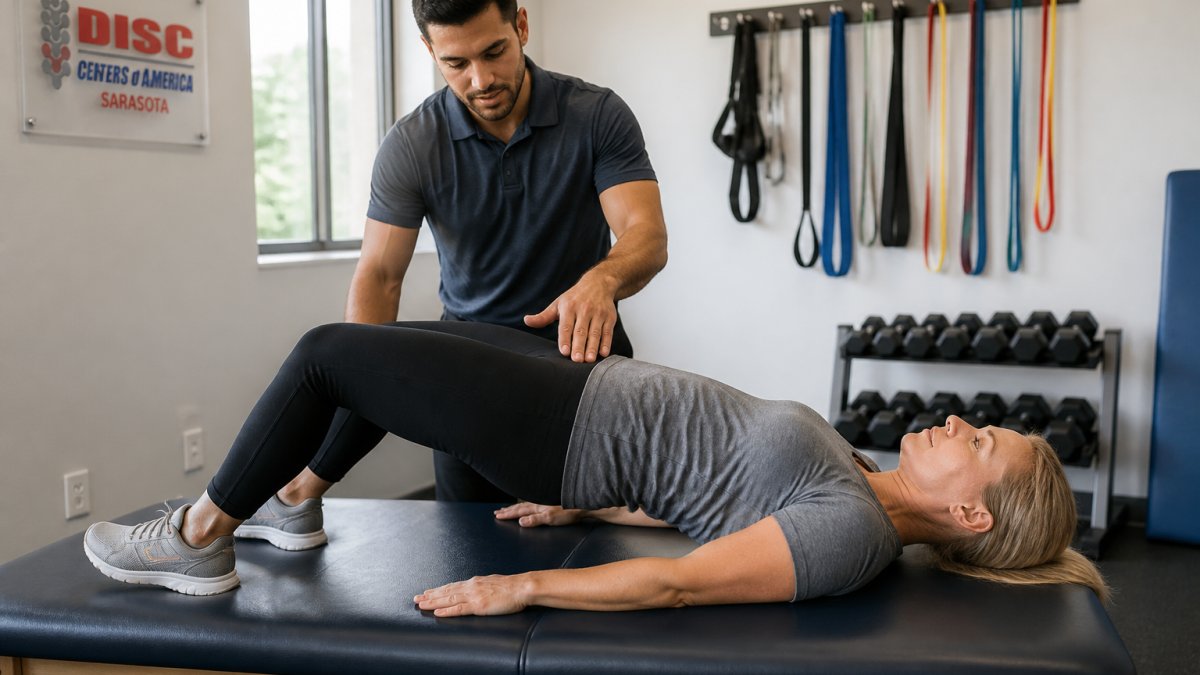
The goal of physical therapy is to rebuild strength and flexibility. Weak muscles put extra stress on damaged discs. Strong muscles support your spine and reduce pressure.
Your therapist will design a program based on your pain pattern. Some people need gentle mobility work first. Others can start with light strengthening right away.
Common exercises include:
- Pelvic tilts to engage core muscles
- Bridges to strengthen glutes and lower back
- Bird dogs for spinal stability
- Gentle stretching for flexibility
- Walking for low-impact cardio
Physical therapy works best when you practice at home between sessions. Most therapists give you exercises to do daily. Consistency matters more than intensity.
Strategy 4: Core Strengthening and Posture Correction
Your core muscles are your spine's first line of defense. They include your abdominal muscles, back muscles, and hip muscles.
Poor posture is a hidden enemy. Slouching puts extra load on your discs. Hunching over a desk all day compounds the problem. Correcting posture takes conscious effort at first.
Check your posture right now:
- Shoulders should sit back and relaxed
- Ears should align with your shoulders
- Your spine should have a natural curve, not too arched or too flat
- Your core should feel engaged, not tight
- Weight should be balanced on both feet
Core strengthening exercises don't require a gym. You can do them at home. Start with exercises that feel easy. Progress slowly. The best exercise is one you'll actually do.
Effective core work:
- Planks (start with 20 seconds, build to 60 seconds)
- Dead bugs (lying on your back, moving opposite arm and leg)
- Bird dogs (on hands and knees, extending opposite arm and leg)
- Glute bridges (lying on your back, pushing hips up)
- Wall sits (back against wall, sliding down into a squat position)
Posture and core strength work together. Good posture keeps your muscles engaged. Engaged muscles support your spine. This creates a positive cycle that reduces pain over time.
Non-Surgical Treatment for Degenerative Disc Disease
Several advanced treatments can help when basic strategies aren't enough. These options provide relief for moderate to severe pain without surgery. Most people try these after initial conservative care.
CALL TODAY TO SCHEDULE YOUR FREE CONSULTATION →
Spinal Decompression Therapy
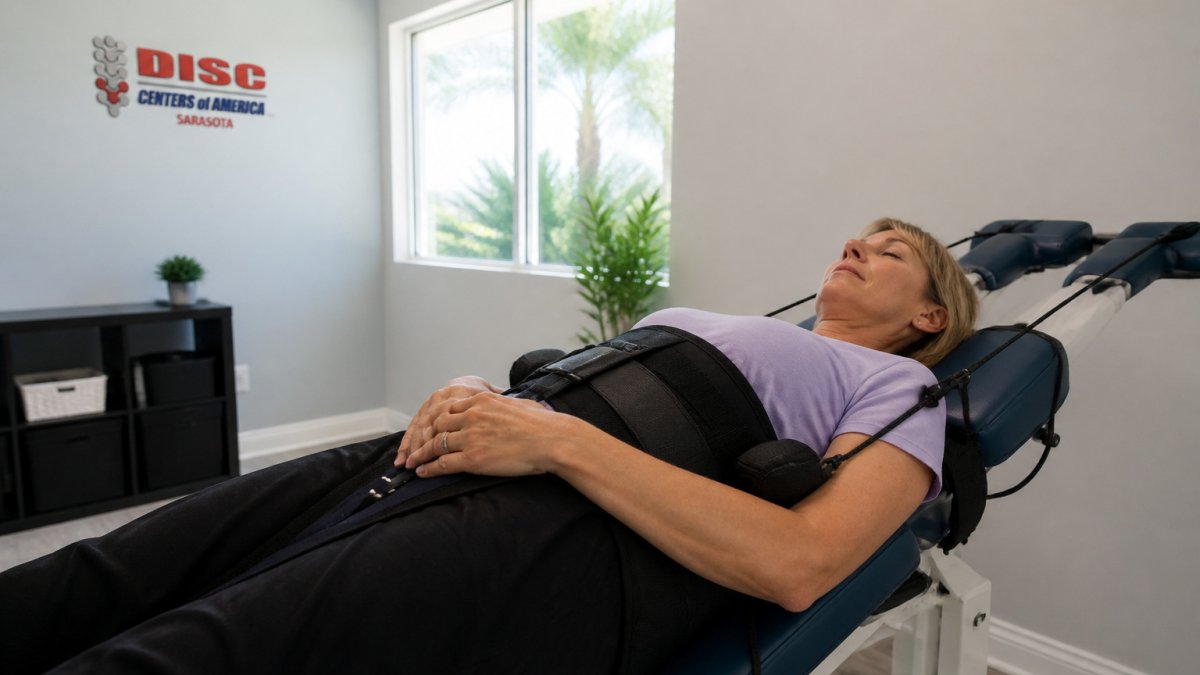
Spinal decompression uses mechanical traction to reduce pressure on discs. A machine gently stretches your spine, creating space between vertebrae.
The treatment feels like a gentle pulling sensation. You lie on a special table while the machine does the work. Sessions last 20-30 minutes.
Research shows decompression helps many people with degenerative disc disease. It works best for pain caused by disc pressure on nerves. Some people feel relief within a few sessions.
At Sarasota Disc Center, we use advanced decompression technology to target the source of your pain. Many patients who failed physical therapy find success with decompression.
Benefits of decompression:
- Non-invasive (no needles or surgery)
- No downtime (you can return to activities immediately)
- No medications required
- Can be combined with other treatments
Steroid Injections and Manual Manipulation
Epidural steroid injections deliver anti-inflammatory medication directly to the source of pain. A doctor guides a needle to the area around your spinal nerves. The steroid reduces inflammation and swelling.
Relief from injections varies. Some people feel better for weeks. Others get relief for months. They work best as part of a broader treatment plan.
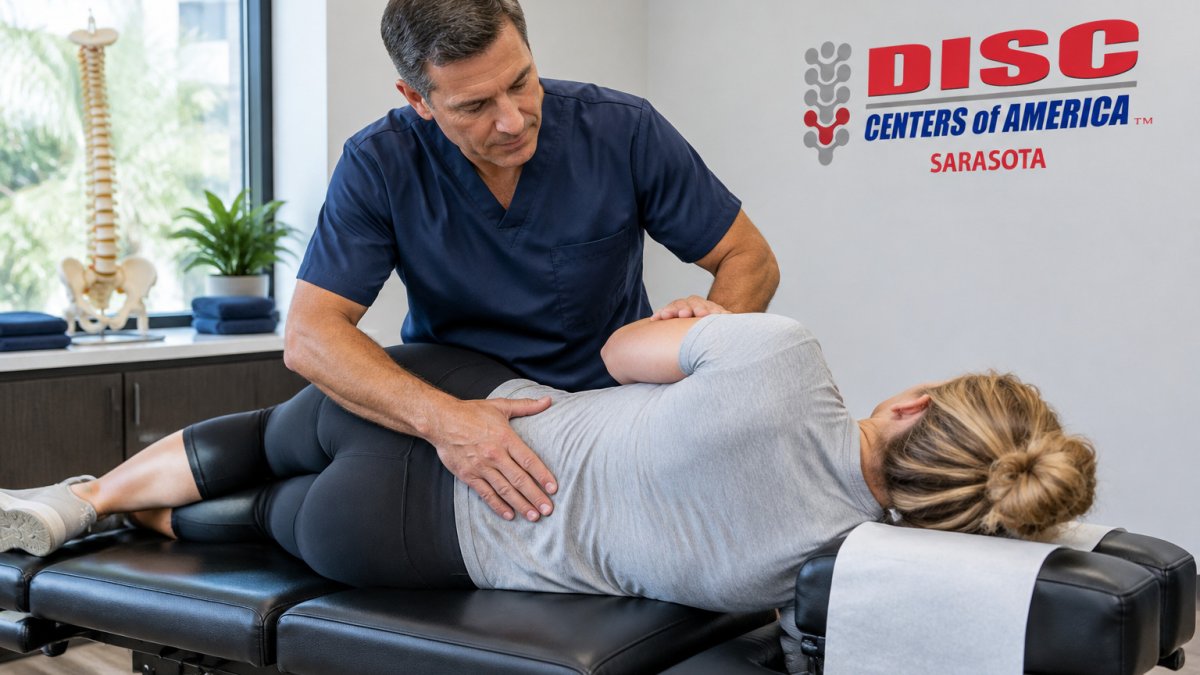
Manual manipulation includes chiropractic adjustments and physical therapy techniques. A practitioner uses their hands to mobilize your spine. This can improve movement and reduce muscle tension. Some people find immediate relief. Others need multiple sessions.
Important notes about these treatments:
- Injections carry small risks (infection, nerve damage are rare)
- Results vary from person to person
- These are best combined with exercise and physical therapy
- They provide temporary relief, not permanent healing
- Insurance coverage varies
How to Sleep with Degenerative Disc Disease
Sleep position matters when you have disc problems. The wrong position puts pressure on your discs and keeps you in pain. The right position takes pressure off and lets your spine rest.
The best sleeping position depends on your pain location. Back pain and neck pain require different approaches.
For back pain:
- Sleep on your back with a pillow under your knees
- This reduces stress on your lower back
- Keep your spine in a neutral position
- Use a thin pillow under your head
For neck pain:
- Sleep on your back with proper neck support
- Use a pillow that keeps your neck aligned with your spine
- Avoid stomach sleeping (it twists your neck)
- Side sleeping works if you use proper support
General sleep tips:
- Invest in a quality mattress that supports your spine
- Use pillows to fill gaps and maintain alignment
- Change positions if you wake up in pain
- Get out of bed slowly in the morning
- Avoid twisting or bending when getting up
Sleep position changes take time to adjust to. Stick with the new position for at least a week. Your body will adapt. Most people sleep better once they find the right position.
Your Staged Self-Management Plan for Degenerative Disc Disease Pain Relief
A staged approach works better than trying everything at once. Different strategies work for different phases of recovery. This plan helps you progress from acute pain to long-term management.
Stage 1: Initial Pain Management (Weeks 1-2)
Your first goal is to reduce acute pain and inflammation. Focus on immediate relief strategies.
Actions for Stage 1:
- Use ice packs for the first 48 hours if pain is acute
- Switch to heat after 48 hours if inflammation is down
- Take pain relief medications as needed
- Rest from activities that increase pain
- Sleep in the optimal position for your pain type
- Avoid heavy lifting and twisting motions
- Start gentle walking (5-10 minutes daily)
This stage is about stabilization. You're not trying to heal yet. You're trying to reduce pain enough to move forward.
Stage 2: Active Recovery (Weeks 3-8)
Once acute pain subsides, you can start strengthening and rebuilding. This stage requires more active participation.
Actions for Stage 2:
- Begin physical therapy (2-3 sessions per week)
- Start core strengthening exercises at home
- Increase walking duration gradually (10-20 minutes)
- Continue heat therapy as needed
- Improve posture throughout the day
- Use pain medications only when necessary
- Consider spinal decompression if pain isn't improving
This stage is longer because healing takes time. You're rebuilding strength and flexibility. Progress may feel slow, but consistency matters.
Stage 3: Long-Term Maintenance and Prevention
Once you're feeling better, maintenance prevents future problems. This stage continues indefinitely.
Actions for Stage 3:
- Continue core strengthening exercises (3-4 times weekly)
- Maintain good posture throughout the day
- Stay active with low-impact exercise (walking, swimming, yoga)
- Use heat or ice as needed for minor flare-ups
- Take pain medications only occasionally
- Get regular physical activity to keep muscles strong
- Address any new pain quickly before it becomes chronic
Long-term success depends on consistency. The exercises that helped you recover should become part of your routine. Think of them as maintenance, like brushing your teeth. Regular prevention is easier than dealing with flare-ups.
Living with degenerative disc disease doesn't mean accepting chronic pain. Most people find lasting relief through a combination of strategies tailored to their specific situation. If you've tried physical therapy or other standard treatments without success, advanced options like spinal decompression can provide the breakthrough you need.
Frequently Asked Questions
What treatments can relieve degenerative disc disease pain?
Relief for degenerative disc disease involves a combination of approaches: anti-inflammatory medications, heat and ice therapy, physical therapy, core strengthening, posture correction, and non-surgical options like spinal decompression. Most patients benefit from starting with conservative treatments before considering advanced options. The right combination depends on your specific symptoms, how long you've had pain, and what you've already tried. A spine specialist can help you create a personalized plan.
Can degenerative disc disease exercises actually help reduce pain?
Yes. Targeted degenerative disc disease exercises strengthen the muscles supporting your spine, reduce pressure on affected discs, and improve mobility. Physical therapy programs focus on low-impact activities like gentle stretching, core strengthening, and posture work. Most patients see noticeable improvement with consistent exercise, though results vary. The key is performing exercises correctly and avoiding movements that aggravate your symptoms.
Is non-surgical treatment for degenerative disc disease effective if physical therapy didn't work?
If standard physical therapy hasn't provided relief after 6-8 weeks, non-surgical options like spinal decompression therapy, steroid injections, or manual manipulation may help. These treatments work differently than traditional PT by directly reducing pressure on spinal discs and nerves. Success depends on the severity of your condition, how long symptoms have persisted, and your overall spine health. A consultation with a spine specialist can determine which option suits your situation.
How should I position myself when sleeping if I have degenerative disc disease?
The best sleeping positions for degenerative disc disease reduce spinal stress: sleeping on your back with a pillow under your knees, or on your side with a pillow between your knees. Avoid sleeping on your stomach, which twists your spine. Use a supportive mattress and pillow that keeps your neck aligned with your spine. If you wake with increased pain, try adjusting your position or adding extra support under key areas. Proper sleep positioning helps reduce inflammation and soreness overnight.