 ultimate-guide
Spinal Decompression After Failed Surgery: Options & Recovery
Table of Contents
- Understanding Spinal Decompression After Failed Surgery
- Why Back Surgery Pain Persists: Common Causes
- Failed Back Surgery Syndrome Treatment: Non-Surgical Options
- Surgical vs. Non-Surgical Spinal Decompression: Key Differences
- Recovery Time for Spinal Decompression Therapy
- Alternatives to Revision Back Surgery
- Red Flags and When to Seek a Second Opinion
- Frequently Asked Questions
Last Updated: October 9, 2026
Understanding Spinal Decompression After Failed Surgery
When back surgery doesn't deliver the relief you expected, the frustration cuts deep. You've endured the procedure and recovery, yet the pain persists, sometimes worse than before. This is where understanding spinal decompression after failed surgery becomes critical.
At Sarasota Disc Center, we work with patients who've walked this path. The good news: you have options beyond another operation.
Spinal decompression after failed surgery refers to treatment, surgical or non-surgical, aimed at relieving nerve and spinal cord compression when initial surgery hasn't resolved symptoms.
The distinction between surgical and non-surgical decompression matters enormously. Many patients assume that if surgery failed, only another surgery can help, an assumption that costs time, money, and unnecessary risk.
Why Back Surgery Pain Persists: Common Causes
Not every failed back surgery stems from surgical error. Pain after spinal surgery can develop for multiple reasons, and identifying the cause determines whether you need revision surgery, non-surgical treatment, or a combination.
Wrong-Level Surgery and Surgical Complications
One of the most straightforward reasons for persistent pain is treating the wrong spinal level. If imaging was misinterpreted, or if the symptomatic level was adjacent to the one treated, pain continues. This is why careful pre-operative imaging and a second opinion matter.
Other complications include nerve root injury during the procedure, scar tissue around the nerve (epidural fibrosis), or instability from removing too much bone or disc material. Some patients develop failed back surgery syndrome, a chronic pain condition that develops despite technically successful surgery.
Infection, though rare, can trigger inflammation and ongoing pain. Hardware failure or loosening (if fusion or instrumentation was used) can cause mechanical problems months or years later.
Nerve Compression and Recurrent Symptoms
Recurrent symptoms often stem from disc herniation at the same or an adjacent level. The first surgery may have removed the herniated material, but if degenerative changes remain, the disc can herniate again.
Spinal stenosis can persist if the decompression wasn't adequate, or new stenosis can develop at other levels. Nerve root compression from bone spurs, ligament thickening, or facet joint arthritis may not have been fully addressed originally.
Whether your pain is from recurrent compression at the surgical site, new compression elsewhere, or non-compressive causes (scar tissue, instability, referred pain) guides treatment selection.

Failed Back Surgery Syndrome Treatment: Non-Surgical Options
Failed back surgery syndrome treatment is not a single therapy but a staged strategy: identify the dominant pain generator, nerve-root compression, scar tissue, joint instability, or centralized pain, and match the least invasive intervention that can address it. When conservative care and physical therapy haven't resolved symptoms, non-surgical spinal decompression is one option among several, and it works best when the diagnosis fits.
How Non-Surgical Spinal Decompression Actually Works
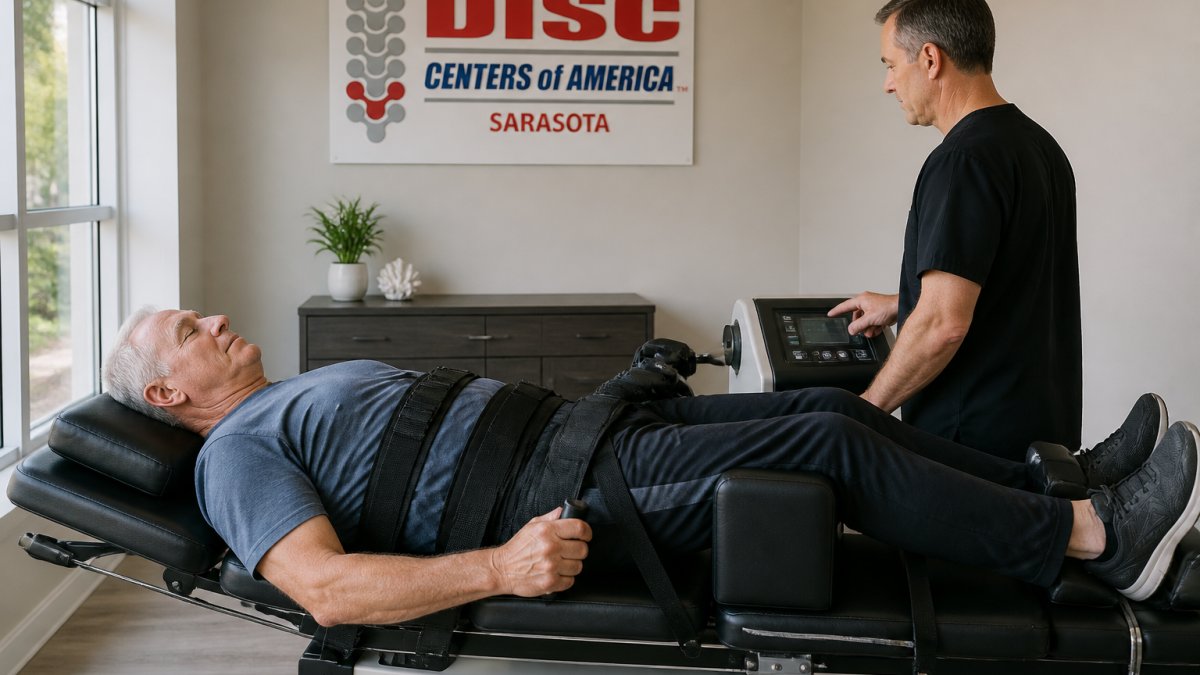
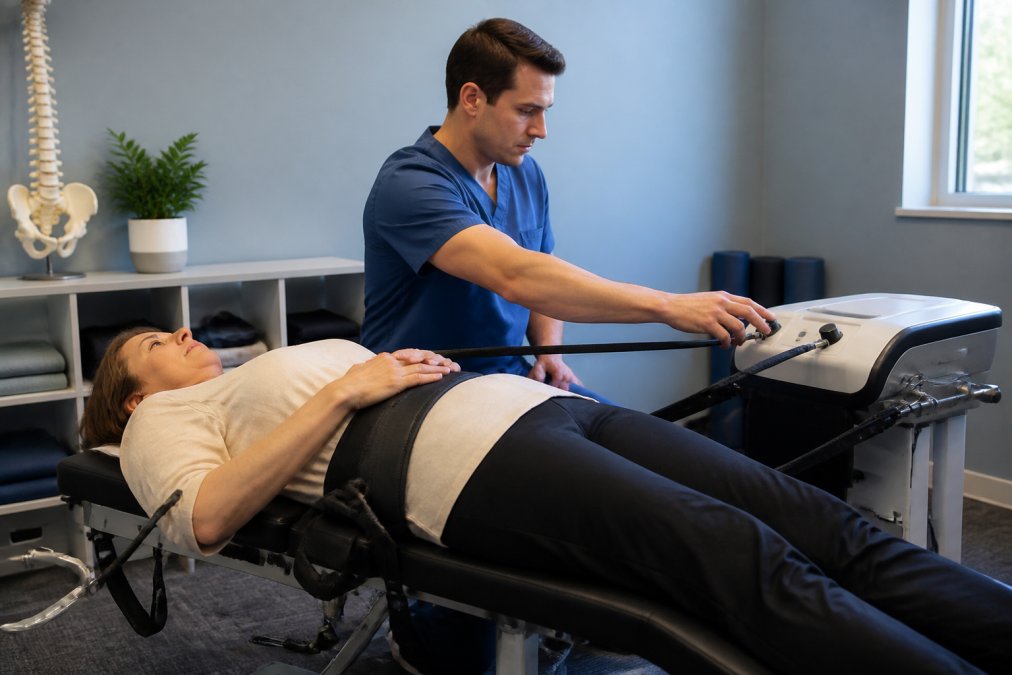
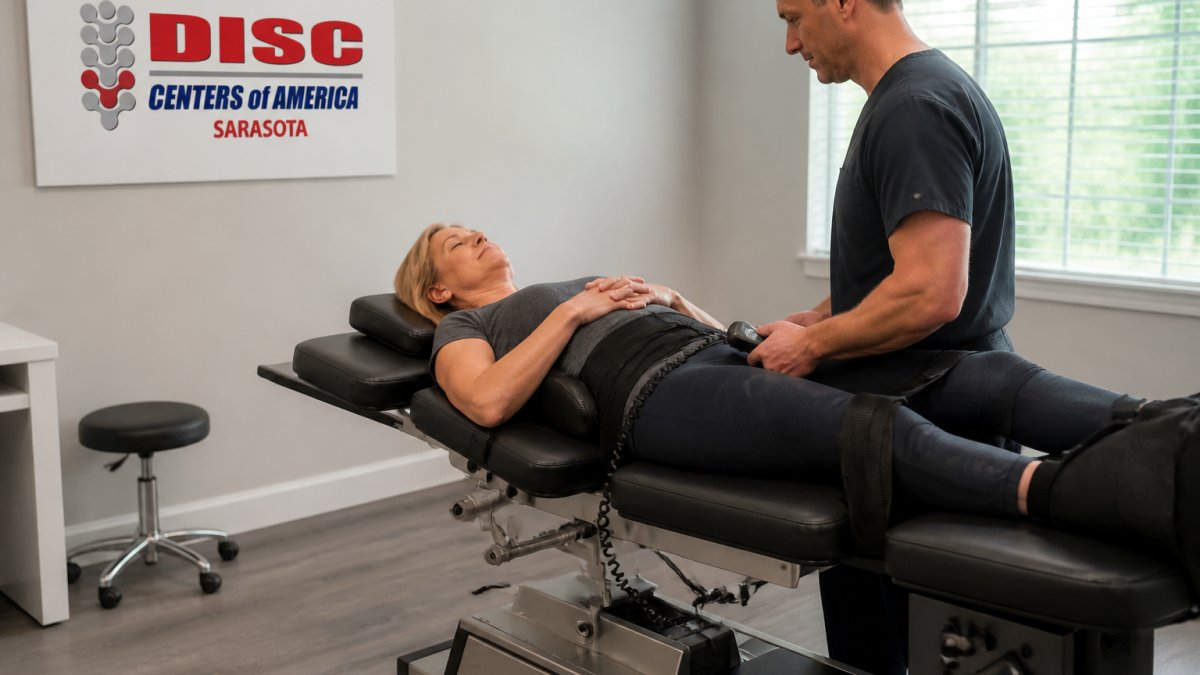
Non-surgical spinal decompression applies controlled, computer-regulated traction, cycling between distraction and partial relaxation, unlike static manual traction. The proposed mechanisms are:
- Reduced intradiscal pressure. Distraction creates negative pressure within the disc, which may encourage a herniated fragment to retract.
- Improved diffusion. Cyclic loading and unloading may help move nutrients and fluid into a degenerated disc.
- Nerve-root unloading. Widening the space around the nerve root can reduce mechanical irritation.
- Muscle guarding reduction. Because the force is gradual and programmed, patients often tolerate it better than manual traction, which can trigger protective spasm.
These mechanisms are plausible but the evidence base is mixed; most studies are small and results vary by diagnosis, protocol, and how success is measured.
A Practical Decision Pathway
Before starting any non-surgical program, a clinician should work through four questions:
- What is the suspected pain generator? Recurrent disc herniation, foraminal stenosis, epidural fibrosis, facet-mediated pain, and centralized pain respond differently.
- What do the prior operative records show? The original procedure, levels treated, hardware, and complications shape what is safe now.
- What does current imaging show? MRI or CT can reveal recurrent compression, adjacent-level disease, hardware issues, or scar tissue, but findings must be correlated with symptoms, not treated in isolation.
- Are there red flags? Progressive weakness, bowel or bladder changes, or saddle numbness change the urgency and pathway entirely.
If the answers point to mechanical nerve-root compression without instability or progressive deficit, a trial of non-surgical decompression is reasonable. If they point to instability, hardware failure, or a structural problem traction cannot change, the conversation shifts toward surgical evaluation.
Other Non-Surgical Options and How They Compare
- Epidural steroid injections. Anti-inflammatory medication delivered near the compressed nerve can reduce pain for weeks to months and create a window for physical therapy. They do not change the underlying structure.
- Physical therapy and rehabilitation. Targeted strengthening, flexibility, and movement retraining address deconditioning and movement patterns that perpetuate pain. Foundational, do not skip it.
- Medication. Neuropathic agents such as gabapentin or pregabalin, muscle relaxants, and NSAIDs make daily life more manageable. They treat symptoms, not compression.
- Spinal cord stimulation. For chronic pain unresponsive to other treatments, an implanted device can interrupt pain signaling. It is a procedure, not a passive therapy.
- Pain management and behavioral approaches. Cognitive behavioral therapy, graded activity, and sleep and stress management are evidence-supported components of chronic pain care.
What Realistic Expectations Look Like
Outcomes depend on the cause of persistent symptoms, how long the nerve has been compressed, whether there is permanent nerve injury, and overall health. Some patients improve substantially; others get partial relief; some do not respond. Anyone promising a fixed result without evaluating your diagnosis is overselling.
Surgical vs. Non-Surgical Spinal Decompression: Key Differences
The choice between surgical and non-surgical spinal decompression hinges on diagnosis, severity, and your response to conservative care.
Non-surgical decompression applies controlled traction without incision, reducing disc pressure, promoting disc rehydration, and relieving nerve irritation. It works best for nerve-root compression and radicular pain.
Surgical decompression (revision surgery) involves removing bone, disc material, or ligament that compresses the nerve or spinal cord.
Surgical decompression is more aggressive and permanent. It's appropriate when non-surgical options have failed, when imaging shows severe compression causing progressive neurological deficit, or when the anatomy requires structural change that non-surgical therapy cannot achieve.
| Approach | Duration | Recovery | Best For | Risks |
|---|---|---|---|---|
| Non-surgical decompression | 20-30 min/session | None, return same day | Nerve root compression, radicular pain | Minimal; not suitable for severe stenosis |
| Surgical decompression | 1-3 hours | 6-12 weeks | Severe stenosis, failed prior surgery, progressive deficit | Infection, nerve injury, instability, bleeding |
Recovery Time for Spinal Decompression Therapy
Recovery time for spinal decompression therapy is a major advantage over surgery: zero downtime. You walk in, undergo treatment, and resume your day.
CALL TODAY TO SCHEDULE YOUR FREE CONSULTATION →
The therapy doesn't damage tissue, so there's no healing phase. You can work, exercise, or perform daily activities immediately after each session, continuing regular routines throughout the treatment course.
However, "recovery" in the sense of symptom improvement follows a different timeline. Most patients notice initial improvement within 2-3 weeks of starting therapy. Meaningful, lasting relief typically emerges over 6-8 weeks of consistent treatment.
The timeline depends on how long the nerve has been compressed, degeneration severity, age, and overall health. Younger patients and those with shorter symptom duration respond faster; those with multiple comorbidities or severe degenerative changes may need extended treatment.
Alternatives to Revision Back Surgery
Before committing to revision surgery, explore alternatives that address the underlying problem without another operation. Many patients avoid surgery entirely by combining approaches strategically.
Physical therapy and rehabilitation form the foundation. A skilled therapist can identify movement patterns that aggravate your condition and teach you to move differently.
Epidural steroid injections deliver anti-inflammatory medication directly around compressed nerves.
Oral medications, neuropathic pain agents like gabapentin or pregabalin, muscle relaxants, and NSAIDs, address symptoms.
Lifestyle modification, activity pacing, ergonomic adjustment, weight management if relevant, and stress reduction, supports recovery. Chronic pain often worsens with inactivity and stress, so addressing these factors matters.
Spinal cord stimulation is an option for patients with chronic pain that hasn't responded to other treatments.
Red Flags and When to Seek a Second Opinion
Persistent pain after back surgery deserves evaluation, but not every symptom carries the same urgency. Separating routine follow-up from same-day assessment is one of the most practical things a patient can do.
Symptoms That Require Urgent or Emergency Assessment
Seek emergency care or call your surgeon immediately if you develop:
- New or worsening weakness in one or both legs. This can signal ongoing nerve-root or spinal-cord compression.
- Saddle numbness. Reduced sensation in the groin, inner thighs, or perineal area can indicate cauda equina syndrome, a surgical emergency.
- Bowel or bladder changes. Difficulty urinating, retention, incontinence, or loss of bowel control require immediate evaluation.
- Fever, chills, or wound drainage. These can indicate infection, which is rare but serious.
- Sudden severe pain with a pop or give-way sensation. This may suggest hardware failure, fracture, or instability.
These symptoms are not "wait and see" problems. Time matters for nerve recovery.
Symptoms That Warrant Prompt but Non-Emergency Follow-Up
Contact your surgeon or a spine specialist within days to weeks if you notice:
- Pain that is steadily worsening rather than plateauing or improving.
- New numbness or tingling that is spreading.
- Pain that changes character, for example, from back-dominant to leg-dominant.
- Difficulty with balance or a feeling that your spine is unstable.
- No meaningful improvement after several weeks of appropriate conservative care.
Why Revision Surgery Is Different
Revision surgery is not simply "the first surgery again." Scar tissue can obscure normal anatomy, making nerve identification harder, and altered anatomy, retained hardware, and prior fusion can change the approach. Recovery may be longer and the risk profile higher than a first-time decompression, so revision surgery should follow a careful review of the original operative report, current imaging, and a clear hypothesis about what is causing the pain.
How to Get a Useful Second Opinion
A second opinion is most valuable when structured. Bring:
- The operative report from your prior surgery.
- Imaging reports and the actual images, not just summaries.
- A written timeline of your symptoms before and after surgery.
- A list of treatments tried and how you responded.
A surgeon who did not perform the first operation can review the case without the same assumptions. Sometimes the answer is revision surgery; often it is not. The purpose is not to find someone who will operate, but to clarify which path fits your situation.
Cauda equina syndrome overview
Frequently Asked Questions
What is considered failed back surgery syndrome?
Failed back surgery syndrome refers to persistent or recurrent pain following spinal surgery, despite the procedure being technically successful. This ongoing pain can result from scar tissue formation, nerve root compression at the surgical level or adjacent levels, spinal instability, or psychological factors. The condition affects a significant portion of patients who undergo spinal surgery. A thorough clinical evaluation and imaging are necessary to identify the underlying cause before pursuing any additional treatment.
Can non-surgical spinal decompression help after I've already had back surgery?
Yes, non-surgical spinal decompression may be an option for post-surgical patients experiencing persistent pain from nerve compression or disc-related issues. However, the presence of hardware, fusion, or extensive scar tissue can affect candidacy. A qualified professional must evaluate your specific surgical history, imaging results, and current symptoms through a comprehensive consultation to determine whether non-surgical decompression is appropriate for your situation.
How does non-surgical spinal decompression differ from surgical decompression?
Non-surgical spinal decompression uses controlled traction and positioning to create negative pressure within the disc space, potentially relieving nerve compression without cutting tissue or requiring anesthesia. Surgical decompression involves physically removing bone, disc material, or ligaments to relieve nerve pressure. Non-surgical approaches typically involve multiple sessions over weeks, while surgical procedures are one-time interventions. Recovery time, risks, and effectiveness differ significantly between the two approaches.
What recovery time should I expect with spinal decompression therapy?
Non-surgical spinal decompression involves multiple sessions. Initial symptom relief may occur within the first few weeks, though full recovery varies by individual condition and severity. Many patients can continue working during treatment. Your provider will establish a personalized timeline based on your specific diagnosis, symptoms, and response to therapy.